Nothing Phone(2a) 60000 Units Sold within 60 minutes of its Launch, What’s so special about it?
The Nothing Phone 2a, the company's newest smartphone, made its debut last week in India and is currently available for purchase. The Phone 2a has received extraordinary feedback, the manufacturer has recently disclosed. Sixty thousand pieces were sold through various outlets in less than sixty minutes after the release. Nothing and Croma worked together earlier this month on Nothing Drops for Phone 2a in India.
What's Creating The Rush ~
( Source: Google Images )
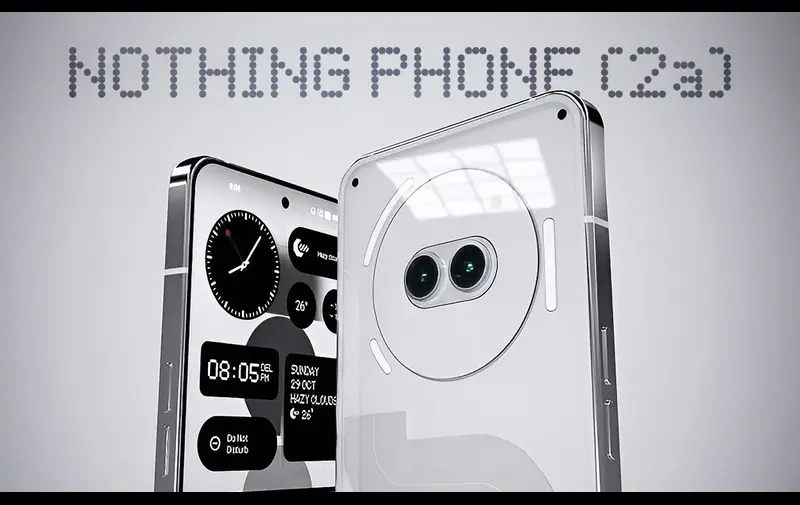
'Nothing' has gone a long way in a short time, and it now truly represents something. The firm produces high-quality, reasonably priced smartphones in the mid- and upper-mid-range. Things are new and different with the Nothing Phone 2a. Everything has been a little more subdued, even though you still receive the same experience with a distinctive style. The pricing is now in the budget-premium range, which is a plus. There are two ways to use the Nothing Phone 2a, and it looks fantastic. The Phone 2a's back design has not been altered, and some LEDs have been eliminated to keep things simple. There are just three LED strips on the rear of this phone, which is less than the preceding Nothing Phone 1 and Phone 2.
Above the battery, several flex cables are also visible through the glass surface. The flat frame, rounded corners, and 90-degree sides of the Nothing Phone 2a contribute to its easy grip. Even while holding the phone in one hand, it is simple to access both the power and volume buttons, which are located on the right and left, respectively. However, there was room for a bit extra clickiness to the buttons. The SIM card tray, speaker, microphone, and USB Type-C connector are located on the bottom, while the top is reserved for the second microphone.
Nothing claims that the mid-frame is made entirely of recycled aluminum. There are also a lot of recycled copper foil, steel, plastic, and tin components in the phone. It has a nice weight to it and seems solidly constructed. But as the back clear panel is made of plastic, scratches will inevitably occur. If it is utilized without a case, we will have to wait and see how it performs over time.
Going to the front, Nothing has maintained the phone's symmetrical bezels, giving it a high-end appearance. This is something that more brands ought to do. The narrow bezels are reminiscent of those on an iPhone. The in-display fingerprint scanner and front camera are housed in a hole punch cutout located at the top center. The Nothing Phone 2a is water and dust-resistant, with an IP54 rating.
Specification And Software ~ The Nothing Phone 2a is a mid-range smartphone in terms of specs. It features a specially designed MediaTek Dimensity 7200 Pro SoC, which was constructed with TSMC's second-generation 4nm manufacturing technology. Nothing indicates that the customized chip increases efficiency by 10%, and yes indeed it does. Up to 12GB of RAM is linked with the chipset and may be increased to 20GB by utilizing the RAM Booster function. Additionally, the phone has 256GB of storage.
The 5,000mAh battery that Nothing has included is the biggest battery that a Nothing Phone has ever utilized. Additionally, it enables 45W rapid charging; however, the package does not contain a charger.
( Source: Google Images )
Connectivity options for the Nothing Phone 2a include Bluetooth 5.3, NFC, dual-band Wi-Fi 6, 5G dual-mode, and standard GPS.
Now let's discuss the software aspect of the matter. Based on Android 14, Nothing OS 2.5 is used by the Nothing Phone 2a. Regarding software support, Nothing guarantees four years of security patches and three years of OS upgrades. You receive NTFS optimizations, a RAM booster that supports up to 8GB of virtual RAM expansion, a HyperEngine 5.0 designed to enhance gaming performance, and a Smart clear tool that can clear unnecessary system files. Additionally, you get an AI wallpaper generator, widgets created by Nothing, and—best of all—no bloatware. Because the Nothing icon collection employs monochromatic components to discourage app use, it's also an excellent strategy to cut down on phone usage. Lastly, the Glyph interface is the Nothing Phone's party trick. Nothing redesigned the Glyph interface with the Phone 2a, but this time it used fewer LED strips. Though there are now only three of them, it's still white. But you can still manage most of what the Glyph interface was designed for. The Phone 2a supports 15 Glyph functions. You can use it for a timer, Flip to Glyph for notifications, a camera shutter countdown, a progress bar for Zomato, Uber, and Google Calendar, a volume indicator, and music visualization.
The Nothing Phone 2a, for the first time in Nothing history, comes with a MediaTek processor. It gets a mid-range custom Dimensity 7200 Pro SoC that is ample good for daily use and gaming and can offer excellent battery life.
For audio, Nothing included stereo speakers on the Phone 2a. The speakers get loud enough but pack a punch. There is good stereo separation and no cracking, even at full volume. As for the microphone quality, everything is also good in that department.
Prices of Nothing Phone 2a in India ~
( Source: Google Images )
As usual, I'll begin by discussing the Nothing Phone 2a's pricing, which is by far its most crucial feature. The basic edition of the phone, which has 128GB of storage and 8GB of RAM, costs Rs. 23,999. Do you need extra room for storage? The 8GB RAM and 256GB storage model costs Rs. 25,999, while the 12GB RAM and 256GB storage model costs Rs. 27,999.
The Verdict:
The company's inexpensive phone, the Nothing Phone 2a, must compete with a wide range of other phones on the market that are priced similarly. The Poco X6 Pro, Redmi Note 13 Pro, Realme 12 Pro, and several other devices with comparable or superior performance are available. The design and software of the Nothing Phone 2a, however, really make it stand out. You receive a distinctive design, three years of guaranteed Android OS updates, and clean software. The phone's build quality and screen are excellent as well. I would suggest the Nothing Phone 2a for Rs. 23,999 to anybody looking for a distinctive phone with good pictures, clean software, and long battery life. You should go elsewhere if you're searching for pure performance. Nothing has priced the Phone 2a well, and I reckon it's going to sell like hotcakes. It's something new, and we like it!






































.jpg)
.jpg)
.jpg)
 (1).jpeg)
.jpg)

.webp)



























.jpg)








.jpeg)
 (1).jpeg)
.jpg)