One Person, Infinite Impact: Stories of Eco Warriors
How much difference can one person make? Just ask these grassroots ecologists, who’ve won an award – and funding – for saving imperilled species. If you’ve ever doubted how much difference one person can make – particularly at a time when environmental challenges seem so overwhelming – then take heart from the winners of this year’s Whitley Awards, held rcently at the Royal Geographical Society in London.The annual do – organized by the Whitley Fund for Nature, a UK charity – celebrates grassroots conservationists who are “changing the narrative” for imperilled species and ecosystems. Between them, this year’s winners have saved charismatic songbirds, rehabilitated the reputations of persecuted animals, and helped to protect unique ecosystems from destruction. And they have done so by enfranchising communities and pioneering – as Princess Royal, who presented the awards – put it “locally-led solutions that have an impact”. “We are in the presence of people who are saving the world,” said wildlife presenter Kate Humble, who compered the event. Here are those people, whose projects were awarded at least £50,000 each to scale up.
1. Purnima Devi Barman, India
(Source: Google Images)
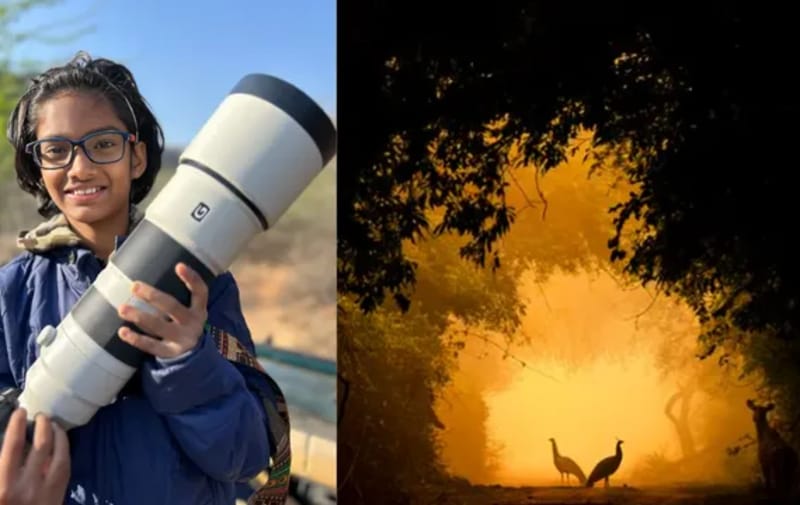
“They were my childhood friends,” said Purnima Devi Barman, a wildlife biologist who’s dedicated much of her life to protecting the greater adjutant stork. “My grandma showed me then in the rice paddies. I love everything about them. They are inspiring. But some people hate them.” With its gnarled, bald head and vulture-like pose, the greater adjutant is not the prettiest bird. It has a grizzly moniker, too. In the Indian state of Assam – one of its last strongholds – locals know it as the Hargill, or ‘bone swallower’. Add to that an unwarranted reputation for being a bad omen and a disease carrier, and it’s perhaps easy to see how the poor stork ended up being pushed to the brink.
(Source: Whitley Fund for Nature)
What the birds needed, Barman reasoned, was some positive PR. So, in 2007 she set up a ‘Hargill army’ of mostly women to change attitudes towards the birds and weave them into local lore by incorporating them into fabrics. The ranks of the Hargill army – or stork sisters – have since swelled to more than 10,000. Members protect nests and advocate for the birds and their habitats, often while wearing stork costumes. Has it paid off? You bet. Hargilla numbers have quadrupled locally to more than 1,800. Even the local government got on board, declaring 7 October ‘adjutant day’ in 2022. “They are a symbol of strength, resilience, and love,” said Barman, who won £100,000 to take her work to other Indian states.
2. Kuenzang Dorji, Bhutan
(Source: Google Images)
Changing weather patterns and habitat loss in Bhutan have forced many of the country’s 2,500 golden langurs into closer contact with roads, power lines, and farmers, whose crops they eat. The animals – once considered a symbol of prosperity – have come to mean the opposite. Conservationist Kuenzang Dorji has developed a suite of solutions – including toy tigers that roar when monkeys approach – to keep langurs away from dangerous infrastructure and farmers.
Bhutan is home to around 2,500 golden langurs, which face myriad threats.
(Source: Whitley Fund for Nature)
His sometimes-eccentric conservation ideas are yielding results. Data suggests they have helped to protect 80% of farmers’ crops, freeing women and children from standing guard over the land, meaning the latter can go to school instead. Other measures include installing animal repellent near power stations where langurs are at risk of electrocution. Dorji first encountered a langur as a teenager and fell in love. “I was fascinated by its golden color and eyes,” he said. Upon receiving £50,000 to scale his solutions, Dorji told the audience: “Bhutan is known as the happiest country in the world. Tonight, I’m very happy.”
3. Leroy Ignacio, Guyana
(Source: Whitley Fund for Nature)
“When I hear the bird, it just hits my heart,” said conservationist Leroy Ignacio of the red siskin – a small finch that’s only been known to science since 2000, when it was ‘discovered’ in Guyana (locals knew about it for generations). Guyana is currently navigating unprecedented change after a massive offshore oil discovery transformed it from one of South America’s poorest countries into the world’s fastest-growing economy. This development, along with the illegal trade in songbirds, threatens the red siskin, which has swiftly become a flagship species for conservation.
The red siskin has only been known to science since 2000
(Source: Whitley Fund for Nature)
Ignacio is the president and founding member of the South Rupununi Conservation Society, which has brought communities on board to protect the red siskin and the habitat it relies on. This community-led conservation work has stopped the illegal capture of the red siskin, stabilized numbers, and empowered local Indigenous people. “It’s made them feel that they are doing something for the world from their backyard,” he said. The £50,000 prize money will help his team double the size of the Red Siskin conservation zone to 150,000 hectares.
4. Naomi Longa, Papua New Guinea
(Source: Whitley Fund for Nature)
Located in the Pacific Ocean’s vibrant Coral Triangle, Kimbe Bay is an area of staggering marine biodiversity, containing 76% of the world’s coral reef species. It also provides food and livelihoods for more than 120 million people. However, this region is under threat from overfishing, habitat degradation, and climate change. Attempting to change that narrative is Naomi Longa, a biologist who founded the Sea Women of Melanesia. Her female-led conservation group works with communities to design and implement locally managed marine areas (LMMAs) to allow reefs to recover.
“Despite pushback from men in high positions”, said Longa, the Sea Women of Melanesia have pioneered sustainable fishing practices, implemented no-take zones to allow reefs to recover, and are set to create four more LMMAs with the £50,000 her project was awarded to scale up. “This is about girl power,” she said.
5. Aristide Kamla, Cameroon
(Source: Whitley Fund for Nature)
Cameroon’s Lake Ossa is a hotspot for the African manatee, a charismatic creature listed as vulnerable by the International Union for Conservation of Nature. However, in 2016, an invasive plant species known as giant salvinia spread rapidly in the lake, covering more than half of its surface in five years. Enter conservationist Aristide Kamla, who developed a natural solution to the problem by introducing the Salvinia weevil to the lake, which chomped through the invasive weed, reducing it by more than 70%. Kamla and his team are now working to tackle the source of the outbreak: nutrient runoff caused by illegal deforestation. Sensors around the lake now alert conservationists to the sound of chainsaws, so rangers can respond. “Now we see more and more manatee – and that’s giving us hope,” he said.
6. Raju Acharya, Nepal
(Source: Whitley Fund for Nature)
Nepal has become a hub for the illegal trade in owls. “Some people believe that they are a bad omen,” said Raju Acharya, a conservationist who made it his mission to change perceptions of these charismatic birds. One way he’s done this is by organizing the Nepal Owl Festival, an annual jamboree that celebrates the birds with traditional games. He was also instrumental in developing the Owl Conservation Action Plan for Nepal, a government-backed strategy to boost owl numbers. It seeks to clamp down on the illegal owl trade and to protect their habitats, benefitting other species. The £50,000 prize from the Whitley Awards will help his team project more forests, boost enforcement of poaching, and train more ‘owl envoys’ to change perceptions about the birds.
7. Fernanda Abra, Brazil
(Source: Whitley Fund for Nature)
Working with Indigenous communities in the Brazilian Amazon, Fernanda Abra has tried to solve a growing problem in the region: animal deaths due to collisions with vehicles. A rapidly expanding road network in this biodiverse ecosystem has resulted in the loss of canopy connectivity. Consequently, animals either try to cross the roads, risking death, or stay where they are, resulting in declines in genetic diversity. With the help of the local Waimiri-Atroari Indigenous community, Abra has installed more than 30 bridges over the deadly BR-174 highway, which endangered primates are using regularly. The Reconecta Project received £50,000 to build more bridges. “We need to implement the culture of sustainable infrastructure in the Amazon,” said Abra.
Nature provides a free lunch, but only if we control our appetites ~ William Ruckelshaus, Business Week, 18 June 1990