"Dream, Dream, Dream! Conduct these dreams into thoughts, and then transform them into action."
- Dr. A. P. J. Abdul Kalam
"Dream, Dream, Dream! Conduct these dreams into thoughts, and then transform them into action."
- Dr. A. P. J. Abdul Kalam
2 Mar 2026
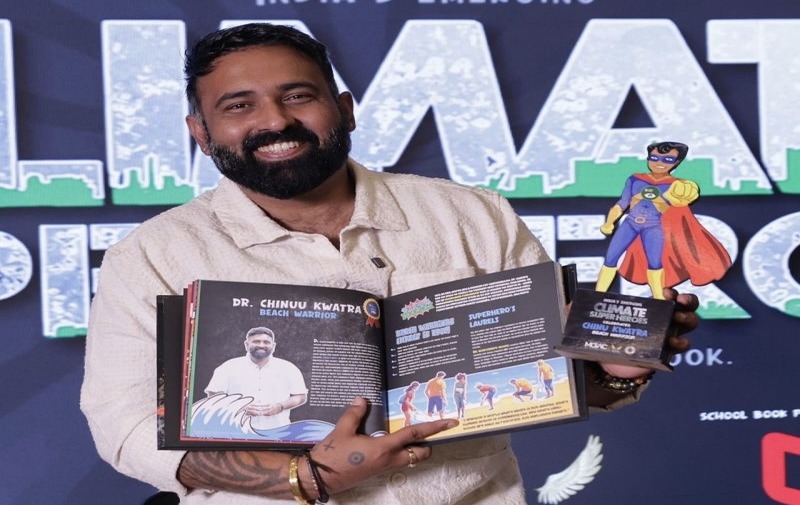
On the shores of Mumbai, where waves once brought more plastic than peace, a young man bent down to pick up garbage—and in that simple act, began a revolution. People laughed. Some called him “Kachrewala,” the garbage man. But while the world mocked, he kept moving. Today, that same man stands recognised as one of India’s emerging climate champions. Chinu Kwatra has now been featured in India’s Emerging Climate Super Heroes, a comic themed coffee table book by The House Of Mosaic. The honour is more than symbolic. It captures a nine-year-long journey of grit, purpose, and relentless environmental activism that turned ridicule into respect. His story reminds us that heroes are not born in spotlights; they are built in silence, in sweat, and sometimes in sand filled with plastic waste.
At Mumbai’s Dadar beach, where tides once deposited heaps of plastic bottles, wrappers, and marine debris, Kwatra started something that many believed would not last a week. What began as a single clean-up mission soon became a weekly ritual. For over seven years, he has led consistent beach clean-up drives, mobilising volunteers who now proudly call themselves “Beach Warriors.” Consistency is what separates intention from impact. Week after week, under the harsh sun and unpredictable monsoon skies, he and his team cleared tonnes of waste, ensuring that the coastline could breathe again. These drives were not just about aesthetics. They were about marine life, about reducing microplastics, and about building environmental consciousness in urban India. In a city that rarely slows down, Kwatra chose to stop, bend and clean. That act of bending down symbolised humility, not defeat. And slowly, the laughter faded.
Behind every sustainable movement stands structure and vision. Armed with dual MBA degrees and a clear mission, Kwatra founded the Khushiyaan Foundation a non-profit organisation built on the pillars of compassion, youth power, and measurable impact. The foundation is driven by a dynamic team of young volunteers whose energy fuels multiple community initiatives. For Kwatra, leadership was never about standing in front; it was about building a team that believes in collective change. Projects like Roti Ghar provide food to underprivileged children and families. Project Pathshala focuses on free education for children living in slums, ensuring that poverty does not steal their future. MARD works toward empowering communities and addressing social stigmas. Each initiative reflects a simple philosophy: social change must touch both the environment and humanity. This holistic approach sets him apart. Cleaning beaches addresses climate concerns; feeding children addresses hunger; educating them addresses inequality. It is climate action blended with compassion.
If cleaning beaches challenged environmental neglect, addressing menstruation challenged social silence. Kwatra is also known as the “Menstrual Man," a title earned through courage and commitment. In many parts of India, menstruation is still surrounded by stigma and misinformation. Women and girls often lack access to hygienic products, leading to health risks and missed school days. Through seminars and awareness sessions, Kwatra initiated open conversations about menstrual health, encouraging society to speak without shame. His team manufactures biodegradable sanitary napkins, ensuring both hygiene and environmental responsibility. These are distributed to women who remain disconnected from proper menstrual practices. This initiative bridges two crucial issues: sustainability and dignity. It takes courage for a man to step into a subject society often labels as “women’s talk.” But Kwatra did not step in for attention. He stepped in because silence harms.
As a young man, Kwatra once aspired to join the Indian Army and serve the nation in uniform. Life, however, had other plans. Instead of serving at the border, he chose to serve within the community. In many ways, his mission remains the same: protecting the nation. Only the battlefield changed. His war is against pollution, ignorance, hunger, and stigma. His weapons are gloves, garbage bags, notebooks, biodegradable pads, and unwavering belief. Service does not always require a uniform. Sometimes, it requires uncomfortable conversations and consistent action.
Being featured in India’s Emerging Climate Super Heroes is not just a personal achievement. It symbolises a shift in how society defines heroism. The comic format makes his story accessible to younger generations, proving that climate action is not boring or distant; it is dynamic and urgent. Citizens who flip through those pages may see a man holding a trash bag instead of a shield. And perhaps that image will inspire them more than any fictional character ever could. Kwatra’s journey teaches an important lesson: purpose outlives mockery. When he was called “Kachrewala,” he could have stopped. Instead, he chose purpose over pride and action over applause.
Romanticizing life and shaping stories from everything I see through my journalistic lens. Also, I love sports on the side.