
No Plastic, No Problem! How One Zoo Is Teaching Thousands to Go Green
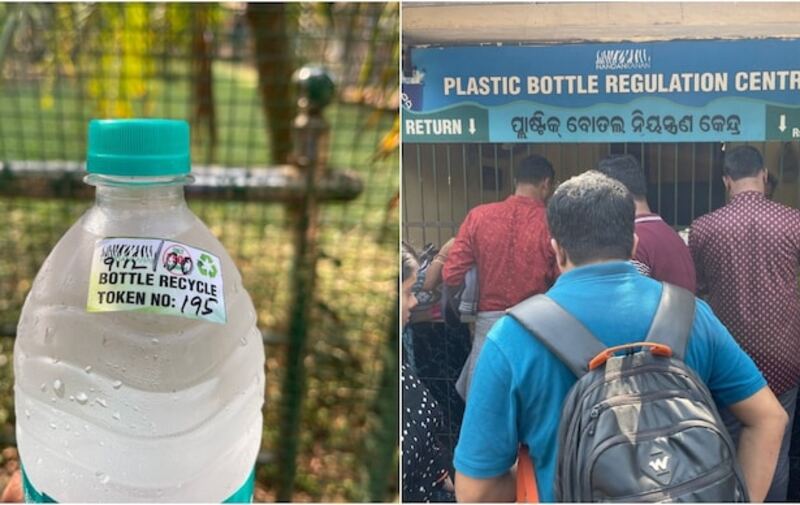
Sometimes, change doesn’t begin with grand policies or massive campaigns. Sometimes, it starts with something as simple as a ₹50 deposit. A recent viral post by Manas Muduli has brought national attention to an inspiring initiative at Nandankanan Zoological Park in Bhubaneswar. The post, viewed by thousands, highlights how the zoo is tackling one of the world’s biggest environmental challenges—plastic waste—with remarkably simple solutions. And perhaps that is what makes it so powerful. Because it proves that sustainability doesn’t always need complexity. It just needs intent.The Idea That’s Winning HeartsAt the heart of this initiative lies a simple rule. Visitors carrying plastic water bottles are required to pay a refundable ₹50 deposit. Once they return the empty bottle while exiting, the money is given back. It’s not a penalty. It’s a nudge. A gentle reminder that what we bring in, we must take out. Alongside this, another thoughtful rule ensures that packaged food in plastic does not enter the premises. Visitors must transfer food into paper bags before entry, reducing the chances of single-use plastic littering the park. In a world filled with complex environmental debates, what Nandankanan has done is quietly revolutionary. Instead of relying solely on awareness campaigns or strict bans, the zoo has introduced a system that makes visitors active participants in conservation. There is accountability. There is responsibility. And most importantly, there is a direct connection between action and consequence. When people know they will get their deposit back, they are far more likely to carry their waste out. When plastic packaging is restricted at the entry point, the problem is reduced before it even begins. This is not just management. It is a behavioral change.A Zoo That Teaches Beyond AnimalsEstablished in 1960 and spread across lush green landscapes near the Chandaka forest, Nandankanan Zoological Park has always been more than just a place to see animals. Home to over 150 species and thousands of animals, including its famous white tiger safari, the zoo attracts millions of visitors every year. But today, it is also becoming a space where people learn something deeper. Respect for nature.Responsibility towards the environment. And the understanding that conservation is not limited to forests and wildlife—it begins with our everyday choices.Changing Habits, One Visit at a TimeImagine a family visiting the zoo. Children are excited to see animals. Parents carrying snacks and water bottles. It feels like any ordinary outing. But as they enter, they are gently introduced to these eco-friendly rules. They pay a small deposit. They shift plastic packaging into paper bags. And without even realizing it, they become part of a larger movement. For children especially, this becomes a lasting lesson. They don’t just learn about animals inside enclosures. They learn about protecting the world those animals belong to. Because habits formed in small moments often shape bigger actions in life.A Model Worth ReplicatingWhat makes this initiative truly special is its scalability. It does not require expensive technology or massive infrastructure. Any public space—a park, a tourist destination, a railway station—can adopt similar measures. A refundable deposit. A restriction on plastic entry. Clear, simple rules. If implemented widely, such systems could significantly reduce plastic waste across cities and public spaces in India. Nandankanan is not just solving its own problem. It is offering a model for others to follow.When Social Media Sparks Real ConversationsThe viral post by Manas Muduli played a crucial role in bringing this initiative into the spotlight. In a time when social media is often filled with fleeting trends, moments like these stand out. Because they don’t just entertain—they inspire. They remind us that positive stories exist. That solutions are already being implemented. And that sometimes, all it takes is one post to start a larger conversation. As India continues to grow and urbanize, the challenge of managing waste will only become bigger. But solutions like those at Nandankanan Zoological Park remind us that the answer lies not just in policies but in people. In everyday choices. In small actions repeated consistently. Because when thousands of visitors follow a simple rule, the impact becomes enormous. Because sometimes, saving the planet doesn’t begin with big movements; it begins with a single bottle returned, a small rule followed, and a simple choice made right.