
Kerala Botanist Wins National Recognition for AI App That Identifies and Tracks Invasive Plant Species
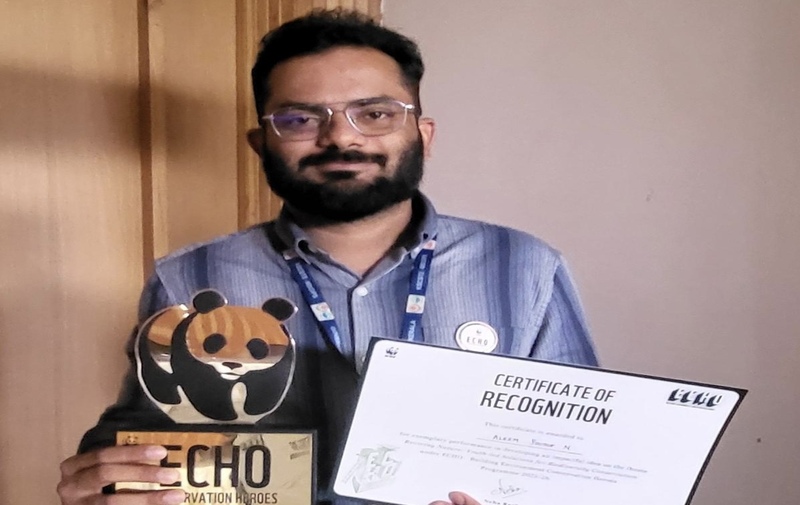
In a time when technology often feels distant from nature, one young researcher from Kerala is proving that the two can work hand in hand. N. Alim Yusuf, a botanist at the Malabar Botanical Garden and Institute for Plant Sciences, has developed an AI-powered mobile application that could change how India identifies and tackles invasive plant species. His innovation, born out of field experience and concern for biodiversity, recently earned him the prestigious World Wide Fund for Nature National Award. The recognition came during the National ECHO Youth Innovation Summit 2026, part of the International Youth Biodiversity Conference held in Telangana. Along with the honour, Yusuf received a seed grant of ₹1.5 lakh, a step that will help him expand and refine his project further. But beyond the award lies a deeper story, one of observation, empathy, and a quiet determination to protect nature.The Growing Threat of Invisible InvadersIndia’s forests and ecosystems are under silent attack not from visible destruction, but from plants that don’t belong. Invasive species, often introduced from other parts of the world, spread aggressively and choke native vegetation. They alter ecosystems, reduce biodiversity, and create long-term environmental damage. In Kerala, the problem has become particularly severe. Species like Senna spectabilis, Lantana camara, and Eupatorium have spread across forests, threatening delicate ecological balance. In places like Wayanad Wildlife Sanctuary, invasive plants have taken over large areas, leaving native species struggling to survive. What makes the situation more complex is that many people unknowingly grow these plants in their homes and gardens, attracted by their beauty without understanding their ecological harm. This lack of awareness often accelerates the spread.When Technology Meets EcologyIt was this gap between awareness and action that inspired Yusuf to create his mobile application, Neophyte ID. Powered by advanced machine learning, the app uses the YOLOv11 model to identify invasive plant species instantly. A simple photograph taken through a smartphone is enough for the app to analyze and determine whether the plant is harmful. Designed to be accessible, the app supports both Malayalam and English, ensuring that local communities, forest officials, and researchers can use it with ease. But it does more than just identify plants—it maps them. Through geospatial tracking, Neophyte ID collects data on where invasive species are spreading, offering valuable insights for conservation efforts and policy decisions. In a country as vast and ecologically diverse as India, such real-time data can become a powerful tool in managing environmental threats.A Story Born in the ForestThe idea for Neophyte ID did not come from a lab or a classroom; it came from the field. During a workshop with tribal communities in Wayanad, Yusuf witnessed a troubling pattern. People were trying to remove invasive plants, but in the process, they were also destroying native species. The lack of clear identification tools was causing unintended harm. That moment became a turning point. Yusuf realized that what was needed was not just knowledge but accessible knowledge, something that could reach people on the ground and guide them in real time. His solution was simple yet powerful: put the knowledge in their hands, literally, through a mobile app.The Hidden Danger Behind BeautyOne of the most striking insights Yusuf shares is how deceptive invasive plants can be. Take, for example, Dolichandra unguis-cati, commonly known as the cat’s claw creeper. With its bright yellow trumpet-shaped flowers and fast-growing vines, it appears to be a perfect ornamental plant. But beneath its beauty lies a destructive force. It climbs over native vegetation, blocks sunlight, and slowly kills the plants it covers. By the time its impact becomes visible, the damage is often already done. This dual nature of invasive species, beautiful yet harmful, makes them particularly dangerous. It also highlights the importance of awareness, something Yusuf’s app aims to address.Recognition and ResponsibilityReceiving the WWF National Award is a major milestone, but for Yusuf, it is also a responsibility. The seed grant will help him improve the app, expand its database, and reach more users. His vision is to scale the project beyond Kerala, potentially covering invasive species across India. The support from organizations like the World Wide Fund for Nature reflects a growing recognition of how technology can play a crucial role in conservation. It also highlights the importance of young innovators who are willing to think differently and act boldly. As Neophyte ID continues to grow, it represents a hopeful direction for conservation in India. It shows that solutions do not always have to be large-scale or complex. They can start small, rooted in observation, empathy, and a willingness to act. And in that quiet effort, led by a young botanist, lies the promise of a greener, more balanced future.

.png)