
No Engineering Degree, He Learned Online for 13 Years to Build an Electric Flying Vehicle
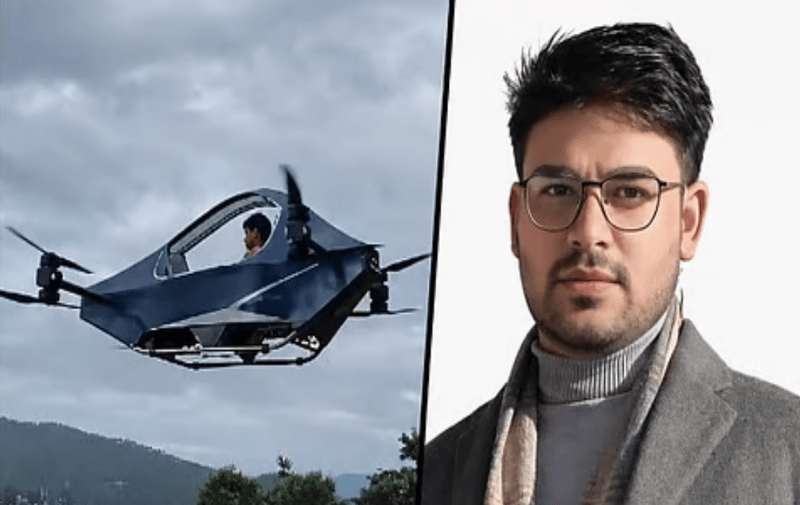
What if a journey through Uttarakhand’s winding mountain roads could one day be completed by flying straight over them? For Ravi Tamta, an innovator from Almora, this idea has become a mission spanning 13 years of learning, experimentation and persistence.In August 2026, his electric flying vehicle prototype, HAPIDA SKYNeX, completed a test flight, lifting off from an Army helipad in Almora and remaining airborne for nearly a minute. The demonstration marked an important milestone for Tamta, who pursued his ambition without a formal engineering degree, relying instead on online resources and hands-on experimentation.When Mountain Roads Inspired a Sky-High IdeaHailing from Kaflikhan village near Jageshwar Dham in Almora district, Tamta understands how difficult travel can be in mountainous regions. Steep slopes, sharp bends and winding roads can turn short distances into lengthy journeys.The challenge can become particularly serious during medical emergencies, when reaching a hospital quickly matters. This inspired Tamta to explore whether a compact flying vehicle could help people bypass difficult road routes.His venture, Hapida Sky Private Limited, became the platform for developing this idea. The resulting prototype is designed as a single-seat, battery-powered electric aircraft capable of vertical take-off and landing.How Does HAPIDA SKYNeX Fly?The prototype uses technology similar to that found in multirotor drones. Multiple motors and propellers generate the thrust required to lift the vehicle, while adjustments to the rotors help control its balance and movement. Unlike conventional aeroplanes, which generally need runways, vertical take-off and landing technology could allow suitable aircraft to operate from smaller spaces. This could make the concept relevant to remote mountain communities where constructing aviation infrastructure is challenging.Its electric propulsion system also eliminates direct exhaust emissions during flight. However, the vehicle would need extensive testing to establish its flight performance, battery capacity, reliability and safety in mountain weather.Thirteen Years of Learning and ExperimentationWhat makes Tamta’s journey particularly remarkable is his determination to learn independently. Without a conventional engineering qualification, he spent years exploring technical concepts online and translating his knowledge into practical experiments. According to a report in The Times of India, his work extends beyond flying vehicles. He has also developed inventions such as firefighting equipment and an assistive walking stick for people with disabilities, reflecting his interest in solving everyday problems through technology.The August 2026 demonstration brought his long-standing ambition closer to reality. District officials witnessed the trial, and Uttarakhand Chief Minister Pushkar Singh Dhami congratulated the innovator.From Prototype to PossibilityThe successful brief flight is an encouraging beginning, but considerable work remains. HAPIDA SKYNeX will need further trials, technical validation and the necessary aviation approvals before it can be considered for routine passenger use.If the technology eventually proves safe and practical, electric personal aircraft could have potential applications in remote transport, disaster response and access to isolated communities.For now, Tamta’s achievement offers a glimpse of what sustained curiosity and self-directed learning can accomplish. His prototype has taken its first steps into the sky; the bigger challenge is making that flight reliable, safe and useful for the people who need it most.