
Why Are Fingerprints Unique and How Do They Form Before Birth?
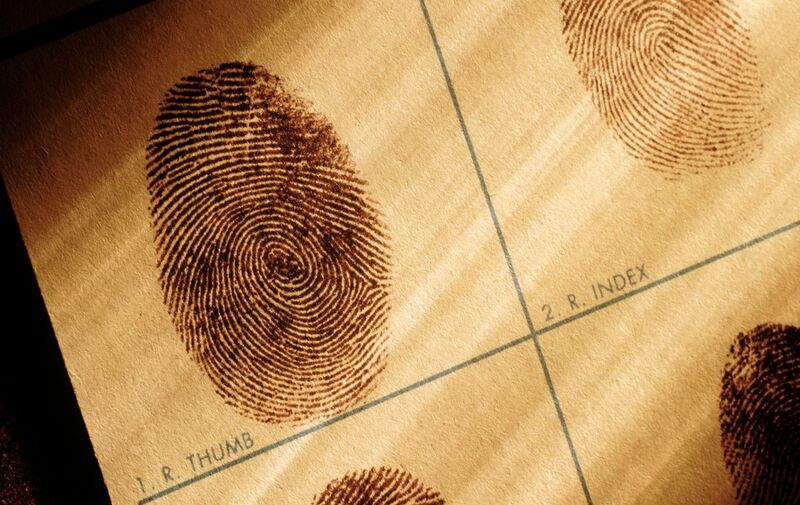
Every time you unlock your phone, sign a document, or leave a faint mark on glass, you are using something that quietly defines you—your fingerprints. They are so ordinary that we rarely stop to think about them, yet so extraordinary that no two people in the world share the same pattern. Fingerprints are more than just lines on our skin. They are a lifelong identity, formed before we are even born, and carried unchanged through every moment of life. But how exactly do they form? And why is each one so unique?The Beginning: Life Inside the WombThe story of fingerprints begins long before birth. Around the 10th to 16th week of pregnancy, as a fetus develops, the skin on the fingertips starts forming tiny ridges. These ridges are not random; they are influenced by a combination of genetics and environmental factors inside the womb. At this stage, the skin consists of two layers: the outer epidermis and the inner dermis. As the fetus grows, these layers begin to interact, creating folds and patterns. The pressure of amniotic fluid, the position of the fetus, and even tiny movements of the fingers all play a role in shaping these ridges. It is a delicate and dynamic process. Even the slightest variation in these conditions can change the way the ridges form, ensuring that each fingerprint becomes one of a kind.Why No Two Fingerprints Are the SameWhile genetics provide a basic blueprint for fingerprint patterns such as loops, whorls, and arches, the final design is influenced by countless unpredictable factors. Think of it like baking bread. You may follow the same recipe every time, but small changes in temperature, humidity, or handling will always produce slightly different results. Similarly, even identical twins, who share the same DNA, end up with completely different fingerprints. The randomness of development inside the womb ensures that every fingerprint is unique. Tiny differences in blood flow, growth speed, and even microscopic variations in skin tension create patterns that can never be exactly replicated. This is why fingerprints have become one of the most reliable methods of identification in the world.Patterns That Tell a StoryAlthough every fingerprint is unique, they generally fall into three main categories: loops, whorls, and arches. Loops are the most common, curving around like gentle waves. Whorls form circular or spiral patterns, while arches rise and fall like small hills. Within these broad types, there are countless variations: tiny ridges, splits, and endings that create a detailed map on each fingertip. These patterns are not just visually fascinating; they are also highly functional. The ridges help improve grip, allowing us to hold objects more securely. They also enhance our sense of touch, making it easier to detect textures and vibrations. So, fingerprints are not just identifiers; they are tools that help us interact with the world.A Mark That Never ChangesOne of the most remarkable aspects of fingerprints is their permanence. Once formed, they remain unchanged throughout life. From childhood to old age, the basic pattern stays the same, even though the size of the finger may grow. This stability is due to the way the ridges are embedded deep within the skin. Even if the outer layer is damaged by cuts or burns, the pattern usually regenerates in the same way, unless the injury is extremely severe. It is as if nature has ensured that our identity remains intact, no matter what happens.Fingerprints and the Human ConnectionBeyond science and biology, fingerprints carry a deeper human meaning. They remind us that every individual is unique—not just in appearance or personality, but at a microscopic level. In a world of billions, where people often feel lost in the crowd, fingerprints quietly tell a different story. They say that no one else has lived your exact life, experienced your exact journey, or carries your exact identity. They are also deeply connected to trust and recognition. From unlocking devices to solving crimes, fingerprints play a role in how we identify and understand one another. They have become symbols of authenticity and individuality. Biometric systems rely on fingerprints to provide secure access. Artists use fingerprint patterns to create unique designs. And in everyday life, these tiny ridges help us perform simple tasks like holding a pen or gripping a cup. They are a perfect example of how something small can have a profound impact.A Signature Written Before BirthIn the end, fingerprints are not just physical features; they are a story written before we even take our first breath. Shaped by both nature and chance, they become a lifelong mark of identity. Every swirl and ridge carries a silent message: that you are one of a kind. And perhaps that is what makes fingerprints so fascinating. They are a reminder that even in the smallest details, there is wonder. That even in something we see every day, there is a story waiting to be understood. Because in those tiny patterns lies one of life’s simplest yet most powerful truths—you are uniquely you.