
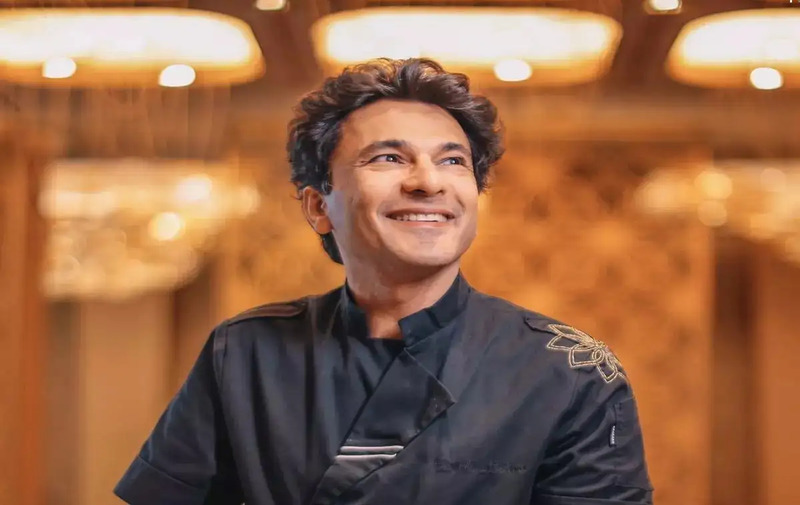
They Called Him “Curry Boy” Now He’s on TIME’s Most Powerful List
In a moment that felt both personal and historic, Vikas Khanna was named in the 2026 list of the world’s 100 most influential people by TIME Magazine. For the celebrated chef, this was not just another award; it was a powerful shift in narrative. Once mocked with the term “curry boy,” Khanna stood tall as he embraced the same identity with pride on one of the world’s most respected platforms. His inclusion is not only a personal victory but also a cultural one, symbolising how far Indian identity and cuisine have travelled globally. What made the moment even more emotional was its timing. Khanna found out about the recognition on March 23, the birthday of his late sister, Radhika Khanna. For him, it felt like more than coincidence—it felt like a blessing.What Makes TIME Magazine So Powerful?To understand the magnitude of this achievement, it is important to understand what TIME Magazine represents. Founded in 1923, TIME is one of the most influential and widely read publications in the world. Every year, its “TIME 100” list recognises individuals who are shaping the future: leaders, innovators, artists, and changemakers whose work impacts millions of lives. Being featured on this list is not about popularity alone. It is about influence—the ability to inspire change, challenge norms, and leave a lasting global impact. The list includes presidents, Nobel laureates, global icons, and cultural pioneers. For a chef to be part of this circle shows that Khanna’s work goes far beyond food. His profile for the list was written by acclaimed chef Eric Ripert, who described him as someone who carries his culture with pride and transforms food into storytelling. That endorsement reflects how deeply respected Khanna is within the global culinary community.A Story That Began with StruggleLong before global recognition, Khanna’s journey began in Amritsar, where life tested him early. Born with a clubfoot condition, he struggled physically and could not run until he was 13. For a child, this could have been limiting, but for Khanna, it became defining. While others played outside, he spent time in the kitchen, watching, learning, and absorbing the magic of food. His grandmother’s cooking became his classroom, teaching him not just recipes but values patience, love, and resilience. That early struggle quietly built the strength that would later carry him across continents.Building a Global Identity Through FoodAfter studying at the Manipal Academy of Higher Education, Khanna moved to the United States, where he worked tirelessly to establish himself. His defining moment came with Junoon, a fine-dining Indian restaurant in New York that earned a Michelin star. But success never distanced him from his roots. Instead, it strengthened his mission to present Indian cuisine not as exotic but as deeply meaningful and globally relevant. His latest venture, Bungalow, reflects this vision beautifully. It is not just a restaurant but a cultural experience, where every dish tells a story of heritage, memory, and identity.More Than a Chef: A Voice That ConnectsKhanna’s influence extends beyond kitchens and restaurants. As a judge on MasterChef India, he has become a household name, admired for his kindness, humility, and encouragement. Unlike many television personalities, he does not just critique; he uplifts. His presence on the show has inspired countless young Indians to pursue their dreams in the culinary world. He has also explored filmmaking, directing The Last Color, featuring Neena Gupta, and working on Imaginary Rain with Shabana Azmi and Prateek Babbar, with music by A. R. Rahman. Through these projects, he continues to tell stories that matter.A Chef Loved Not Just for Food but for HeartIn India, Vikas Khanna is not just respected—he is loved. His warm smile, grounded personality, and genuine connection with people have made him a favourite across generations. Whether cooking in Michelin-starred kitchens or serving meals to those in need during crises, Khanna carries the same sincerity. His humanitarian work reflects a simple belief: food is not just about taste; it is about dignity and care. The inclusion of Vikas Khanna in the TIME 100 list is a reminder that influence is not limited to politics or power. It can come from compassion, culture, and the courage to stay true to oneself. From a child who struggled to walk to a global icon who carries India’s identity with pride, Khanna’s journey is deeply human. It is about turning pain into purpose, criticism into confidence, and food into a universal language. And perhaps that is why his story matters because in a world chasing success, Vikas Khanna shows us what it truly means to make a difference.