
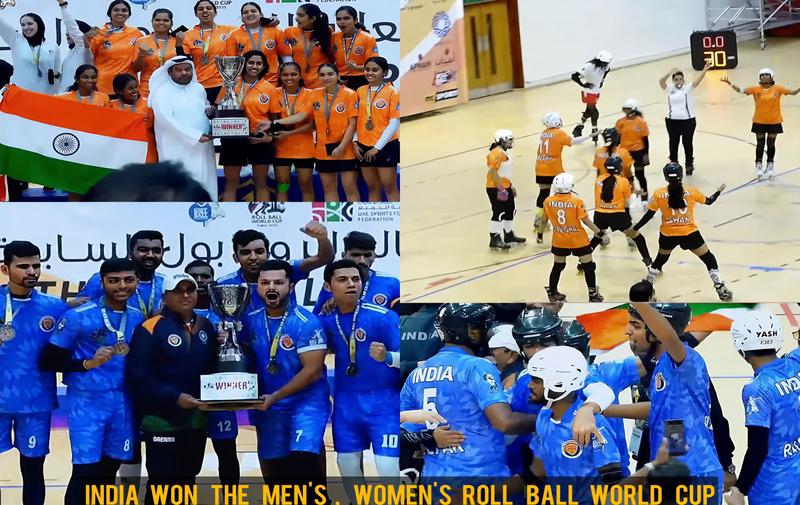
Double Gold in Dubai: India Clinches Men’s and Women’s Roll Ball World Cups
Indian sport witnessed a moment of rare symmetry and pride in Dubai when both the men’s and women’s roll ball teams emerged as world champions on the same night. Facing Kenya, the defending champions in both categories, India delivered performances marked by grit, belief, and tactical maturity to script a historic double triumph at the 2025 Roll Ball World Cup. For a sport that often thrives quietly away from the mainstream spotlight, the twin victories felt especially powerful. They were not just about medals and trophies but about years of unseen effort finally receiving global recognition.Women Set the Tone with a Battle of NervesThe Indian women’s team laid the foundation for the historic night with a tense and thrilling 3–2 victory over Kenya. The final unfolded as a test of composure, with both teams matching each other goal for goal and refusing to concede ground. Kenya entered the contest chasing a third consecutive world title, applying constant pressure and forcing India to defend deep for long spells. Yet, the Indian players remained disciplined, absorbing the attacks and striking at crucial moments. Their defensive organization and calm decision-making proved decisive as they protected a slender lead until the final whistle. The win marked India’s third women’s Roll Ball World Cup title, equalling Kenya’s tally. It also represented a return to the summit after finishing third in the previous edition held in Pune in 2023. For many of the players, the victory was deeply personal—a reward for years of training, travel, and sacrifice in a sport that rarely promises fame. Officials credited the triumph to fitness, teamwork, and trust. The team’s ability to stay composed under pressure reflected growing maturity and belief on the international stage.Men Deliver a Comeback for the AgesIf the women’s final showcased composure, the men’s championship match delivered raw drama. Trailing 4–8 against a confident Kenyan side, India appeared to be slipping away from the title. Kenya’s momentum was strong, and the pressure was relentless. What followed was a remarkable turnaround. India tightened its defence, slowed the tempo, and began converting crucial chances. With each goal, belief surged—not just among the players, but across the bench and the stands. In a heart-stopping finish, India edged ahead to secure an 11–10 victory, completing one of the most memorable comebacks in Roll Ball World Cup history. The win handed India a record fifth men’s world title, reclaiming the crown they had lost to Kenya in the previous edition after winning four consecutive championships since 2013. Team officials later described the victory as a triumph of mental strength. Even when trailing, the players trusted the plan and each other, turning adversity into opportunity.Understanding Roll Ball and India’s Deep RootsRoll ball is a fast-paced team sport played on roller skates, combining elements of basketball, handball, and throwball. Players move at high speed while bouncing and passing the ball, aiming to score the maximum number of goals within the stipulated time. The sport was invented in 2003 in Pune by physical education teacher Raju Dabhade, who sought to create a dynamic game that blended skating with ball-handling skills. Today, Dabhade also serves as the secretary of the International Roll Ball Federation. Played between two teams of twelve players, with six on the field at a time, roll ball demands speed, coordination, balance, and tactical awareness. Protective gear such as helmets and knee pads is essential. Over the years, India has quietly built a strong rollball ecosystem, especially at the international level. Regular domestic competitions, growing grassroots participation, and exposure to overseas tournaments have helped nurture a steady pipeline of talent.Celebration, Recognition and the Road AheadNews of the historic double victory sparked celebrations across sporting circles in India. Coaches, former players, and supporters called for greater recognition and institutional support for roll ball and similar non-mainstream sports. Sports administrators believe these wins can act as a catalyst for increased funding, better infrastructure, and wider visibility. However, experts caution that sustained success will depend on long-term planning, consistent investment, and integration into school and collegiate sports programs. Without such structural backing, they warn, achievements risk becoming isolated moments rather than building blocks for sustained growth.On one unforgettable night in Dubai, Indian athletes proved that determination, preparation, and unity can overcome even the toughest champions. As the tricolour rose twice and the national anthem echoed, the moment captured more than victory; it captured belief. Belief in a sport born in India, belief in athletes who train without limelight, and belief that Indian sport, in all its diversity, is ready to shine on the world stage.