
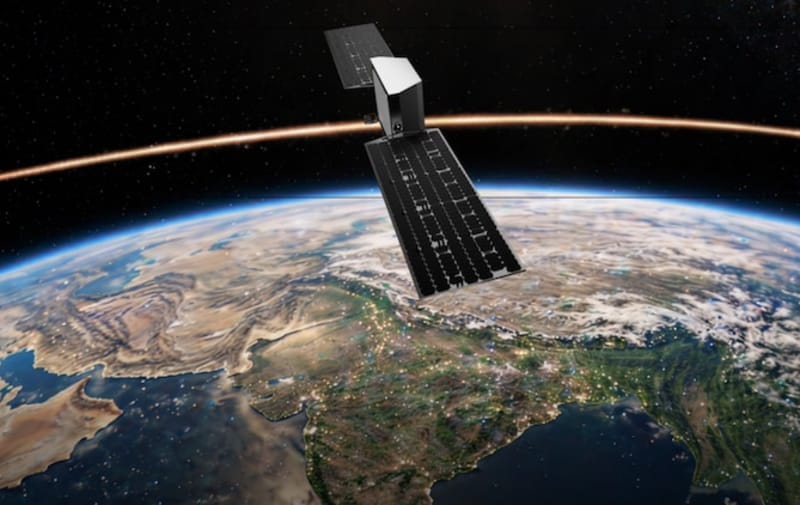
Pathfinder Mission 2026: How India’s First AI-Powered Orbital Data Centre Will Redefine Space Computing
India’s space story has always been one of innovation, ambition, and quiet determination. From launching cost-effective missions to exploring distant planets, the country has steadily built a reputation for doing more with less. Now, a new milestone is on the horizon. On 3 May 2026, Pixxel and Sarvam announced Pathfinder, India’s first AI-powered orbital data centre satellite. This 200 kg-class demonstration satellite, scheduled for launch in the fourth quarter of 2026, represents something far bigger than its size. It signals a shift in how space technology will function in the future, not just collecting data but understanding it instantly, right where it is generated.What is an Orbital Data Centre Satellite?Traditionally, satellites orbiting Earth collect massive amounts of data, images, signals and environmental readings and send them back to ground stations for processing. This process takes time, requires bandwidth, and can delay critical insights. Pathfinder changes that approach. It is designed as an orbital data centre, meaning it can process data directly in space. Instead of sending raw data to Earth, it will analyse and interpret it in orbit, delivering faster and more meaningful results. This concept of space-based computing is becoming increasingly important in a world that depends on real-time information. Whether it is monitoring climate change, tracking natural disasters, or managing agricultural resources, speed can make a crucial difference.The Power of AI in SpaceAt the heart of Pathfinder lies artificial intelligence. While Pixxel is responsible for designing, building, launching, and operating the satellite, Sarvam brings the intelligence that will power its operations. Sarvam will provide the AI backbone, including on-board models capable of both training and inference in orbit. This means the satellite will not just follow pre-programmed instructions; it will learn, adapt, and improve its performance over time. This is a significant leap forward. AI in space allows satellites to identify patterns, detect anomalies, and make decisions without waiting for human intervention. It transforms satellites from passive observers into active analysts.Inside Pathfinder: Technology That ThinksPathfinder is not just another satellite—it is a compact, high-performance computing system in space. It will carry data centre-class Graphics Processing Units, commonly known as GPUs, which are essential for handling complex computations and AI workloads. These GPUs enable parallel processing, allowing the satellite to process large volumes of data quickly and efficiently. Combined with AI models, they create a powerful system capable of delivering insights in near real-time. Another key feature of Pathfinder is its hyperspectral imaging camera. Unlike traditional cameras, hyperspectral imaging captures data across hundreds of narrow wavelength bands. This allows scientists to detect details that are invisible to the human eye, such as soil health, water quality, or vegetation stress. By processing this data in orbit, Pathfinder can provide faster and more precise information, opening new possibilities for industries ranging from agriculture to environmental monitoring.Made in India, Built for the FuturePathfinder will be developed at Pixxel’s Gigapixxel manufacturing facility in India, a centre designed for large-scale satellite production. With a planned capacity of up to 100 satellites, this facility represents India’s growing strength in space manufacturing. The project also highlights the role of startups in shaping the future of space technology. Companies like Pixxel and Sarvam are bringing fresh ideas, agility, and innovation to a field that was once dominated by government agencies. This collaboration between space technology and artificial intelligence reflects a broader trend—where different fields come together to create solutions that are smarter, faster, and more efficient.Why This Mission MattersThe importance of Pathfinder goes beyond technology. It represents a new way of thinking about data and decision-making. In a world where information drives progress, reducing the time between data collection and insight can have a powerful impact. For example, faster data processing can help farmers respond to changing crop conditions, enable disaster management teams to act quickly during emergencies, and support scientists in understanding environmental changes more effectively. Pathfinder also positions India as a key player in the emerging field of space-based computing. As global demand for real-time data grows, innovations like this will play a crucial role in shaping the future.