
India’s Hidden Knowledge Hunt Begins: Inside the Gyan Bharatam Mission
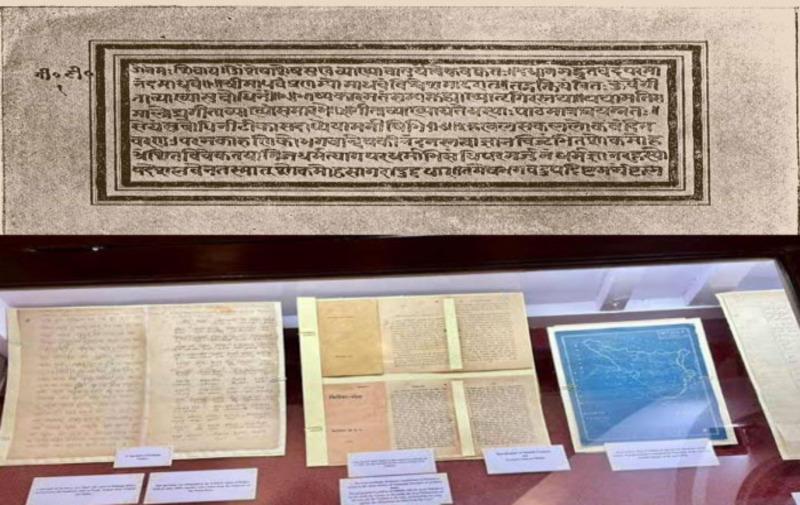
Recently, the Ministry of Culture launched a historic initiative the Gyan Bharatam National Manuscript Survey—marking a major step toward rediscovering India’s vast and scattered manuscript heritage. Under the broader Gyan Bharatam initiative, this nationwide effort seeks to identify, document, and digitally preserve manuscripts hidden across the country. From ancient palm-leaf texts in temples to handwritten family records stored in old trunks, India’s knowledge legacy is immense but largely undocumented. This survey is not just about cataloguing old texts—it is about reconnecting a nation with its intellectual roots.India’s Manuscript Wealth: A Treasure Yet to Be Fully DiscoveredIndia is home to one of the richest manuscript traditions in the world. These manuscripts cover a wide range of subjects including philosophy, science, medicine, mathematics, astronomy, literature, governance, and the arts. Written in diverse languages and scripts, they reflect centuries of intellectual exploration and cultural exchange. However, a significant portion of this heritage remains scattered and inaccessible. Manuscripts are often preserved in private homes, temples, monasteries, libraries, and local institutions, many of which are unknown to scholars and researchers. The Gyan Bharatam National Manuscript Survey aims to change this by creating a comprehensive, geo-tagged national inventory of manuscript repositories. This will lead to the development of a ‘Manuscript Presence Map’, offering a clear picture of where these valuable resources are located.A Four-Stage Mission to Preserve the PastThe survey follows a structured four-stage framework designed to ensure both accuracy and long-term preservation:1. Identification and MappingThe first stage involves collecting information about manuscripts through a digital platform. Citizens, institutions, and communities can submit details, helping to build a nationwide database.2. Physical VerificationIn the second stage, experts and state authorities verify the submitted information. This ensures authenticity and helps identify manuscripts that require urgent attention.3. Cataloguing and Metadata CreationOnce verified, manuscripts are carefully catalogued. Details such as language, script, subject, and historical context are recorded, making them easier to study and understand.4. Conservation and DigitisationThe final stage focuses on preserving manuscripts through scientific conservation methods and creating high-quality digital copies. This ensures that fragile texts survive for future generations while becoming accessible to researchers worldwide.Technology Meets TraditionOne of the most exciting aspects of the initiative is its integration of technology. The survey encourages participation through the Gyan Bharatam mobile application and website, making it easy for people to contribute information. The initiative also aligns with India’s growing focus on technology, as highlighted during the India AI Impact Summit 2026, inaugurated by Narendra Modi. By combining traditional knowledge systems with modern tools like artificial intelligence, the mission aims to make ancient wisdom more accessible and relevant in today’s world. Digital preservation not only protects manuscripts from physical decay but also opens doors for global research, collaboration, and innovation.A People’s Movement: Every Citizen Can ContributeWhat sets this initiative apart is its emphasis on public participation. The survey is voluntary and non-intrusive—participants are not required to transfer ownership of manuscripts. Instead, they simply share basic information such as location, type of ownership, number of manuscripts, and available details. This approach empowers individuals, families, scholars, and institutions to become active contributors to a national mission. Whether it’s a handwritten Ayurvedic text passed down generations or a rare philosophical manuscript stored in a temple, every contribution matters.Why This Initiative Matters TodayIn an age dominated by fast-paced digital information, the importance of preserving historical knowledge cannot be overstated. Manuscripts offer insights into ancient wisdom, sustainable practices, scientific discoveries, and philosophical ideas that remain relevant even today. The Gyan Bharatam National Manuscript Survey lays the foundation for Cultural preservation of India’s intellectual legacy and Academic research across disciplines The vision of the Gyan Bharatam initiative goes beyond documentation. It aims to create a living bridge between the past and the future where ancient knowledge informs modern innovation. As India embarks on this ambitious journey to map and preserve its manuscript heritage, the success of the mission depends on collective participation. Every manuscript discovered is a piece of history recovered, a voice from the past heard again. In the end, the Gyan Bharatam National Manuscript Survey is not just a government programme it is a national movement to rediscover who we are, where we come from, and the knowledge that has shaped generations .