
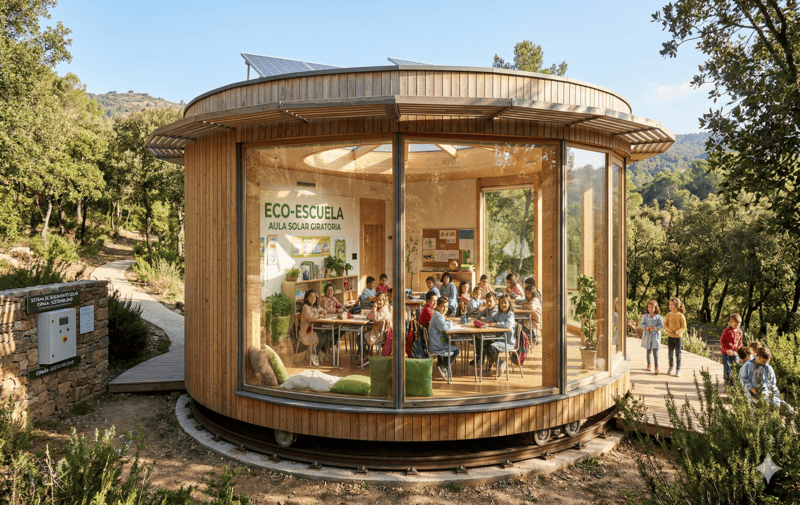
Classrooms That Follow the Sun: How Smart Design is Transforming the Future of Learning In Spain
In an age where sustainability and well-being are becoming central to design, a fascinating concept has emerged in educational spaces—classrooms that follow the sun. Inspired by experimental and pilot projects, particularly in places like Spain, architects and educators are exploring ways to create learning environments that maximise natural daylight throughout the day. While fully rotating classrooms remain largely in the conceptual or experimental stage, the idea represents a powerful shift in how we think about schools, not just as buildings, but as living spaces that respond to nature.The Science Behind Natural Light in LearningModern research has consistently shown that natural light plays a crucial role in improving student performance and well-being. Classrooms filled with sunlight can enhance concentration, boost mood, and even improve academic outcomes. Unlike artificial lighting, natural daylight helps regulate the body’s internal clock, keeping students more alert and engaged. It also reduces eye strain and creates a more comfortable learning environment. This is why architects are increasingly prioritising designs that maximise sunlight—through large windows, open layouts, and innovative positioning of classrooms.The Concept of Sun-Following ClassroomsThe idea of rotating or sun-tracking classrooms takes this concept a step further. These designs aim to ensure that classrooms receive optimal sunlight throughout the day by adjusting their orientation in response to the sun’s movement. In theory, such classrooms could rotate slowly or be designed with movable elements that capture sunlight from different angles. This would eliminate the need for artificial lighting during daytime hours, making the space more energy-efficient. Although large-scale implementation is still limited, pilot projects and conceptual designs have demonstrated the potential of this approach in creating sustainable and dynamic learning environments.Sustainability Meets Smart DesignAt the heart of these innovations is the principle of passive solar design—a method that uses natural sunlight and heat to regulate indoor environments. By reducing reliance on electricity for lighting and temperature control, such classrooms can significantly lower energy consumption. This aligns with global efforts to create eco-friendly buildings that minimise environmental impact. In addition, these designs often incorporate natural ventilation, green materials, and integration with surrounding landscapes, further enhancing their sustainability.Learning in Harmony with NatureBeyond the technical aspects, sun-following classrooms represent a deeper philosophy, bringing education closer to nature. Imagine a classroom surrounded by trees, filled with natural light, where students can feel the changing patterns of the day. Such environments encourage curiosity, creativity, and a sense of calm that is often missing in traditional settings. This approach is particularly relevant in a world where children spend increasing amounts of time indoors and on screens. Reconnecting them with natural elements can have lasting benefits for both mental health and environmental awareness.A Glimpse into the Future of SchoolsThe exploration of sun-following classrooms reflects a broader trend in education—rethinking how learning spaces are designed. Schools of the future are likely to prioritise flexibility, sustainability, and well-being, moving away from rigid, traditional structures. Whether through rotating elements or smarter static designs, the goal remains the same: to create environments that support both learning and the planet. The idea of classrooms that follow the sun may still be evolving, but its impact is already being felt in the way we design educational spaces. By harnessing natural light and integrating sustainable principles, these innovations offer a glimpse into a more thoughtful and human-centered approach to learning. In the end, it’s not just about saving energy or improving performance; it’s about creating spaces where students can truly thrive, guided not just by textbooks, but by the natural rhythm of the world around them.