
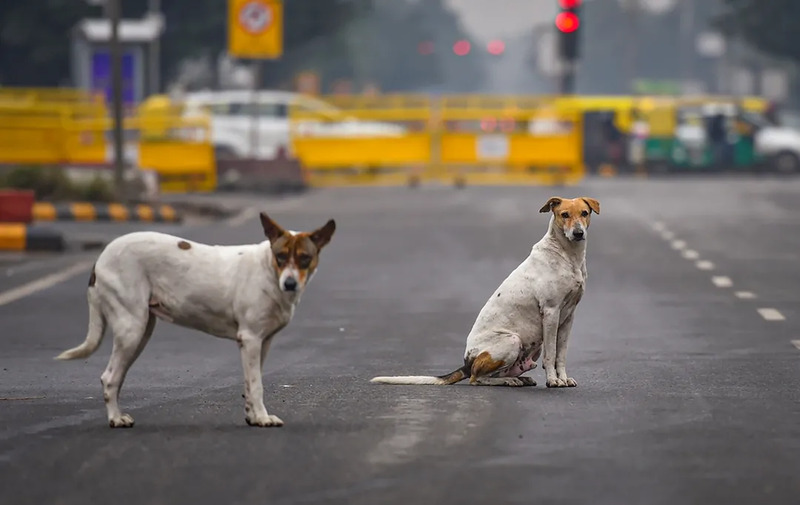
Public Safety First: Supreme Court Cracks Down on Stray Dog Menace, Allows Euthanasia of Rabid and Aggressive Dogs
A Landmark Verdict Amid Rising Dog-Bite CasesIn a significant and far-reaching move, the Supreme Court of India has allowed authorities to carry out euthanasia of rabid, incurably ill, and demonstrably aggressive stray dogs in appropriate cases, strictly in accordance with statutory protocols.The judgment comes amid growing public concern over the alarming rise in stray dog attacks across the country, especially involving children and elderly citizens. A Bench comprising Justice Vikram Nath, Justice Sandeep Mehta and Justice N. V. Anjaria delivered the order while hearing a batch of petitions related to the stray dog menace.The court observed that the “right to live with dignity” under Article 21 of the Constitution includes the right of citizens to move freely in public spaces without fear of dog attacks.Human Safety Takes Centre StageThe Bench noted that stray dog attacks had reached “deeply disturbing” levels in several parts of the country. Referring to reports from different States, the court highlighted shocking figures: According to reports, Udaipur reportedly recorded nearly 1,750 dog-bite cases in 2026. Bhilwara witnessed 42 bite incidents in a single day. Tamil Nadu reported approximately 2.63 lakh dog-bite cases and 17 deaths within the first four months of 2026.The judges stressed that the State “cannot remain a passive spectator” when preventable threats to human life continue to grow despite the existence of legal mechanisms to manage stray dog populations.Euthanasia Allowed Under Strict RulesThe court clarified that euthanasia would not be arbitrary and could only be carried out after proper assessment by qualified veterinary experts and in strict compliance with the Prevention of Cruelty to Animals Act, 1960 and the Animal Birth Control (ABC) Rules, 2023.The order specifically applies to:Rabid dogsIncurably ill dogsDemonstrably dangerous or aggressive dogs posing a serious threat to public safetyThe Bench said authorities could adopt “legally permissible measures” in areas where stray dog populations have reached alarming proportions and aggressive attacks are frequent.No Return of Dogs to Sensitive Public SpacesThe Supreme Court also refused to modify its earlier November 2025 order directing authorities to remove stray dogs from high-footfall public places such as:Schools and collegesHospitalsRailway stationsBus depotsSports complexesAirportsImportantly, the court clarified that dogs picked up from these areas cannot be re-released there even after sterilisation and vaccination.The judges rejected arguments claiming stray dogs possess an “absolute right” to occupy all public spaces regardless of their nature or usage.ABC Centres to Be Established in Every DistrictRecognising the lack of infrastructure as a major challenge, the court directed all States and Union Territories to establish at least one fully functional Animal Birth Control Centre in every district.These centres must include:Veterinary infrastructureTrained personnelSurgical facilitiesSterilisation and vaccination programmesSupporting logisticsThe court further ordered authorities to expand the number of ABC centres depending on population density and territorial requirements.In addition, States were instructed to ensure adequate availability of anti-rabies vaccines and immunoglobulin in government hospitals and create effective public health response systems for dog-bite cases.Accountability for Animal Welfare GroupsIn another notable direction, the court said animal welfare organisations and student groups feeding stray dogs within educational institutions must file affidavits accepting tortious liability for any attacks or harm caused by the animals.Without such undertakings, feeding activities would not be permitted on institutional premises. The court also warned of action against institutional heads in case of non-compliance.High Courts Asked to Monitor ComplianceAcknowledging the scale of implementation required nationwide, the Supreme Court directed High Courts across India to initiate suo motu proceedings to monitor compliance with its orders.The Bench also empowered High Courts to dismiss frivolous cases filed against municipal officials acting in good faith while carrying out the directions.The verdict marks one of the strongest judicial interventions yet in India’s ongoing debate between animal welfare and public safety, signalling a sharper focus on protecting human life while continuing regulated and humane stray dog management practices.