
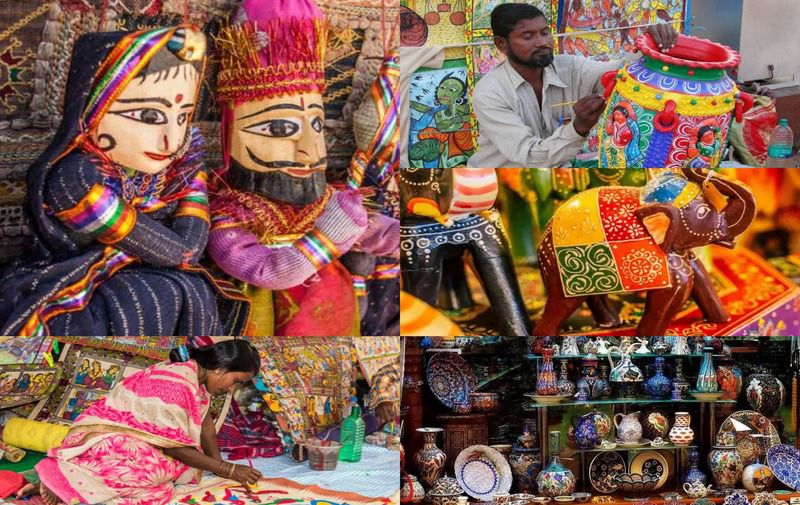
National Handicrafts Week: A Salute to India’s Master Artisans
India’s handicraft sector is more than an industry; it is a living expression of culture, memory, and identity. Spread across rural and semi-urban regions, the sector sustains millions of artisans whose skills are rooted in generations of tradition. With 318 GI-tagged handicraft products and around 455 formally classified craft categories, India’s craft heritage reflects extraordinary diversity and creativity. Today, handicrafts are not just cultural symbols but key drivers of rural employment, women’s empowerment, and export growth, giving India a strong position in the global market for authentic, handmade, and sustainable products.The Art Behind Every Crafted PieceEach Indian handicraft is a story told through hands that weave, carve, mold, paint, dye, stitch, and sculpt with skills passed down through families. Though artisans may use tools or simple machinery, the essence of handicrafts lies in their handmade charm. These products carry unique cultural, artistic, and ethnic significance, offering beauty and character that machine-made goods cannot replicate. Across states like Rajasthan, Uttar Pradesh, Assam, Odisha, West Bengal, and Tamil Nadu, craft clusters flourish with distinct styles, techniques, and traditions. Despite low capital investment and part-time engagement for many artisans, the value addition remains remarkably high, making handicrafts a viable source of income and pride for rural households.National Handicrafts Week: Celebrating Craft CommunitiesEvery year, National Handicrafts Week (December 8–14) shines a light on the guardians of India’s craft legacy. It is a reminder of the artisans who turn raw materials into art and livelihoods. The week also highlights the government’s commitment to preserving, promoting, and modernizing the craft ecosystem. One of its key highlights is the National Handicrafts Awards, including the prestigious Shilp Guru Awards, which honor master craftspeople who have dedicated their lives to perfecting and protecting traditional arts. These recognitions elevate artisans to national and global platforms, acknowledging their creativity and contribution to cultural preservation.Economic Strength and the Stories Behind ItThe handicraft sector employs around 64.66 lakh artisans and handloom weavers, many of whom come from marginalized communities, including Scheduled Castes, Scheduled Tribes, and Other Backward Classes. Women form the backbone of this workforce, representing 71% of handloom weavers and 64% of total artisans as of August 2025. For many rural women, craftwork offers economic independence, dignity, and the ability to support their families while staying within the home environment. Handicrafts also serve as supplemental income for farming households during off-agricultural seasons, providing much-needed financial stability. The Pehchan Artisan Identification initiative has registered over 32 lakh artisans, of which nearly 20 lakh are women. These ID cards give artisans formal recognition, enabling them to access government schemes, financial services, training, and social security. Rising Exports and Global DemandIndia’s handicrafts have gained strong global appeal, with buyers seeking sustainable, handmade products that carry cultural authenticity. The sector’s export value reflects this demand. In 2024–25, exports of handicrafts (excluding hand-knotted carpets) touched ₹33,122.79 crore, a significant rise from ₹20,082.53 crore in 2014–15. Woodwares, art metal wares, embroidered goods, handprinted textiles, and imitation jewelry form the major export categories. The United States remains the biggest market, accounting for 37% of India’s handicraft exports, while 61% go to other global buyers. This international demand not only strengthens India’s trade profile but also uplifts rural artisans whose livelihoods depend on craft production.Government Support Strengthening the Craft EcosystemThe government has launched multiple schemes to enhance skill development, improve infrastructure, expand market access, and strengthen artisan clusters. The National Handicraft Development Programme (NHDP), with an outlay of ₹837 crore for FY2022–26, supported over 66,000 artisans through more than 2,300 sanctioned projects in 2023–24. It focuses on design training, marketing platforms, social security, and capacity building. Skill development initiatives such as Design and Technology Development Workshops, Guru Shishya programs, and toolkit improvement schemes ensure artisans stay competitive in modern markets while preserving their heritage. Why Handicrafts Matter: The Soul of a Nation’s Culture and EconomyHandicrafts are important because they carry the cultural identity, heritage, and creativity of a country. In India and across the world, handmade crafts preserve traditional skills passed down through generations while providing livelihoods to millions of rural artisans. They support local economies, empower women, reduce migration, and promote sustainable development. Handicrafts also represent slow, mindful production in a fast-paced, industrialized world, celebrating uniqueness over uniformity. Globally, handmade products strengthen cultural exchange, boost tourism, and create economic opportunities through exports. In every stitch, weave, and carving, handicrafts keep a nation’s history alive while shaping its future. Handicrafts in India are more than beautiful objects; they are living expressions of culture and memory. Every crafted piece carries centuries-old skills passed down through families, preserving traditions that might otherwise fade in a modern, machine-made world. From Rajasthan’s puppets to Assam’s weaving and Odisha’s stone carving, each craft reflects the identity of its region and people. Handicrafts also empower rural communities, especially women, by providing income and dignity. By supporting millions of artisans, promoting sustainability, and keeping cultural stories alive, India’s handicrafts ensure that the nation’s rich heritage continues to thrive across generations.