
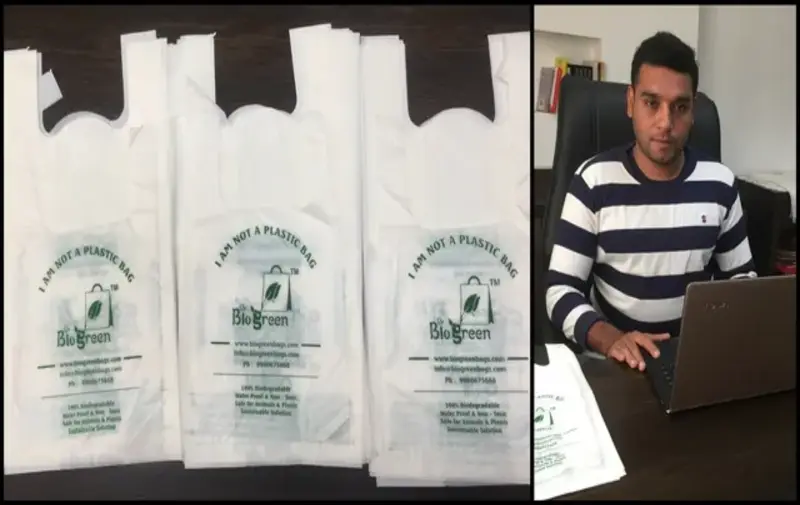
A Daily Life Problem Became a Global Solution: The Story Behind BioGreen Bags
Great ideas don’t always come from boardrooms; they often come from everyday life. For Mohammed Sadiq, the turning point came during a routine visit to buy milk. Carrying it home in a paper bag, he faced a frustrating but familiar problem—the bag tore, spilling everything. While most people would have dismissed it as a minor inconvenience, Sadiq saw a deeper issue. In that small moment of inconvenience, he identified a much larger gap in everyday life: the absence of a reliable, eco-friendly alternative to plastic bags.India’s Growing Plastic CrisisIndia has long struggled with plastic waste, generating over 15,000 tonnes daily, with a significant portion ending up polluting streets, rivers, and landfills. When several states and Union Territories implemented plastic bans, it was a necessary step toward sustainability. However, the sudden absence of plastic created a new challenge; people needed an alternative that was just as strong, flexible, and convenient. This gap between environmental responsibility and everyday practicality became the foundation for Sadiq’s innovation.The Birth of a Sustainable VisionDriven by his experience and the growing environmental crisis, Mohammed Sadiq established BioGreen Bags in Bengaluru. His vision was clear and ambitious—to replace petroleum-based plastics with materials that are completely biodegradable and safe for the environment. He wanted to create something that didn’t just reduce harm but actively contributed to a cleaner planet.BioGreen Bags are not just another alternative; they are a rethinking of materials themselves. Made from natural starch, vegetable oil derivatives, and vegetable waste, these bags are designed to mimic the strength and flexibility of plastic while eliminating its long-term damage. The raw materials are processed into pellets and transformed into thin films, which are then molded into carry bags. Unlike plastic, these bags decompose fully within 180 days, leaving no toxic residue behind.From Local Idea to Global ReachWhat began as a solution to a personal problem soon gained attention on a much larger scale. As awareness about environmental damage increased globally, businesses began seeking sustainable alternatives. BioGreen Bags quickly found acceptance in India. Major brands such as D-Mart and Myntra adopted these bags, proving that eco-friendly solutions can also meet large-scale commercial demands.One of the biggest reasons plastic became so widespread was its convenience. Any alternative needed to match that ease of use without compromising on functionality. Sadiq understood this clearly. His innovation did not force people to adjust their habits drastically; instead, it offered them a seamless switch. BioGreen Bags perform like plastic but without its harmful consequences, making sustainability an effortless choice rather than a burden. At its heart, this is not just a story about business success or environmental awareness—it is about perspective. Mohammed Sadiq turned a common frustration into a meaningful solution that impacts millions. His journey highlights how innovation often begins with observation and curiosity. It reminds us that even the smallest moments in daily life can lead to transformative ideas if we choose to look at them differently.As the world grapples with climate change and environmental degradation, solutions like BioGreen Bags offer hope. They represent a shift in thinking from temporary convenience to long-term sustainability. By reducing dependence on oil-based plastics and promoting biodegradable alternatives, such innovations play a crucial role in protecting ecosystems and reducing pollution.