
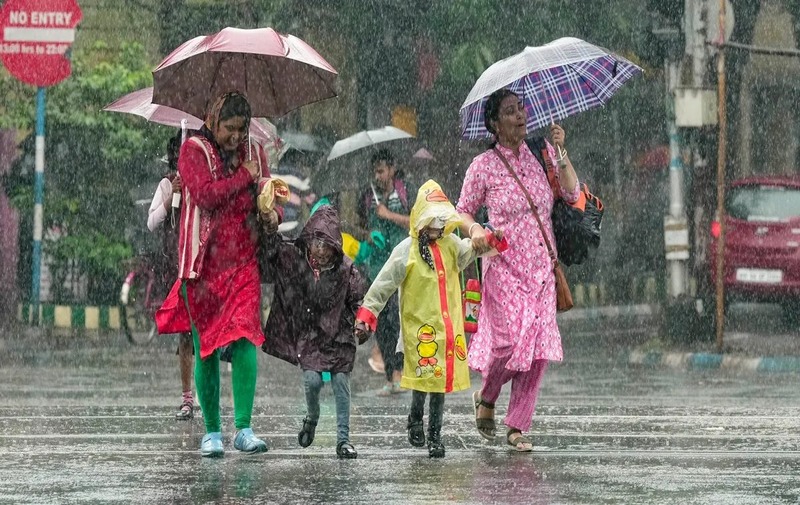
What Decides Where Rain Falls and Where It Doesn’t?
Remember those days when you and your friends planned to go out… and suddenly it started pouring like the sky had a personal issue with your plans? And then there are those other days, when you want rain, desperately and the sky just stays blank. Feels unfair, right? But rain isn’t moody. It’s actually following a very precise science.It all begins when the Sun heats up oceans, rivers, and even puddles. Water quietly turns into vapor and rises into the air. Warm air holds more moisture, like an invisible sponge. But as this air rises higher, it cools down, and suddenly it can’t hold all that moisture anymore. So the vapor condenses into tiny droplets, forming clouds. When those droplets get heavy enough… they fall. That’s rain. Simple, but powerful. And this process happens more often in hot regions, which is why places near the equator see frequent showers. When Clouds Hit a “Wall”Now imagine clouds just casually floating, minding their own business… and then boom, they hit a mountain. They can’t go through it, so they go up. As they rise, the temperature drops, and all that moisture inside them turns into rain. That’s why places like Mawsynram feel like they’re living inside a permanent shower, receiving over 11,000 mm of rainfall every year. Even nearby Cherrapunji has seen insane rainfall records.But here’s the plot twist, once the clouds cross the mountain, the air comes down the other side, warms up, and dries out. So suddenly, the same region that was soaking wet on one side becomes dry on the other. It’s like nature playing favorites… but really, it’s just physics doing its job.The Long Journey of Monsoon CloudsThink of rain clouds like travelers. They don’t just appear, come from somewhere. Most of them begin their journey over oceans, picking up moisture along the way. That’s why coastal areas get more rain. And then comes India’s main character, the monsoon. These winds travel thousands of kilometers across oceans, carrying massive amounts of moisture. When they finally reach land, especially during June to September, they release it dramatically. That’s the rain we wait for, complain about, and secretly love.But here’s the thing, if the winds don’t pass through your region, or if they lose their moisture earlier, you might get very little rain. So it’s not about distance from the sea, it’s about whether the winds choose your path.From Endless Rain to Endless SilenceThe world is full of extremes. On one side, you have places like Mount Waialeale, where it rains so often it almost feels normal. Clouds, mountains, and moisture, all perfectly aligned. And then there’s the Atacama Desert, where rain is almost a myth. Some parts receive barely a few millimeters of rain in an entire year. Imagine waiting for rain… and it just never comes.This happens because of a mix of factors, cold ocean currents that don’t allow much evaporation, mountains blocking moisture, and air that simply refuses to rise and form clouds. So the next time it rains on your plans or refuses to show up when you need it, remember, it’s not random. It’s a journey shaped by heat, air, winds, and land.And maybe… just maybe… that one drop falling on your hand has traveled across oceans, climbed mountains, and crossed skies just to reach you.