
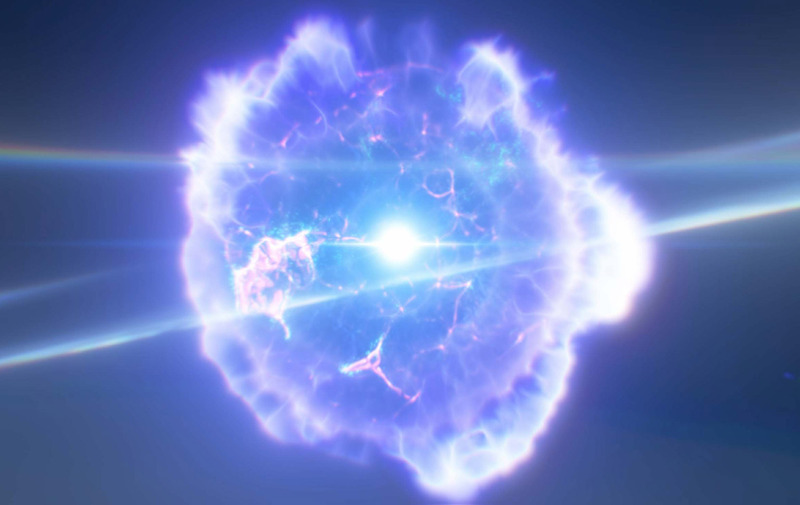
Bengaluru Startup Is Building an ‘Artificial Sun’ to Power India’s Future
What if the answer to India’s energy challenges lies in recreating the process that powers the Sun?That is the extraordinary ambition driving Pranos Fusion, a Bengaluru-based startup working on nuclear fusion. Its goal is to develop the technology needed to harness fusion — a process that could one day deliver vast amounts of clean energy.Unlike fossil fuels, which burn fuel, or conventional nuclear power, which splits atoms, fusion joins light atoms such as hydrogen under extreme conditions. The process releases enormous amounts of energy, just as it does inside stars.For decades, fusion remained largely the domain of massive government-backed research programmes. Now, startups are attempting to turn decades of scientific knowledge into practical engineering solutions.Meet Pragya, the Fusion TestbedPranos Fusion is not attempting to build a giant commercial reactor overnight. Instead, it is taking a step-by-step approach.The company began by developing Jenga, a software platform designed to act as the “brain” of future fusion reactors. The system was benchmarked against data from nearly 18 fusion reactors around the world. But the team soon encountered a fundamental challenge: simulations alone could not provide everything needed to improve the technology.So came Pragya — a mid-scale tokamak built by the startup. A tokamak uses powerful magnetic fields to confine extremely hot plasma inside a doughnut-shaped chamber. Pragya is not yet generating fusion electricity. Instead, it is designed to produce valuable real-world data that can help researchers refine simulations, controls and future reactor designs.Its development represents a significant step for India’s private fusion ecosystem.Can Fusion Help Solve the Energy Puzzle?Fusion has long been described as the “holy grail” of energy, but making it commercially viable remains extraordinarily difficult.One major obstacle is cost. Conventional fusion reactors can be enormous and highly complex. Pranos Fusion is therefore exploring more compact reactor configurations that could potentially reduce size, complexity and cost while maintaining strong performance.According to a report in India Today, the startup is also pursuing advanced magnet technology and software for fusion systems. Its longer-term ambition is even bigger: developing a full-scale fusion reactor capable of producing 50–100 megawatts of electricity.If such technology can eventually be made commercially viable, it could transform the energy landscape — offering a potentially abundant, low-carbon source of electricity and reducing dependence on fossil fuels.The dream of an “artificial Sun” in India is still a work in progress. But with private innovators beginning to build the hardware, software and expertise needed to make fusion practical, that once-distant dream is steadily moving closer to reality.