A Voice That Prints Braille: Andhra Student Himaja Wins James Dyson Award
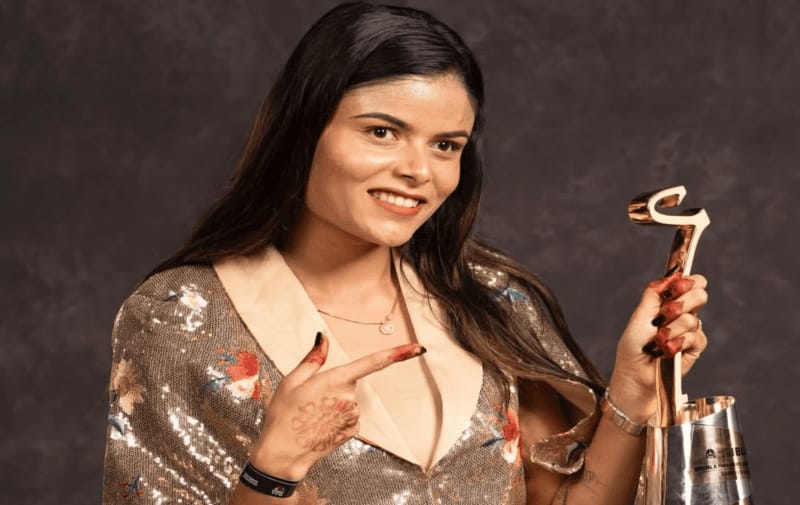
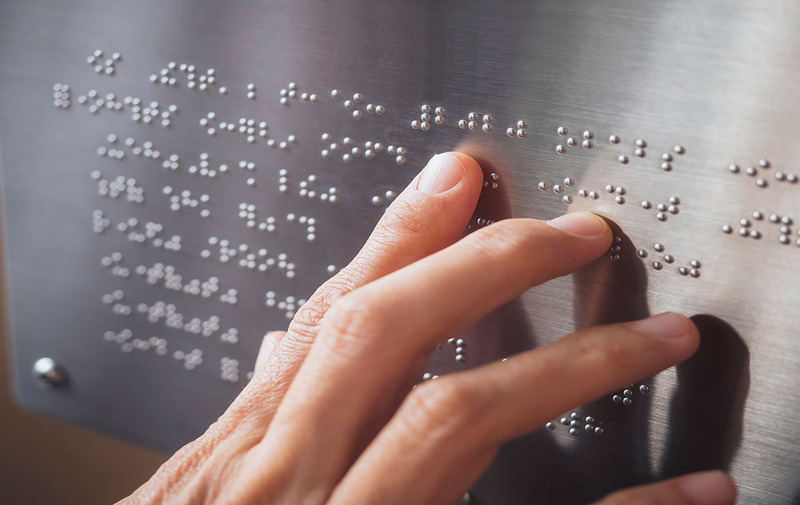
A simple question from a visually impaired student sparked an invention that has now earned national recognition.Lingampalli Himaja, a student of Shri Vishnu Engineering College for Women in Andhra Pradesh, has won the India national stage of the James Dyson Award 2026 for developing RUDHRA, a voice-enabled Braille printer designed to help visually impaired people create Braille documents independently.Hailing from Chintalapudi in Eluru district of Andhra Pradesh, Himaja developed the device after observing the difficulties faced by visually impaired students while using traditional methods of writing Braille. Her winning idea began with a visit to a school for visually impaired students. After building her first prototype, one student asked her a simple question: “Why should I type when I can speak?”That question changed the direction of her invention.When Speech Becomes BrailleRUDHRA allows users to create, edit and print Braille documents through voice commands.NDTV Education reports that the system uses Alexa to convert spoken words into text. A Raspberry Pi then processes the text and translates it into reverse Braille patterns. Finally, a printing mechanism embosses the required dots onto paper. The innovation is designed to remove a major challenge associated with conventional Braille writing. Users do not need to manually learn reverse writing techniques before creating documents. By combining voice input with automated Braille embossing, RUDHRA aims to make the process simpler and reduce the physical effort involved in traditional slate-and-stylus writing.Importantly, the device was developed with feedback from visually impaired students, keeping their practical needs at the centre of the design.A Win That Could Take RUDHRA FurtherAs the 2026 India national winner, Himaja will receive approximately £5,000 (around ₹6 lakh).For her, the recognition could provide more than an award. She hopes the visibility will help RUDHRA reach institutions and communities that could benefit from the technology, while also supporting further refinement and testing of the prototype.The James Dyson Award challenges students across 30 countries to develop practical solutions to real-world problems using engineering and design.Three Indian Innovations Move AheadHimaja’s RUDHRA emerged as the national winner from a field of innovative entries.ViabilityX, developed by Anvika Shetty of the National Institute of Design, Ahmedabad, was named the first runner-up. The passive organ preservation system is designed to maintain organs at 4°C to 8°C without electricity, batteries or ice.The second runner-up was Trike 2π, created by Shakeel Akthar S of Anna University. The compact electric patrol vehicle is designed to improve mobility and reduce fatigue for security personnel operating in confined pedestrian areas.All three top Indian entries will now represent the country in the international round of the James Dyson Award.Himaja’s interests extend beyond technology. She has trained in Kuchipudi, received recognition for her performances and later took up guitar. She has also balanced academics with sports, cultural activities and her responsibilities as a class representative.Her journey offers a simple message to fellow engineers: follow what genuinely inspires you, keep working at it and let passion turn an idea into something meaningful.