
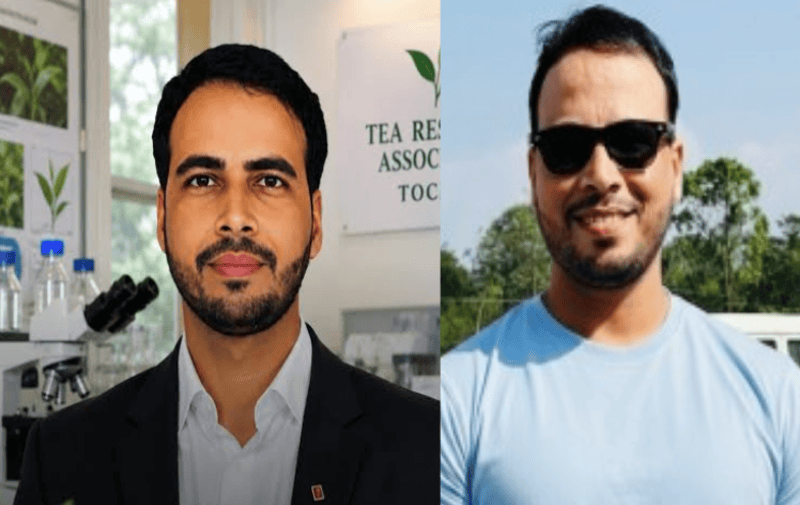
Assam Scientist Abhay Kumar Pandey Makes It to World’s Top 2% for Fourth Consecutive Year
A scientist working to protect India’s tea crops has earned international recognition for the fourth year in a row. Dr Abhay Kumar Pandey, a senior mycologist at the Tocklai Tea Research Institute in Jorhat, Assam, has once again been named among the world’s Top 2% Scientists.According to details shared by Pandey on Facebook, he ranks 1,195 among more than two lakh researchers worldwide in Plant Biology and Botany. The recognition is based on citation-related indicators used in the database prepared by researchers associated with Stanford University and published by Elsevier.Expressing his gratitude, Pandey acknowledged the support of his well-wishers and described the recognition as an honour. His achievement highlights the contribution of Indian scientists working on agricultural challenges that directly affect farmers and rural livelihoods.Using Microorganisms to Protect Tea PlantsTea is one of Assam’s most important agricultural crops, supporting countless growers and workers. However, fungal diseases can threaten the health of tea plants and affect crop productivity. Pandey’s research focuses on finding ways to manage these diseases using beneficial microorganisms. As a mycologist, he studies the relationship between tea plants and disease-causing pathogens.His work examines microbial biocontrol agents found in the tea ecosystem and how they can help suppress harmful fungi. Biological control uses living organisms or their products to manage pests and pathogens. Such research could help develop additional disease-management options, potentially reducing dependence on conventional chemical treatments in certain situations.By understanding how these beneficial microorganisms work, researchers can explore more sustainable ways to protect tea plantations. The findings could be particularly relevant to tea-growing regions such as Assam and North Bengal, where plant health is closely linked to agricultural livelihoods.A Career Built on Agricultural ResearchPandey’s scientific journey extends beyond tea. He has also worked with the World Vegetable Center in South Asia, the International Crops Research Institute for the Semi-Arid Tropics (ICRISAT), and the Ministry of Agriculture, Government of India. His research experience includes biological control and host-plant resistance. He earned his PhD in postharvest pathology of pigeon pea seeds from Kumaun University, Nainital, in 2012.According to a report in The Times of India, Pandey has authored more than 60 research papers and review articles in peer-reviewed journals. His earlier honours include the Prof. O.P. Mall Gold Medal in Mycology and Plant Pathology, awarded by the Indian Botanical Society in 2012. He was also named a Fellow of the Indian Botanical Society in 2020.What Does the Top 2% Recognition Mean?The Stanford-Elsevier database uses citation-based measures, including the h-index, co-authorship and authorship position, to assess the influence of researchers’ published work. Inclusion reflects performance under these indicators rather than every aspect of scientific contribution.For Pandey, the repeated recognition brings attention to research that connects scientific understanding with practical agricultural needs. His work demonstrates how studying tiny microorganisms could contribute to protecting one of India’s most valued crops.