
How Did Tesla’s Roadster Flip in Mid-Air? The Science Behind the Stunt
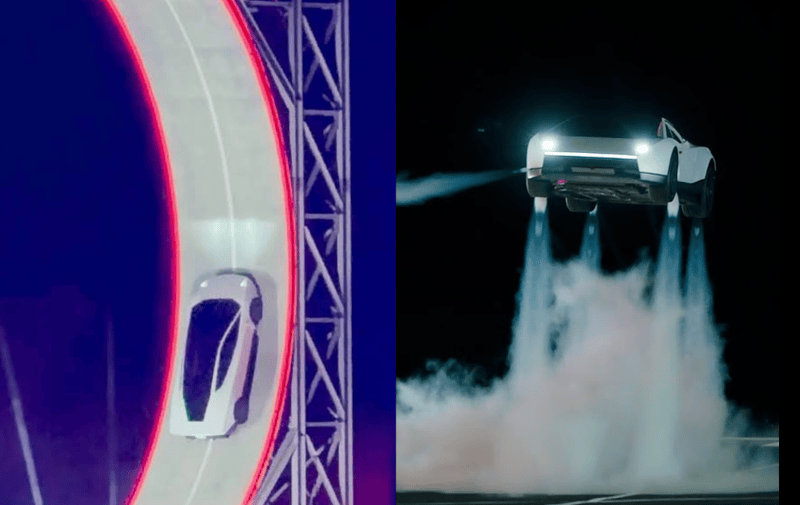
What if a car could leap into the air, flip around and land back on its wheels? It sounds like a scene from a science-fiction movie, but Tesla’s next-generation Roadster has brought this extraordinary idea closer to reality.At its unveiling in Texas on October 15, 2026, the electric sports car performed a dramatic demonstration, using SpaceX-inspired thrusters to lift off, rotate in mid-air and land. But how can a car weighing far more than a person perform such a manoeuvre?According to a report in India Today, the answer lies in compressed air, carefully directed forces and some fundamental laws of physics. How Do Rocket-Like Thrusters Work?Despite the rocket-inspired technology, the system demonstrated for the Roadster does not rely on conventional fuel-burning rocket engines. Instead, it uses cold-gas thrusters, which release stored, highly pressurised gas through strategically positioned nozzles. Reports from the unveiling describe a system with approximately 250 kilograms of compressed air stored in specialised pressure vessels and 10 nozzles to help control the vehicle’s movement.When a valve opens, the compressed gas rushes out at high speed. As the gas is expelled in one direction, it produces a force in the opposite direction. This is an application of Newton’s third law of motion: every action has an equal and opposite reaction.Directing the gas downwards generates an upward force on the car. By controlling the direction and timing of the gas bursts, the system can help change the vehicle’s movement and orientation.How Can a Car Flip in Mid-Air?A flip requires more than simply lifting off the ground. The vehicle must also rotate around its centre of mass. This is where carefully positioned thrusters become important. When a force acts away from the vehicle’s centre of mass, it can create a turning effect called torque. By applying controlled forces at different points, the system can initiate rotation and adjust the car’s orientation.To perform a brief jump, the upward thrust must exceed the car’s weight. Once airborne, timed bursts can help control its rotation. Further adjustments can influence its descent and landing.The Indian Express states that the demonstration also featured a specially designed suction system beneath the vehicle, which Tesla said helps it cling to an inverted ramp. This is a separate mechanism from the thrusters used for the airborne manoeuvres. Is This the Future of Cars?Tesla has targeted 2028 for production, but the final capabilities and real-world safety of the production model remain to be established.The technology raises fascinating engineering questions about stability, control and safe operation. For now, the Roadster offers a striking glimpse of how principles used in spacecraft engineering could be adapted for automobiles.