
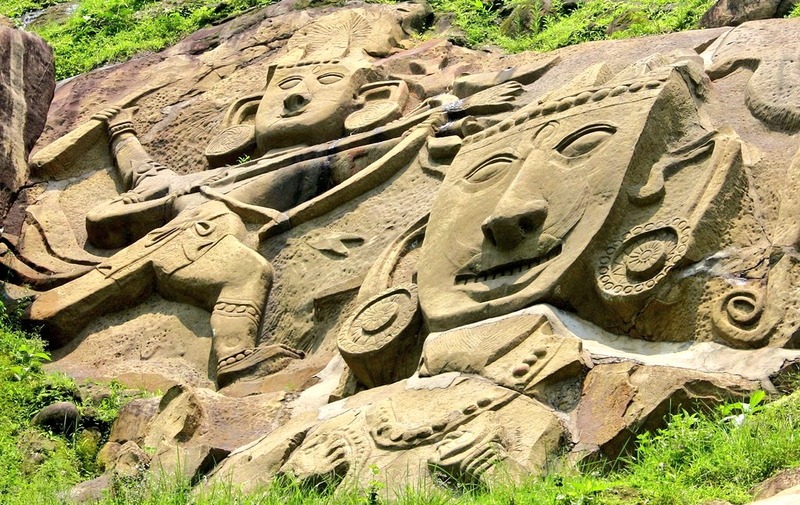
Tripura’s Secret Stone Wonderland: Inside the Magical Hills of Unakoti
Tucked away in the lush green hills of Tripura, near the town of Kailashahar, lies one of India’s most mysterious and breathtaking archaeological sites Unakoti. At first glance, it feels less like a historical monument and more like a forgotten kingdom where stone giants quietly guard the forest. Massive faces of deities rise out of rock cliffs, intricate carvings emerge from moss-covered walls, and waterfalls trickle through the ancient sculptures as if time itself paused centuries ago. The site is believed to date back to around the 7th–9th centuries, making it one of the oldest rock-carving locations in the region. What truly amazes visitors is the scale, enormous bas-relief carvings etched directly into the hillsides, some towering over visitors like silent guardians. The most famous among them is the colossal Kal Bhairava, a towering face of Shiva, rising nearly 30 feet high from the rock surface.Source: HomegrownThe Legend of “One Less Than a Crore”The name Unakoti itself carries a fascinating story. In the local language, the word literally means “one less than a crore”, suggesting 99,99,999 carvings, just one short of ten million. According to a popular legend, Lord Shiva was once travelling to Varanasi with one crore Gods and Goddesses. During their journey, they stopped to rest in this very place. Shiva instructed everyone to wake up before sunrise and continue the journey. However, when morning arrived, only Shiva woke up. Furious that the others were still asleep, he cursed them to turn into stone forever. The countless carvings scattered across the hills are believed to be those very deities frozen in time. Whether myth or metaphor, the story adds an enchanting aura to the site. Walking through Unakoti today, visitors often feel as though these ancient figures might suddenly come alive if the mist lifts and the forest whispers just right.Source: Sadlifestyle_ne via InstagramAn Archaeological Treasure in the Heart of the ForestBeyond its legends, Unakoti is also a remarkable example of early Indian rock-cut art. The carvings here are not small temple sculptures but massive hillside engravings, created by carving directly into natural rock surfaces. Apart from the iconic face of Kal Bhairava, the site features detailed depictions of Ganesha, Durga, and other divine figures, along with elaborate ornaments, crowns, and mythological motifs. Many sculptures are partially hidden under foliage, making exploration feel like a real-life treasure hunt. Historians believe the site once served as a major Shaivite pilgrimage centre, drawing devotees from surrounding regions. Even today, Unakoti comes alive during the Ashokastami Mela, when thousands of pilgrims gather here to offer prayers. The combination of sacred tradition, ancient artistry, and natural beauty has led many travelers to describe Unakoti as the “Angkor Wat of Northeast India.”When and How to Experience This Stone WonderlandFor travellers looking to experience Unakoti at its most magical, the best time to visit is between October and March. During these cooler months, the weather in Tripura remains pleasant and the surrounding forests are vibrant and lush. Early mornings are particularly mesmerizing, when mist floats between the carvings and sunlight slowly illuminates the giant faces on the hillsides. The nearest major town is Kailashahar, and the site is roughly 180 kilometers from Agartala, the state capital. Reaching the carvings requires a gentle trek down stone steps through the forest, which adds to the adventure. Visitors are advised to carry water, wear comfortable shoes, and take their time exploring because Unakoti is not a place to rush through. It is a place to pause, look up at the towering carvings, and wonder how ancient artists managed to transform a quiet hill into a living gallery of Gods. Hidden in the forests of Tripura, Unakoti remains one of India’s most magical secrets, a stone wonderland waiting to be rediscovered.