
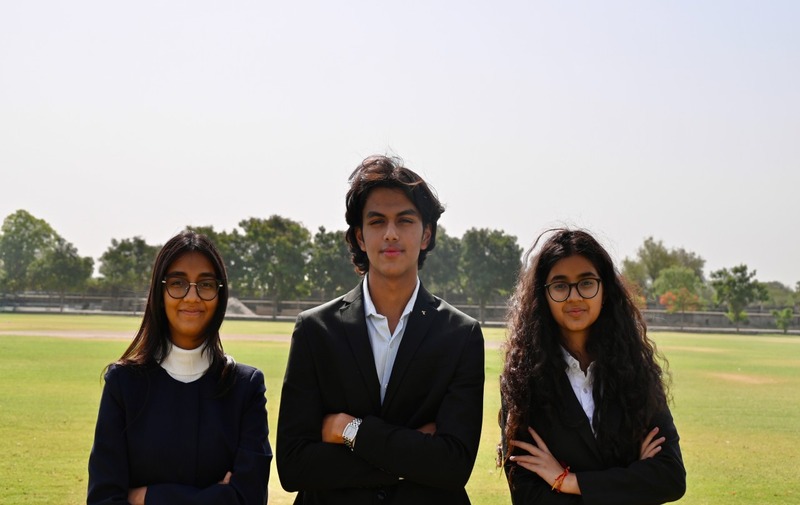
From Tamarind Waste to Clean Water: Indian Teens Win Earth Prize Asia 2026 With Microplastic-Fighting Innovation
In a breakthrough that blends science, sustainability, and social impact, three Indian teenagers have won Asia’s top honour at The Earth Foundation’s Earth Prize 2026 for developing an affordable tool that helps remove microplastics from drinking water.At just 16 years old, Vivaan Chhawchharia, Ariana Agarwal, and Avyana Mehta have created Plas-Stick — a simple yet powerful invention that could make clean drinking water more accessible to vulnerable communities across the globe.A Tiny Pollutant, A Massive ProblemMicroplastics are among the most alarming environmental threats of our time. Invisible to the naked eye, these tiny plastic particles often find their way into rivers, lakes, stored water containers and eventually, the human body.For millions living in rural and underserved areas, advanced filtration systems remain expensive and inaccessible. According to the World Health Organization, nearly 2.1 billion people worldwide still lack safely managed drinking water, making contamination a growing concern. That grim reality inspired these teenagers to act.The idea for Plas-Stick emerged during an environmental science course and a visit to a rural village, where the trio witnessed a child drinking water from a shared storage container. The moment sparked a question that would eventually lead to an award-winning solution: How do you remove something you cannot even see?How Plas-Stick WorksThe answer came from an unlikely source—waste tamarind seeds. The students developed a biodegradable powder extracted from discarded tamarind seeds. When added to water, the powder attracts floating microplastic particles and binds them together into visible clumps.These clumps can then be removed using a simple handheld magnet. No electricity. No costly machinery. No complex filtration units.The beauty of Plas-Stick lies in its simplicity. Designed specifically for shared water storage systems common in rural India and other developing regions, the tool offers a practical and affordable alternative for communities that cannot afford expensive purification systems.Even more remarkably, the invention repurposes agricultural waste, making it both eco-friendly and scalable.Beating Thousands Across the GlobeThe innovation impressed judges at The Earth Prize 2026, widely regarded as the world’s largest environmental competition for teenagers aged 13 to 19.This year’s edition witnessed participation from over 21,000 students across 169 countries and territories, with nearly 4,000 project submissions competing for recognition. Among thousands of entries worldwide, the Indian trio emerged as Asia winners, earning a $12,500 prize to scale their innovation further.The award is not merely symbolic. It is designed to help young innovators transform ideas into real-world impact.According to a report in Startuppedia, the Plas-Stick team has already partnered with researchers at Indian Institute of Technology Guwahati to refine the technology. They have also conducted workshops reaching nearly 8,000 students and teachers, spreading awareness about microplastic pollution and sustainable water practices.From Pilot Project to Rural RevolutionThe teenagers now plan to use the prize funding to establish decentralized production facilities and distribute Plas-Stick kits to more rural communities across India. In their statement following the victory, the team emphasized their vision for accessibility and impact.“Plas-Stick was designed to be simple, affordable, and accessible, and this support allows us to take it beyond pilot schools and scale it to many more communities that need it most.”At a time when climate anxiety often dominates conversations around the environment, these young innovators offer something different — hope powered by action. Their invention proves that age is no barrier to innovation and that some of the world’s biggest problems can sometimes find solutions in the smallest ideas.With global voting now underway to select the overall winner among the seven regional champions, all eyes are on the Indian trio whose tamarind-powered innovation could soon change how communities fight invisible pollution.