
Racing Against Time: How Hyderabad’s Green Corridor Turned Seconds into a Second Chance at Life
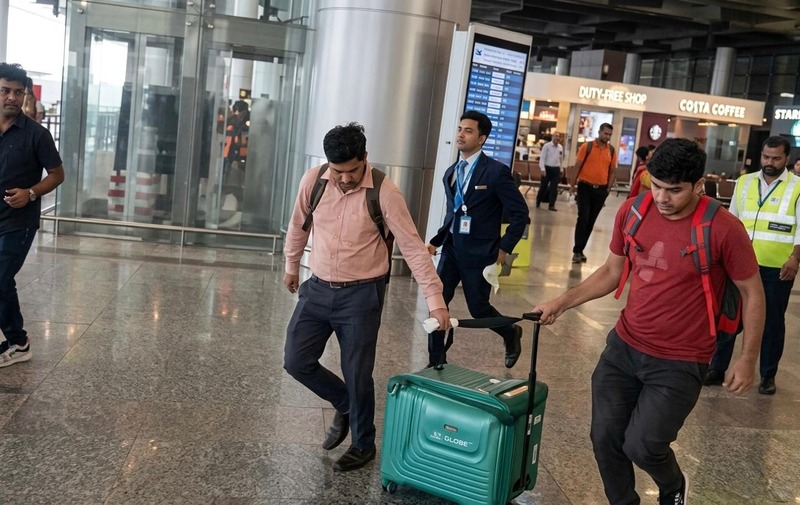
In the middle of a busy city where traffic rarely pauses and every second feels stretched, an extraordinary moment unfolded—one where time was not just managed, but mastered. In Hyderabad, a life hung in the balance, waiting not in a hospital ward but somewhere between an airport runway and an operating table. What followed was not just an act of efficiency but a powerful story of humanity in motion.When Every Second Becomes CriticalThe journey began far from the city. A pair of donor lungs, carefully retrieved in Bengaluru, was flown to Rajiv Gandhi International Airport. But the real challenge was not the flight; it was the race against time that would begin once the aircraft touched down. In organ transplantation, timing is everything. For lungs, the window of viability is incredibly narrow: just four to six hours. Beyond that, the chances of a successful transplant drop sharply. Every delay, every signal, every traffic jam could mean the difference between life and loss. And that is where the city stepped in.A Corridor of HopeAs soon as the lungs arrived, the Hyderabad Traffic Police activated a green corridor, a specially designed, traffic-free route that allows ambulances to move without interruption. From the airport at Shamshabad to KIMS Hospital, a clear path was created through one of the busiest urban landscapes. Traffic signals were manually controlled, congestion was cleared in advance, and every intersection was monitored. The ambulance carrying the donor lungs moved swiftly, uninterrupted by the usual chaos of city traffic. What would normally take much longer was completed in a fraction of the time, transforming a routine journey into a life-saving mission.Behind the SirensWhile the operation itself was a feat of coordination, its true significance lies in the lives it touched. Somewhere inside the hospital, a patient waited, someone whose lungs had failed, whose breath had become laboured, and whose hope now depended on the timely arrival of these donor organs. For patients suffering from end-stage lung diseases such as pulmonary fibrosis or chronic obstructive pulmonary disease (COPD), a transplant is often the last option. It is a second chance at life. But behind every transplant is another story—one of loss and generosity. A donor family, in the midst of grief, made the courageous decision to give life to someone else. Their choice set this entire chain of events into motion.Precision Inside the Operation TheatreOnce the lungs reached KIMS Hospital, there was no time to pause. A team of highly skilled surgeons and medical staff was already prepared. The transplant procedure began almost immediately, relying on precision, expertise, and flawless coordination. Such surgeries require advanced infrastructure, experienced professionals, and meticulous planning. From pre-operative preparation to post-operative care, every step must be executed perfectly. In that moment, the hospital became more than a medical facility; it became a place where science, skill, and hope came together. This successful operation was not the result of one effort but of an entire ecosystem working in harmony. The donor family, the medical teams, the aviation network, and the police force all played crucial roles. Green corridors, in particular, have become a vital part of India’s organ transplant system. Cities like Hyderabad, Chennai, and Mumbai have demonstrated how efficient planning and coordination can overcome even the most challenging conditions.India’s Growing Strength in Organ TransplantsOver the years, India has made significant progress in promoting organ donation and improving transplant logistics. Awareness campaigns have encouraged more families to consider cadaver organ donation, while advancements in infrastructure have made rapid transport possible. Intercity transfers, like the one between Bengaluru and Hyderabad, highlight how far the system has come. What was once considered complex and risky is now being executed with remarkable efficiency. Yet, the need remains immense. Thousands of patients across the country continue to wait for transplants, hoping for a chance that depends on both awareness and action. In the end, it is about time being honoured, teamwork being trusted, and humanity being at its finest. Because sometimes, the fastest journeys are not measured in distance, but in the lives they manage to save.