
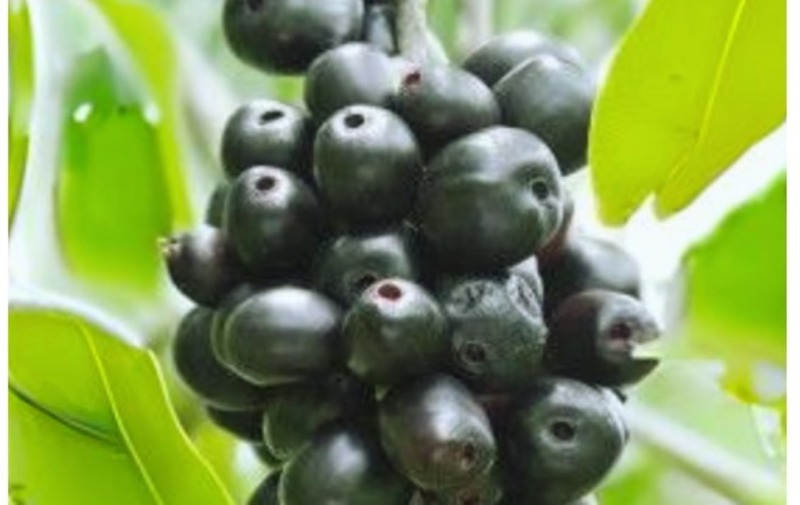
Maharashtra’s Drought, A Bumper Jamun Crop: Can Trees Really Warn Us?
Maharashtra is facing a difficult end to the monsoon. With rainfall 18% below normal, the state government has declared drought in 265 of its 358 tehsils. Between June 1 and September 26, the state received 798.2 mm of rainfall against a normal 970.9 mm.As officials prepare crop-loss assessments and relief measures, an unusual observation has also caught public attention. Across parts of India, jamun trees appeared to have produced an unusually large crop this year. For some people, this brings back an old saying: when jamun trees shed fruit heavily, drought may follow.But is there really a connection?Why Were Jamun Trees Loaded With Fruit?To understand the mystery, we first need to look at the jamun’s flowering cycle. The jamun, or Syzygium cumini, generally flowers around March and April. Those flowers must be successfully pollinated before they can develop into fruit. Weather can influence this process.Heavy rain during flowering may interfere with pollination, wash pollen away or affect pollinating insects. A relatively dry spell, on the other hand, could sometimes provide more favourable conditions for flowering and fruit-setting.If more flowers are successfully pollinated, the result could be a much larger crop several months later. This offers one possible explanation for the abundance being observed this year.Is the Tree Trying to Save Itself?Another explanation often mentioned in discussions about bumper fruiting is stress-induced reproduction. Plants can respond to environmental stress in different ways. Under certain conditions, water stress may alter how a plant allocates its resources. It will save its energy to produce more fruits so that the species can propagate.The idea that a stressed tree may prioritise reproduction has a basis in plant science. While stress could potentially influence fruiting, there isn't enough evidence to say that an unusually heavy jamun crop is a reliable drought predictor.What About Grandmother’s Wisdom?This is where traditional knowledge becomes fascinating. Generations of people have closely observed trees, crops, insects, rainfall and seasons. Such observations can sometimes point towards genuine ecological patterns.So, What Does the Jamun Really Tell Us? Perhaps the most interesting answer is also the simplest. The jamun crop may be telling us something about the weather it has experienced, but not necessarily about the weather that is coming.