
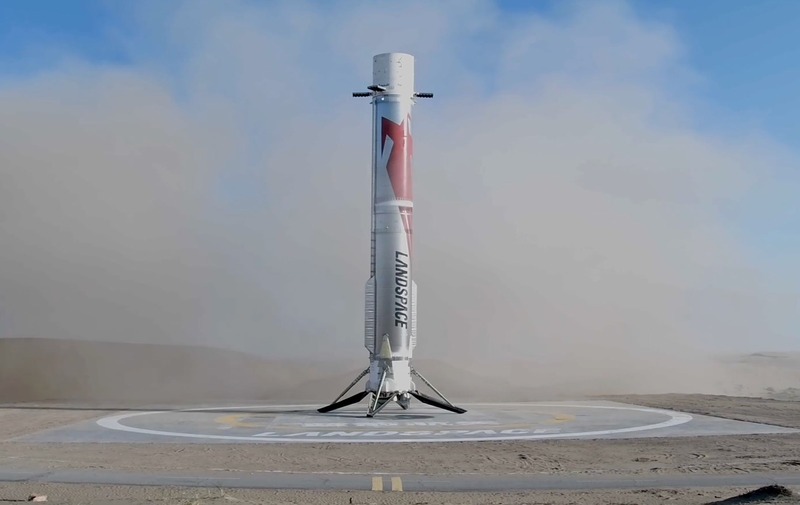
China Lands Its First Orbital Rocket Booster—A Giant Leap Towards Reusable Spaceflight
For decades, rockets have largely been treated as one-use machines—launching payloads into space before their expensive hardware falls back to Earth.That equation is changing. China has now achieved a major milestone in its reusable-spaceflight ambitions, with private space company LandSpace successfully recovering the first stage of its Zhuque-3 rocket on land.The 66-metre rocket lifted off from the Jiuquan Satellite Launch Centre in the Gobi Desert at around 7:35 a.m. local time on Wednesday, carrying a Honghu-3 internet satellite into its designated orbit. Then came the remarkable part. After completing its job, the rocket’s nine-engine first stage began its journey back to Earth. It performed a controlled descent and landed vertically at a designated recovery site in Minqin county, Gansu province, roughly 390 kilometres from the launch site.It marked China’s first successful land-based recovery of an orbital rocket’s first stage.Why Landing the Booster MattersA successful landing is more than a spectacular engineering feat. Reusable boosters can dramatically reduce the cost of space launches by allowing expensive rocket hardware to fly multiple missions instead of being discarded after every launch.Companies such as SpaceX and Blue Origin have already demonstrated reusable rocket technology, with SpaceX’s Falcon 9 routinely returning first stages for reuse. China is now joining that select group. The approach used by Zhuque-3—deploying landing legs and bringing the booster down vertically—is particularly significant because it resembles the recovery model that has transformed commercial launch operations.From Failure to a Historic LandingThe achievement becomes even more impressive considering what happened during Zhuque-3’s first orbital mission in December. While the rocket’s second stage successfully reached orbit, its first stage failed during its final powered descent and was destroyed.LandSpace went back to the drawing board, making changes to the landing-engine configuration, autonomous control systems and thermal protection.The second attempt produced a very different ending. Instead of a fireball, the booster came home intact. Now comes the next challenge: reuse.Landing the rocket is only the beginning. The recovered booster will need to be inspected, refurbished and eventually flown again safely and economically.A New Race for the SkiesThe breakthrough could prove particularly important as China expands its satellite ambitions.Beijing is developing massive broadband constellations such as Guowang and Qianfan, each envisioned to eventually contain more than 10,000 satellites.Such ambitious networks will require frequent launches—and frequent launches require affordable rockets. LandSpace says Zhuque-3 could eventually support repeated booster use, with the company targeting as many as 20 reuses.For now, China has achieved one successful landing. The real game-changer will be proving that the same rocket can launch, land, launch again—and keep doing it. If that happens, the race for reusable spaceflight could enter an exciting new chapter.