
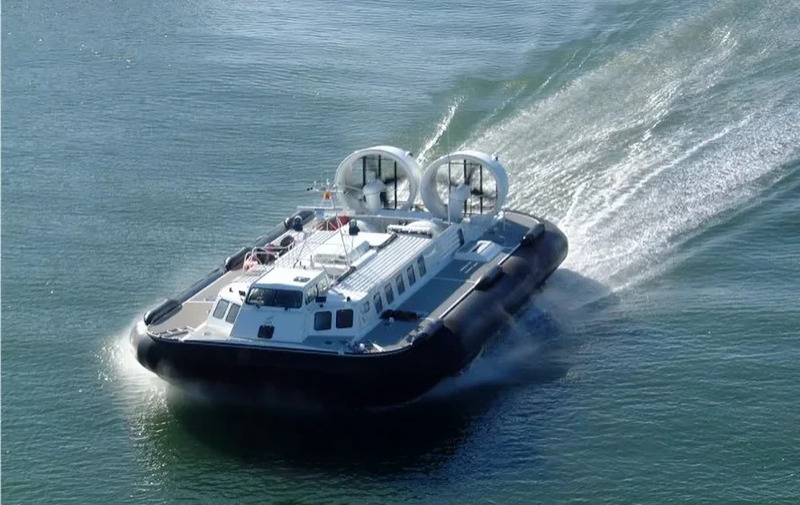
Coast Guard Inducts ACV H-561, India's First Indigenous Military Hovercraft
India’s push towards self-reliance in defence manufacturing achieved another milestone on Thursday with the induction of the country’s first indigenously built Air Cushion Vehicle (ACV), or hovercraft, into the Indian Coast Guard.Constructed by Goa-based Chowgule Shipyards, the vessel, designated H-561, marks the first time a private Indian shipyard has designed, built and delivered a military hovercraft from the ground up. The induction represents a significant leap for India’s maritime industry and strengthens the vision of Aatmanirbhar Bharat.A Historic First for Indian ShipbuildingThe hovercraft is part of a ₹387.4-crore contract awarded to Chowgule Shipyards for the construction of six Air Cushion Vehicles for the Indian Coast Guard.The first vessel was inducted at the company’s Rassaim facility in Goa in the presence of senior Coast Guard officials and industry representatives. The remaining five hovercraft are expected to be delivered at intervals of three months. While earlier hovercraft in the Coast Guard fleet were imported or assembled with foreign support, H-561 stands apart as a truly indigenous achievement, showcasing India's growing expertise in advanced maritime technology.Faster Than ExpectedBuilt under a technology licence from the United Kingdom’s Griffon Marine Ltd, a globally renowned hovercraft manufacturer, the vessel has already exceeded expectations. Accoeding to a report in The Times of India, during sea trials, the ACV touched an impressive speed of 52 knots, well above the contractual requirement of 48 knots.The hovercraft carries more than 50 per cent indigenous equipment, reflecting India's expanding manufacturing ecosystem. Chowgule Shipyards will also maintain and service the vessel for five years after delivery.Designed for Challenging TerrainUnlike conventional boats, hovercraft can travel seamlessly over water, mudflats, marshlands, and shallow coastal regions, making them ideal for diverse maritime operations.The new ACV features:Payload capacity of 8 tonnesMaximum speed of 45 knotsCruising speed of 35 knotsAccommodation for up to 42 personnelOperational endurance of nine hoursIts unique capabilities allow rapid deployment in riverine environments and coastal areas that are difficult for traditional vessels to access.Strengthening Coastal SecurityThe hovercraft is expected to be stationed at Haldia in West Bengal, where it will support operations across eastern India's riverine and delta regions. Officials say the vessel will play a vital role in coastal surveillance, maritime law enforcement, search and rescue operations, disaster response, flood relief and humanitarian missions.Its versatility makes it a valuable asset as the Coast Guard prepares to tackle emerging maritime challenges.A Boost for Aatmanirbhar BharatThe induction of H-561 underscores the growing capabilities of India’s private defence sector and highlights the country's ambitions to become a major defence manufacturing hub. The Indian Coast Guard described the induction as a reflection of the strengthening maritime industrial base and a key step toward self-reliance.As the remaining five hovercraft prepare for delivery, India has demonstrated that cutting-edge maritime platforms can now be built on home soil.