
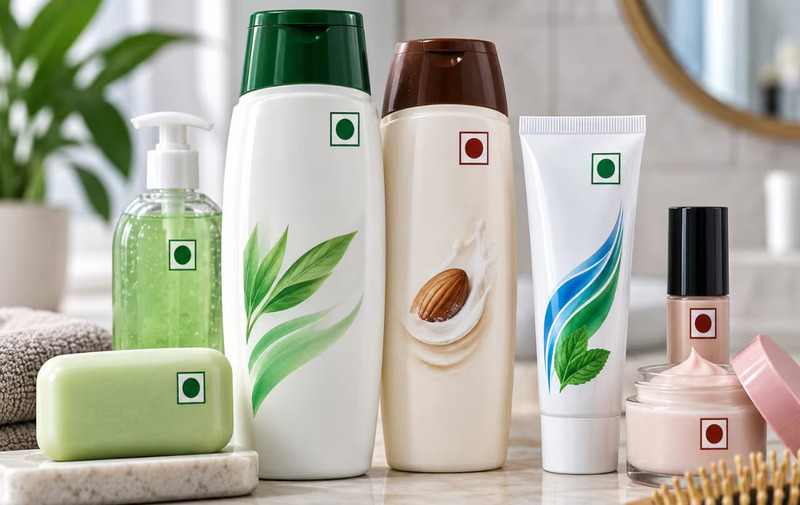
That Green or Brown Dot Isn’t Just for Food Anymore: It’s Coming to Cosmetics Too
The next time you pick up a soap, shampoo or toothpaste, the package may carry a familiar-looking symbol—but in a new place.The Centre has amended the Legal Metrology (Packaged Commodities) Rules, 2011, requiring pre-packed soaps, shampoos, toothpastes, cosmetics and toiletries to display symbols indicating whether the product is of vegetarian or non-vegetarian origin. The amendment was notified on September 21, 2026. A green dot indicates vegetarian origin, while a red or brown dot indicates non-vegetarian origin. The symbol is required at the top of the product’s principal display panel.What Does the Symbol Actually Mean?The classification relates to the origin of ingredients used in the product. Earlier, the symbol was used for food products, but now it will cover cosmetics too. For manufacturers and importers, this means examining formulations and supply chains to determine whether ingredients—including oils, additives and other components—are derived from animal or non-animal sources.For consumers, the intention is to make this information easier to spot while making purchasing decisions.Not Exactly a New RuleThere is an interesting twist to the development. The requirement itself is not new. A similar provision was introduced in 2014 under Rule 6(8), requiring soaps, shampoos, toothpastes and other cosmetics and toiletries to carry the same green, red or brown dots. The latest amendment shifts the provision to a different part of Rule 6 while deleting the earlier sub-rule. The issue had become complicated because different regulatory frameworks took different approaches.A report in The Tribune states that in the February 2026 case involving Reckitt, the Delhi High Court noted the conflict between the Legal Metrology rules and the position taken by the Drug Technical Advisory Board (DTAB). The DTAB had considered the question in 2018 and again in 2021. It noted that India did not have a clear system for certifying whether cosmetic ingredients were vegetarian or non-vegetarian. The Board therefore did not favour making the disclosure mandatory under the cosmetics framework and suggested that it could instead be voluntary. However, the court described the situation as a contradiction and called for consultation between the concerned authorities and stakeholders.What Consumers Can ExpectThe new amendment puts the colour-coded symbol firmly back in the spotlight. For shoppers, a quick glance at the top of the package could now reveal whether the product contains vegetarian or non vegetarian ingredients.But behind that simple green or brown dot lies a larger question: how those claims are determined, documented and verified across complex cosmetic supply chains.