
The World's Most Inspiring Wall Isn't Made of Stone—It's Made of Trees!
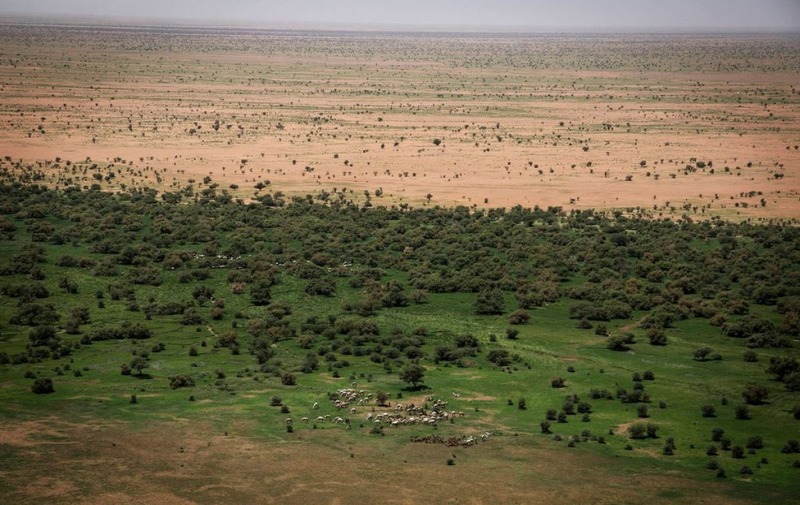
When people think of the world's greatest walls, the Great Wall of China often comes to mind. But across Africa, another monumental "wall" is taking shape, one that isn't built with bricks or stones, but with trees, grasslands and wetlands.Known as the Great Green Wall, this ambitious African-led initiative stretches across the Sahel region, creating a living barrier against desertification and climate change. Spanning nearly 8,000 kilometres, the project is restoring degraded landscapes while improving livelihoods for millions of people.Launched by the African Union in 2007, the initiative is one of the world's most ambitious ecosystem restoration efforts. Its goal is to restore 100 million hectares of degraded land by 2030.Why the Sahel Needed a Green ShieldThe Sahel is a vast semi-arid region that stretches along the southern edge of the Sahara Desert, from Senegal in the west to Djibouti in the east. It is also one of the regions most vulnerable to climate change.Temperatures here are rising nearly 1.5 times faster than the global average, leading to prolonged droughts, shrinking water resources, and declining soil fertility. Communities that have depended on farming and livestock for generations have watched productive land gradually turn barren, threatening food security and livelihoods.The Great Green Wall was conceived as a bold response to this growing crisis. Rather than simply slowing the advance of the desert, the project aims to revive ecosystems, restore healthy soils, improve water retention, and help communities adapt to a changing climate.More Than Just a Line of TreesDespite its name, the Great Green Wall is not a continuous row of trees stretching across Africa. Early planners realised that planting a single strip of trees would not survive the harsh environmental conditions of the Sahel. Instead, the initiative evolved into a flexible, community-driven restoration programme tailored to local landscapes.Today, farmers and local communities are planting native tree species, practising agroforestry by integrating trees with crops, restoring grasslands and wetlands, and using traditional water-harvesting techniques to improve soil moisture.These nature-based solutions have helped revive degraded land, improve groundwater levels, and create cooler local microclimates that support agriculture. The project now spans 11 core countries while restoration activities extend across nearly 20 African nations, forming a vast mosaic of productive ecosystems rather than a simple "wall."Progress That Is Already Making a DifferenceAccording to recent updates from the United Nations Convention to Combat Desertification (UNCCD), more than 30 million hectares of degraded land have already been restored.Across participating regions, healthier soils are helping farmers grow crops more reliably, increasing food production and reducing the risks associated with drought. The initiative is also supporting biodiversity by restoring habitats for native plants and wildlife.Equally significant is its social impact. By creating sustainable livelihoods and green jobs, the project offers young people economic opportunities closer to home, reducing the pressure to migrate in search of work.A Blueprint for Climate ActionThe road ahead is not without challenges. Funding gaps, political instability, and local conflicts continue to slow progress in some areas. Yet the momentum behind the Great Green Wall remains strong.Its success lies in recognising that environmental restoration is not simply about planting trees, it is about empowering communities to rebuild landscapes that can sustain both people and nature.As the world searches for practical solutions to climate change, Africa's Great Green Wall stands as a powerful example of how large-scale ecological restoration can deliver environmental, economic, and social benefits simultaneously.