
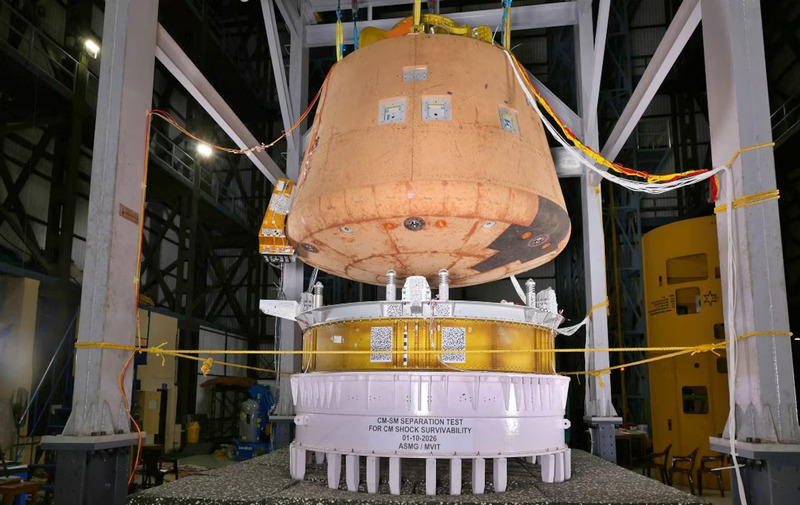
India’s Space Dream Takes Another Leap as ISRO Clears Key Gaganyaan Test
Sending astronauts into space is an incredible achievement, but bringing them safely back to Earth is just as important. India's space agency, ISRO, has now cleared a critical milestone in this journey by successfully completing a series of Crew Module–Service Module (CM-SM) separation tests for its ambitious Gaganyaan human spaceflight programme.Conducted at the Vikram Sarabhai Space Centre (VSSC) in Thiruvananthapuram, the tests examined a system that will separate the astronaut-carrying capsule from the spacecraft's service module before it re-enters Earth's atmosphere. The successful tests provide greater confidence ahead of Gaganyaan's first uncrewed mission, G1, targeted for launch in 2026. Why Must the Spacecraft Split Into Two?Gaganyaan's Orbital Module consists of two major components: the Crew Module and the Service Module. The Crew Module is designed to house astronauts and protect them during their journey. The Service Module supports the spacecraft during its mission, providing essential services and connections.Both modules remain connected from launch through the orbital phase. However, when the spacecraft begins its return journey, the Crew Module must detach from the Service Module and continue towards Earth.This separation is a precisely timed operation involving specialised mechanisms, pyrotechnic devices and jettisoning systems. Any malfunction could jeopardise the return sequence, making it essential to test the system thoroughly before astronauts travel aboard the spacecraft.How Did ISRO Test the Separation System?ISRO created a specialised test setup at VSSC to simulate the integrated Crew Module–Service Module assembly. Extensive instruments monitored the separation process, including the severing of electrical and fluid connections, known as umbilicals, linking the two modules. The tests assessed whether the separation system could perform its intended function and whether critical components of the Crew Module could withstand the shocks generated during the operation.The results strengthen confidence in the design and performance of these essential systems.Gaganyaan Moves Closer to Its Spaceflight GoalGaganyaan aims to demonstrate India's ability to send humans into space and bring them back safely. Before astronauts embark on the mission, uncrewed flights will help validate the spacecraft and its systems under actual flight conditions.The latest separation tests add to this extensive preparation, showing why space missions depend on hundreds of carefully verified operations working together.With the G1 uncrewed mission targeted for 2026, each successful test brings India closer to a major milestone in human spaceflight. The journey to space may capture the imagination, but ensuring a safe return is where precision engineering truly makes the difference.