BRICS Summit 2026: New Delhi Declaration Sets a New Course for Global Cooperation
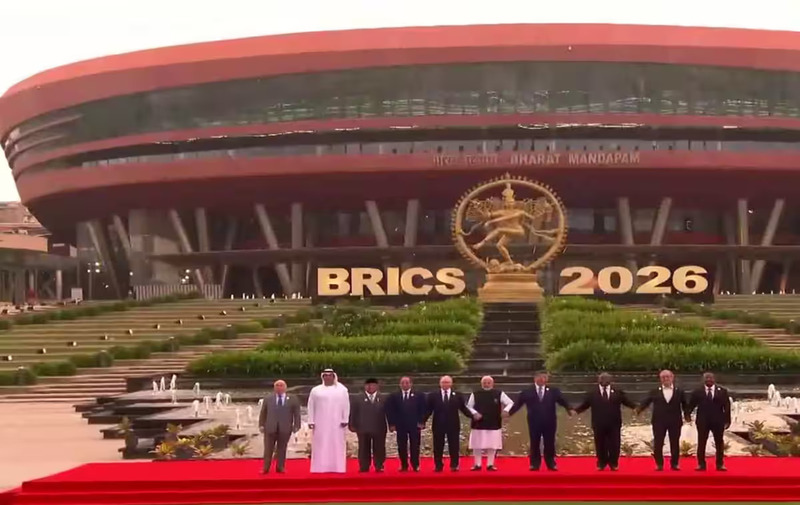
The first day of the BRICS Summit 2026 in New Delhi ended with a significant message of unity as leaders of the member countries unanimously adopted the New Delhi Declaration at Bharat Mandapam.Prime Minister Narendra Modi proposed the adoption of the declaration at the close of the first day’s session, saying it provides a clear direction for the shared resolve of BRICS nations. But, he stressed, the real challenge now is to turn those commitments into tangible results. “The gap between decisions and outcomes” must be bridged through partnership and collective action, the Prime Minister said.This year’s summit carries added significance as BRICS marks its 20th anniversary, making the gathering a moment to reflect on the grouping’s journey and its future role in a rapidly changing world.Giving the Global South a Bigger VoiceA major focus of India’s BRICS Chairship has been strengthening the voice of the Global South. Prime Minister Modi pointed out that countries of the Global South are often at the forefront of global crises but remain underrepresented in decision-making. He called for transforming what he described as a “pyramid of privilege” into a “platform of partnership.”India proposed jointly formulating 10 proposals for global governance reform, with the aim of developing them into a BRICS reform roadmap by the next summit. The Prime Minister also called for urgent reform of the United Nations Security Council, saying the issue can no longer be postponed. He emphasised that global financial institutions must also better reflect today’s economic realities.India also proposed a BRICS Continuity and Implementation Mechanism to ensure that initiatives do not lose momentum when the chairship changes hands every year. India also proposed a Seafarers Emergency Support Network, connecting maritime authorities and diplomatic missions to help seafarers during emergencies.Modi-Xi Talks Add Another DimensionOn the sidelines of the summit, Prime Minister Modi held detailed bilateral discussions with Chinese President Xi Jinping, who made his first visit to India in seven years.The two leaders welcomed the steady progress in India-China relations since their meeting in Tianjin in August 2025 and agreed that both countries should adopt a strategic and long-term perspective towards their relationship.Prime Minister Modi highlighted the importance of mutual respect, mutual sensitivity and mutual interest. He also appreciated China’s support for India’s BRICS Chairship and its contribution to the summit.India’s People-Centric BRICS VisionIndia’s Chairship has been guided by four priorities: Resilience, Innovation, Cooperation and Sustainability. More than 350 meetings were organised across nearly 30 Indian cities, reflecting India’s effort to connect BRICS cooperation with people and communities beyond diplomatic circles.As BRICS begins its next chapter, the New Delhi Declaration signals an ambition that goes beyond statements—to build stronger partnerships, more representative institutions and concrete outcomes for a changing world.

.jpeg)






.jpg)
.jpeg)




.jpeg)
 (1).jpeg)



.jpeg)
.jpg)