
Arya Satheesh Bags European Earth Prize 2026 for Revolutionary ‘Eco Purge’ Plastic
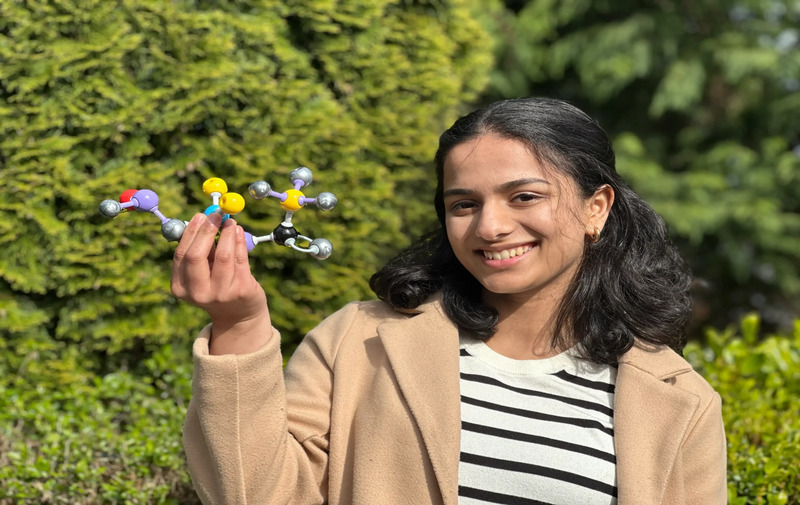
At just 18, Arya Satheesh is proving that some of the world’s biggest environmental breakthroughs can come from young minds with bold ideas. The Ireland-based teenager has been named the European winner of The Earth Prize 2026 for inventing Eco Purge, a groundbreaking biodegradable plastic prototype designed to fight one of the planet’s most dangerous invisible threats: microplastics.In a world drowning in plastic waste, Arya’s innovation stands out for doing something extraordinary. Instead of merely replacing plastic, Eco Purge is designed to actively break down existing microplastic pollution in soil and water.Her invention has now earned global recognition, a $12,500 prize grant, and the attention of scientists and environmentalists worldwide.A Plastic That Cleans Up PlasticUnlike ordinary plastic, which can remain in the environment for hundreds of years before fragmenting into harmful microscopic particles, Eco Purge is made from plant-based biodegradable material. But the real magic lies inside it.Arya embedded special enzymes within the biodegradable plastic. These enzymes remain stable while the material is being used in everyday products such as packaging or compost bags. As the plastic naturally decomposes, the enzymes are gradually released into the surrounding environment, where they begin attacking existing microplastics.After winning the award, Arya said that plastic pollution does not simply disappear but breaks into tiny particles that remain in the environment. She said she wanted to create something that could directly tackle the problem, adding that Eco Purge was designed not only to replace plastic but also to help remove existing microplastics.From School Project to Global RecognitionWhat makes Arya’s journey even more inspiring is that she began developing Eco Purge while still in school. Her interest in microplastics started during earlier research on water quality, where she discovered that although microplastics could be detected in water systems, removing them was far more difficult.To develop her prototype further, she collaborated with researchers from University College Dublin (UCD), Atlantic Technological University (ATU) Letterkenny, and the BiOrbic Bioeconomy Research Centre.The recognition from The Earth Prize now gives her funding to continue refining Eco Purge and explore real-world applications.Why Microplastics Are a Growing Global CrisisMicroplastics are tiny plastic particles formed when larger plastic waste, such as bags, bottles, wrappers, and packaging, breaks apart over time.These microscopic particles have now spread almost everywhere on Earth. Scientists have detected microplastics in oceans, rivers, soil, food, drinking water, and even the air humans breathe. Researchers are still studying the long-term health effects, but growing evidence suggests they may pose serious environmental and health risks.The Earth Prize Celebrates Young ChangemakersArya’s achievement comes through The Earth Prize, an international environmental competition for young people aged 13 to 19. Founded by The Earth Foundation in Geneva during the School Strike for Climate movement in 2019, the initiative encourages teenagers to move beyond environmental anxiety and create practical solutions for real-world problems.Now in its fifth year, the competition has reached over 21,000 students across 169 countries and territories and awarded more than half a million dollars to youth-led environmental projects. Seven regional winners are selected globally, each receiving $12,500 to further develop their ideas. A public vote will now determine the Global Winner, to be announced on May 29.Arya Satheesh’s success is more than a personal victory, it represents a growing movement of young innovators stepping forward with solutions to some of the planet’s toughest environmental challenges. If Eco Purge succeeds on a larger scale, this teenager’s idea could one day become a powerful weapon in humanity’s fight against plastic pollution.