Akasha300 Explained: The Indigenous 3D Printer That’s Set to Transform India’s Space Missions and Engineering Power
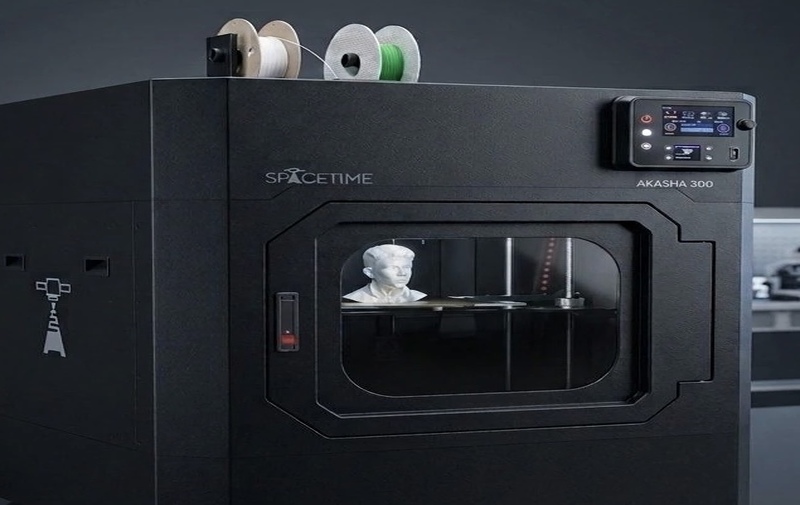
India has taken a significant step forward in its journey toward technological self-reliance with the deployment of the Akasha300, an advanced high-temperature multi-material 3D printer. Installed at the Liquid Propulsion Systems Centre in Valiyamala, in Kerala, this innovation represents a powerful shift in how complex components for space and industrial applications are designed and manufactured. As the country continues to expand its footprint in global space exploration, such indigenous technologies are becoming essential in reducing dependency on external resources while boosting efficiency and precision.Understanding the Akasha300: A Next-Generation 3D PrinterThe Akasha300 is not an ordinary 3D printer; it is a high-performance system designed specifically for complex engineering needs. Built with dual-extrusion technology, it can operate at temperatures up to 350°C, with future upgrades expected to extend this capability to 500°C. This allows it to work with advanced, high-performance materials that are crucial for aerospace and industrial applications. Its modular design further enhances its versatility, enabling the integration of multiple extruders and supporting hybrid additive manufacturing techniques. This flexibility makes it a powerful tool for engineers and researchers working on cutting-edge projects.Advanced Features Driving Precision and PerformanceWhat sets the Akasha300 apart is its ability to maintain precise thermal conditions, which are essential for high-quality 3D printing. The printer includes a heated bed capable of reaching 110°C, extendable to 150°C, along with an enclosed chamber that can sustain temperatures up to 80°C. These features ensure stability while printing complex components that require consistent environmental conditions. Additionally, the system is equipped with a robust motion mechanism and integrated air filtration, making it suitable for industrial-grade research and development. Such capabilities enable the production of durable, high-precision components that meet the stringent requirements of space missions.Transforming Space Manufacturing and InnovationThe deployment of the Akasha300 at the Liquid Propulsion Systems Centre is expected to accelerate advancements in propulsion systems, materials science, and rapid prototyping. Additive manufacturing, commonly known as 3D printing, allows engineers to create intricate designs that would be nearly impossible using traditional manufacturing methods. This is especially valuable in space technology, where components must be lightweight yet extremely strong and precise. By enabling faster prototyping and reducing material waste, the Akasha300 not only enhances efficiency but also supports sustainable engineering practices.Collaboration Driving India’s Space EcosystemThe development of the Akasha300 reflects a strong collaborative effort between academia, startups, and government institutions. It was supported by the Space Technology Innovation and Incubation Centre at the Indian Institute of Space Science and Technology, along with the Kerala Startup Mission. This partnership highlights the growing ecosystem of innovation in India, where ideas are nurtured and transformed into real-world technologies. Such collaborations are crucial for building a sustainable and competitive space sector, ensuring that India remains at the forefront of technological advancement.Shaping the Future of Engineering in IndiaThe introduction of advanced systems like the Akasha300 is not just about improving current capabilities; it is about shaping the future of engineering in India. As industries increasingly adopt additive manufacturing, the demand for skilled professionals and innovative solutions will continue to grow. This technology has the potential to transform sectors beyond space, including healthcare, automotive, and defense, making manufacturing faster, more efficient, and more sustainable. As India continues to explore new frontiers in space, innovations like the Akasha300 will play a crucial role in turning ambitious ideas into reality. This is not just a machine; it is a symbol of progress, collaboration, and the limitless potential of human ingenuity.