"Dream, Dream, Dream! Conduct these dreams into thoughts, and then transform them into action."
- Dr. A. P. J. Abdul Kalam
"Dream, Dream, Dream! Conduct these dreams into thoughts, and then transform them into action."
- Dr. A. P. J. Abdul Kalam
11 Dec 2025
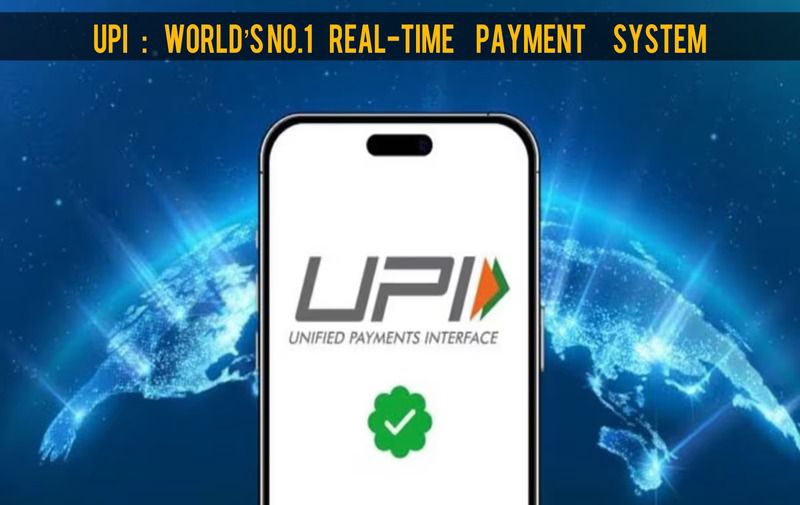
India has achieved a milestone that reflects both technological innovation and social transformation. The International Monetary Fund (IMF) has officially recognized the Unified Payments Interface (UPI) as the largest real-time retail fast-payment system in the world. With 129.3 billion transactions, UPI now handles nearly half of global real-time payments—an astonishing 49 percent share. This achievement places India far ahead of other leading nations. Brazil occupies the second position with a 14 percent market share, followed by Thailand with 8 percent and China with 6 percent. For a platform that began less than a decade ago, UPI’s meteoric rise signals a powerful shift in the global financial ecosystem.
Why UPI Became a Global Leader
UPI’s success is rooted in its simple, instant, and accessible-to-everyone design. Unlike many countries where digital payments rely heavily on banking infrastructure or private wallet companies, India built UPI as a public digital good. It allows anyone with a smartphone or even a feature phone in many regions to send and receive money instantly, without needing a debit card, wallet, or physical paperwork. What makes this more meaningful is the way it connects millions of ordinary people to the digital economy. For a daily wage worker sending money home, a vegetable vendor accepting payment at a roadside stall, or a student splitting bills with friends, UPI turns financial transactions into a fast, hassle-free experience. This human-level impact is the true foundation of its global success.
IMF Recognition Validates India’s Digital Revolution
The IMF’s recognition is more than a statistical achievement; it is global validation of India’s digital blueprint. According to the IMF report released in June 2025 and supported by data from ACI Worldwide’s “Prime Time for Real-Time” study, UPI stands unmatched in real-time payments by volume. This recognition highlights India’s long-term vision of creating an open, secure and scalable digital infrastructure. It also proves that India’s digital transformation is not limited to large cities but has taken root across rural and semi-urban regions, powered by government policies, innovative technology and wide public acceptance.
Government and RBI Initiatives Expand the Ecosystem
India’s ability to reach such extraordinary transaction numbers is the result of careful planning and continuous support from the Government of India, the Reserve Bank of India (RBI) and the National Payments Corporation of India (NPCI). One of the major contributors to UPI’s growth has been the incentive scheme for promoting low-value BHIM-UPI transactions. This initiative encourages small-scale merchants such as kirana shop owners, auto drivers and street vendors to embrace digital payments without fear of additional charges. Another crucial effort is the Payments Infrastructure Development Fund (PIDF), which helps deploy digital infrastructure such as point-of-sale machines and QR codes in tier-3 to tier-6 cities. As of October 31, 2025, around 5.45 crore digital touchpoints had been deployed in these smaller centers, proof that digital payments are no longer limited to metropolitan India.
QR Codes Revolutionise Merchant Transactions
One of the simplest yet most powerful tools behind UPI’s success is the QR code. In FY 2024-25, India deployed 56.86 crore QR codes across nearly 6.5 crore merchants. This widespread adoption transformed how businesses operate, especially small and medium enterprises. A QR sticker placed outside a tea stall or on a vegetable cart is more than a tech upgrade; it is a symbol of a business owner stepping confidently into the digital economy. For customers, it means freedom from cash shortages, bank queues, or the hassle of exact change. For merchants, payments become transparent, trackable and instant. This shift not only supports convenience but also enables financial inclusion, helping millions build credit history and better access loans.
UPI Becoming the Backbone of the Indian Economy
UPI’s role is no longer limited to person-to-person transfers. It is now deeply integrated into transportation systems, government services, e-commerce platforms and public utilities. Metro stations, buses, toll booths, hospitals, schools and local markets across India accept UPI. This seamless ecosystem has made UPI more than a payment option; it is now the backbone of India’s daily economic activity. From urban professionals tapping their phones for a quick cab ride to farmers in remote villages receiving payments directly into their bank accounts, UPI is changing the rhythm of financial life across the country.
A New Global Standard in Digital Payments
With its 49 percent share in global real-time payments, UPI has set a new benchmark for the world. Countries across Asia, Africa and the Middle East are already studying or adopting the UPI model. India has not only built a successful digital payments system but has also become a global example of how technology can transform lives at scale. As digital adoption continues to rise, UPI’s next chapter will be about innovation, security and expansion into new areas of public and financial services. One thing is clear: UPI is no longer just India’s payment system; it is India’s digital identity, powering the confidence of a nation moving swiftly towards a cashless future.

Writing about what truly matters, good news and stories to remind the world - it is brighter than we think.