"Dream, Dream, Dream! Conduct these dreams into thoughts, and then transform them into action."
- Dr. A. P. J. Abdul Kalam
"Dream, Dream, Dream! Conduct these dreams into thoughts, and then transform them into action."
- Dr. A. P. J. Abdul Kalam
30 Jun 2026
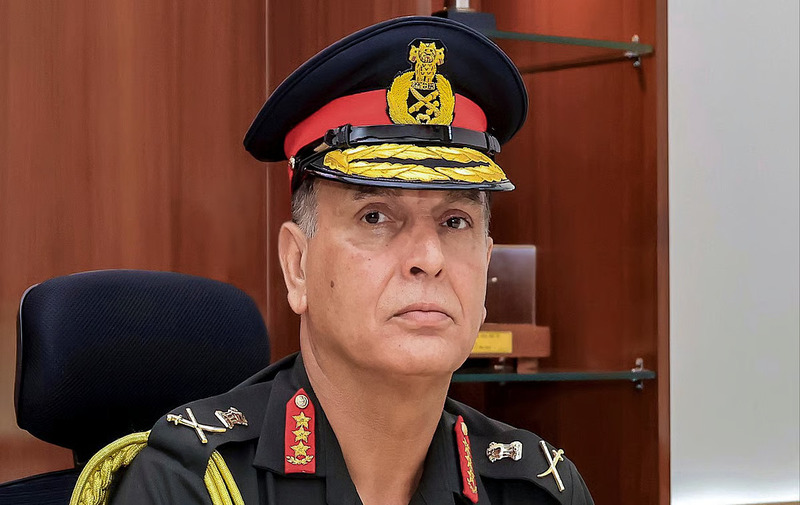
India's defence establishment has entered a new chapter with General Dhiraj Seth assuming office as the 31st Chief of the Army Staff (COAS) on June 30, 2026.
Succeeding General Upendra Dwivedi, General Seth takes command at a crucial time when the Indian Army is rapidly embracing advanced technologies, integrated warfare, and force modernisation.
His appointment comes as part of a broader leadership transition across the armed forces, with Admiral Krishna Swaminathan taking over as Chief of the Naval Staff and General Subramani assuming charge as the Chief of Defence Staff.
For the Indian Army, however, the spotlight is firmly on General Seth—a decorated Armoured Corps officer whose career spans nearly four decades of command, strategy, and operational excellence.
General Dhiraj Seth's appointment marks a historic milestone. He is the first officer from the Armoured Corps to become Chief of Army Staff since General Shankar Roychowdhury held the post nearly three decades ago, retiring in 1997.
Commissioned into the prestigious 2nd Lancers (Gardner's Horse) in 1986, General Seth steadily rose through the ranks by leading some of the Army's most strategically significant formations. His extensive experience includes commanding the Southern Command in Pune and the South Western Command in Jaipur—both critical formations responsible for safeguarding India's western borders. He is among a select group of officers to have commanded two Army Commands, reflecting the confidence the military placed in his leadership.
Throughout his distinguished career, General Seth has held several high-profile appointments. Before becoming Army Chief, he served as the Vice Chief of Army Staff, overseeing key operational and administrative responsibilities.
He also commanded the XXI Corps in Bhopal, one of India's strike formations, and served as the General Officer Commanding (GOC) of Delhi Area. His leadership extended beyond conventional warfare. General Seth also led a counter-insurgency force in Jammu & Kashmir and commanded both an armoured brigade and an armoured regiment.
In addition to field command, he has played an important role in strategic planning and military capability development.
General Seth assumes command during what the Indian Army describes as its "Decade of Transformation." His tenure is expected to oversee several major reforms designed to make the force faster, smarter, and technologically superior.
Among the key priorities are the rollout of Integrated Battle Groups (IBGs)—highly agile combat formations designed for rapid deployment. The Army is also accelerating the integration of artificial intelligence, drones, autonomous systems, cyber capabilities, and next-generation battlefield technologies into military operations.
Another major focus will be advancing the Integrated Theatre Command concept, aimed at improving coordination between the Army, Navy, and Air Force for joint operations. These initiatives are expected to redefine India's military preparedness for future security challenges.
General Seth's military credentials extend well beyond the battlefield. He is an alumnus of the National Defence Academy, the Indian Military Academy, the prestigious Command and Staff Course in Paris, and the National Defence College.
His exemplary service has earned him some of India's highest military honours, including the Param Vishisht Seva Medal (PVSM), Uttam Yudh Seva Medal (UYSM), and Ati Vishisht Seva Medal (AVSM). Military service also runs deep in his family. His father, Lieutenant General Krishna Mohan Seth, also served the nation with distinction, making General Seth part of a proud military legacy.
General Seth's appointment is more than a routine change of command, it signals continuity, experience, and a renewed focus on building a future-ready force capable of meeting the challenges of an increasingly complex security landscape.
.jpeg)
I have a Masters in Literature and a knack for spotting the silver lining! When I’m not chasing good news, you’ll find me nurturing my farm or lost in a good book.