"Dream, Dream, Dream! Conduct these dreams into thoughts, and then transform them into action."
- Dr. A. P. J. Abdul Kalam
"Dream, Dream, Dream! Conduct these dreams into thoughts, and then transform them into action."
- Dr. A. P. J. Abdul Kalam
5 Jun 2026
As the world gears up to celebrate World Environment Day 2026, Mumbai is preparing to make a bold artistic statement, one built not from fresh materials, but from waste.
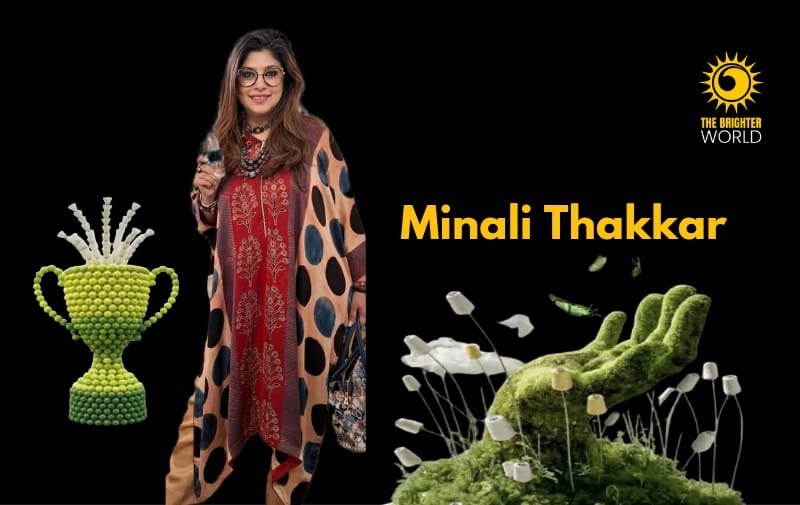
Renowned public artist and curator Minali Thakkar has unveiled a remarkable series of environmental art installations that transform discarded materials into monumental symbols of hope, sustainability, and collective responsibility. Spanning textile waste, plastic scrap, and retired sports equipment, the three large-scale creations challenge people to see waste not as an end but as the beginning of something meaningful.
At a time when environmental concerns are reshaping industries and communities worldwide, these striking installations offer a powerful reminder that creativity can be one of the strongest tools for change.
Created in collaboration with Sanathan Textiles, The Greener Promise is perhaps the most visually striking of the three installations.
The artwork features a colossal moss-covered hand emerging from the earth, gently nurturing blooming flowers crafted from industrial yarn spools. Butterflies flutter around the structure, symbolizing renewal, growth, and ecological harmony.
The giant hand represents human responsibility, while the blooming flowers showcase the possibilities that emerge when innovation is guided by sustainability. By transforming industrial yarn cones and textile spools into vibrant floral forms, the installation challenges the long-held perception that industry and nature must exist in opposition. Instead, it presents an optimistic vision where both can thrive together.

More than an art piece, The Greener Promise serves as a conversation starter about responsible production, circular design, and the role industries can play in building a greener future.
Plastic waste is often seen as one of the planet’s biggest environmental threats. But in The Bloom of Tomorrow, it becomes a symbol of renewal.
Developed in partnership with the Bhamla Foundation, the installation takes the form of an oversized flower pot bursting with bright, colourful flowers. What makes it extraordinary is the material behind the beauty.
Discarded plastic bottles, PVC waste, hose pipes, and other post-consumer materials have been transformed into a vibrant bouquet of life. The dramatic scale and bright colours instantly capture attention, inviting viewers to rethink their relationship with waste. The installation sends a clear message: every recycled bottle, every conscious choice, and every community effort contributes to a healthier environment.
By turning pollutants into symbols of growth, The Bloom of Tomorrow demonstrates how creative reuse and circular thinking can inspire environmental action on a larger scale.

The scale and vibrancy of the installation are designed to capture attention instantly, encouraging viewers to reflect on how waste can be transformed into something meaningful
Sports are often associated with achievement, discipline, and competition. But what if sustainability became part of the victory?
Commissioned by Gymkhana Sports Club, Minal Thakkar's The Victory of Green takes the shape of a towering championship trophy constructed entirely from discarded tennis balls, pickleballs, badminton shuttlecocks, and other retired sporting equipment.
The installation was inspired by the significant amount of waste generated through recreational and competitive sports. Rather than allowing these materials to end up in landfills, they have been repurposed into a monumental sculpture celebrating environmental responsibility.

The artwork challenges athletes, clubs, and sports enthusiasts to expand their definition of success. True victory, it suggests, is not measured solely by medals and trophies but also by the commitment to protecting the planet.
Together, the three installations create a powerful environmental narrative. Whether through textile waste, plastic scrap, or sports equipment, each artwork demonstrates the transformative potential of reuse and circular design.
As India marks World Environment Day 2026, these larger-than-life creations stand as symbols of hope and action. They remind us that sustainability is not just a policy or a goal—it is a choice made every day by industries, communities, and individuals alike. And sometimes, that choice begins by looking at waste and imagining something beautiful.
.jpeg)
I have a Masters in Literature and a knack for spotting the silver lining! When I’m not chasing good news, you’ll find me nurturing my farm or lost in a good book.