"Dream, Dream, Dream! Conduct these dreams into thoughts, and then transform them into action."
- Dr. A. P. J. Abdul Kalam
"Dream, Dream, Dream! Conduct these dreams into thoughts, and then transform them into action."
- Dr. A. P. J. Abdul Kalam
20 May 2026
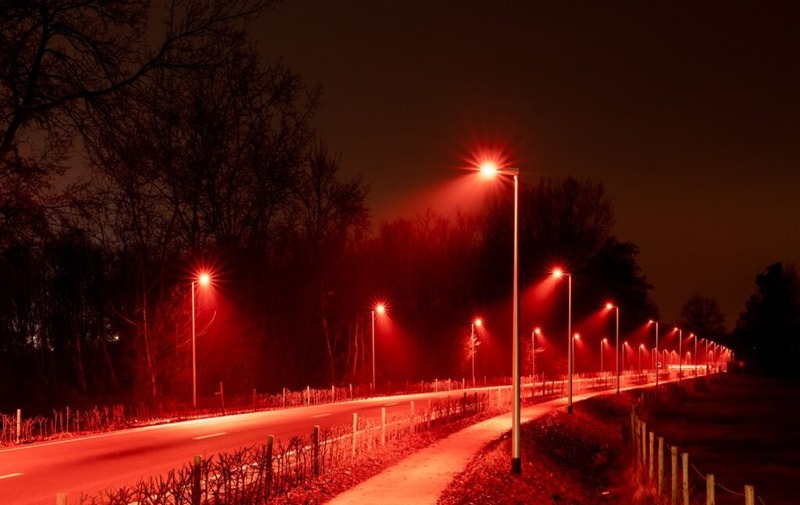
Drivers entering Gladsaxe, just outside Copenhagen, were met with an unusual sight earlier this year. A section of Frederiksborgvej, usually illuminated by standard white streetlights, suddenly appeared drenched in an eerie deep red glow.
For many, it looked like something out of a science-fiction film. But this wasn’t an art installation, a festival display, or a publicity stunt. The glowing red road is actually part of one of Europe’s most fascinating environmental experiments — a bold attempt to solve an invisible nighttime crisis caused by urban lighting and at the centre of the story are bats.
Cities around the world are getting brighter every year. Streetlights, billboards, LED displays and floodlights now illuminate urban areas long after sunset. While this helps visibility and safety for humans, scientists say excessive artificial light is quietly disrupting ecosystems. This phenomenon is known as light pollution.
For humans, light pollution can interfere with sleep cycles and reduce the ability to experience natural darkness. But for nocturnal animals, especially bats, the consequences can be far more severe.
Bats rely heavily on darkness to move between their resting spots and feeding grounds. Brightly lit roads can become dangerous barriers, exposing them to predators and disrupting their natural routes. In simple terms, a streetlight can feel like a wall to a bat.
The road project in Gladsaxe was introduced specifically near a known bat corridor where several bat species have been recorded. Officials say the goal was to reduce the impact of artificial lighting without compromising road safety for motorists and cyclists.
Instead of traditional white LEDs, the municipality installed red LED lighting along a 0.4-mile stretch of road and nearby cycling paths. The setup includes 30 low bollard-style lights standing just over three feet tall and spaced strategically along the route. Unlike harsh overhead lighting, the red glow creates softer illumination while reducing disturbance to wildlife.
But why red? The answer lies in scientific research.
A landmark 2017 study led by researcher Kamiel Spoelstra at the Netherlands Institute of Ecology examined how bats responded to different colours of artificial light.
The findings were striking. Researchers observed that bats remained almost equally active under red lighting and natural darkness. However, white and green lights significantly reduced activity for several light-sensitive bat species.
That discovery sparked growing interest in “bat-friendly lighting” across parts of Europe. Officials in Denmark believe the Gladsaxe experiment could become an important model for balancing urban infrastructure with biodiversity conservation.
For drivers, the road still remains visible and functional. For wildlife, however, the difference could be life-changing.
.jpeg)
I have a Masters in Literature and a knack for spotting the silver lining! When I’m not chasing good news, you’ll find me nurturing my farm or lost in a good book.