"Dream, Dream, Dream! Conduct these dreams into thoughts, and then transform them into action."
- Dr. A. P. J. Abdul Kalam
"Dream, Dream, Dream! Conduct these dreams into thoughts, and then transform them into action."
- Dr. A. P. J. Abdul Kalam
15 Sep 2026
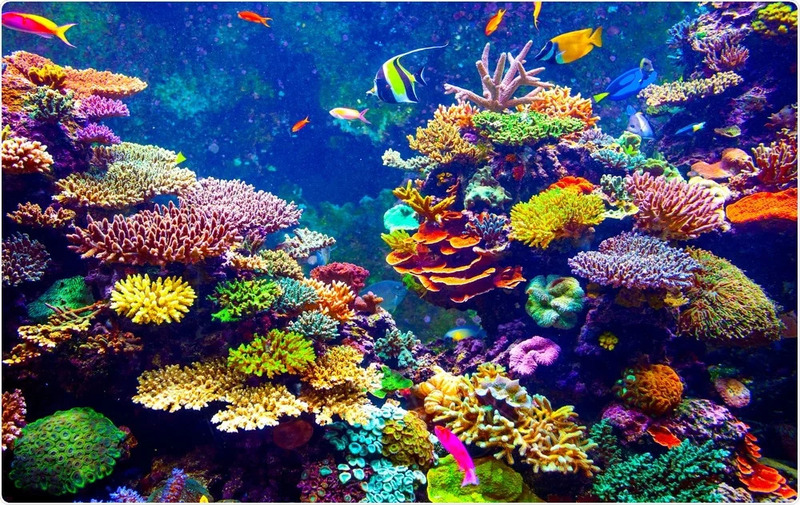
A coral reef can look like an underwater rainbow. Brilliant fish dart between corals glowing in shades of red, pink, purple and green. But beneath those striking colours lies a fascinating partnership between tiny animals and microscopic algae.
Corals are living animals made up of tiny creatures called coral polyps. These polyps build the hard skeleton that forms the familiar structure of a coral. The skeleton itself is ghostly white. So where does the colour come from? The answer begins with tiny algae living inside the coral’s tissues.
Known as zooxanthellae, these single-celled algae have a remarkable relationship with coral. Using sunlight, they carry out photosynthesis and produce sugars. The algae use some of these sugars themselves, while much of the remaining food—up to 90 percent—can be passed on to the coral. In return, the coral provides the algae with a protected place to live.
This mutually beneficial relationship is called mutualism. The chlorophyll inside the algae gives many corals their familiar greenish-brown appearance. But some corals have an additional colour trick.
Many corals produce special protein pigments that can reflect light in vivid shades of purple, blue, green and red. Some of these pigments are fluorescent. Fluorescent pigments may help convert light into a form that the algae can use. These fluorescent proteins can absorb blue light and emit it as another colour, such as green or red.
Light behaves differently underwater. Red light, which has a longer wavelength, does not travel as effectively through water as shorter wavelengths such as blue light. Since photosynthesis needs both blue and red light, converting some blue light into longer-wavelength light could potentially help the algae living inside the coral.
These colourful pigments may have another important job: protection. Strong sunlight, particularly harmful ultraviolet radiation, can damage the algae. Coral pigments can act like a natural sunscreen by filtering out some of this damaging radiation.
When exposed to intense light, corals can produce more pigments. They can also temporarily contract their bodies, bringing the pigments closer together to create a stronger protective layer.
This delicate system becomes especially important as oceans warm. Heat stress can cause corals to lose their algae, a phenomenon known as coral bleaching. Without their algae, corals lose their main source of food and turn white. Prolonged bleaching can eventually lead to coral death.
Yet their colourful pigments could offer a glimmer of hope. If pigments help protect coral tissues and encourage algae to return, they may play a role in recovery. The next time a coral reef dazzles with colour, remember: those spectacular hues may be part of the coral’s survival toolkit.
.jpeg)
I have a Masters in Literature and a knack for spotting the silver lining! When I’m not chasing good news, you’ll find me nurturing my farm or lost in a good book.