"Dream, Dream, Dream! Conduct these dreams into thoughts, and then transform them into action."
- Dr. A. P. J. Abdul Kalam
"Dream, Dream, Dream! Conduct these dreams into thoughts, and then transform them into action."
- Dr. A. P. J. Abdul Kalam
20 Mar 2026
In the scorching landscapes of Barmer, where the sun blazes relentlessly and water becomes more precious than gold, survival itself is a daily challenge. For humans, it is difficult but for birds, it can be devastating. As temperatures soared and water sources dried up, even the smallest creatures began to struggle. Sparrows, pigeons, and other birds once active and lively were now seen searching desperately for a drop of water. It was a silent crisis unfolding in the skies. But in the middle of this harsh reality, something beautiful happened. The villagers of Barmer chose compassion over convenience.
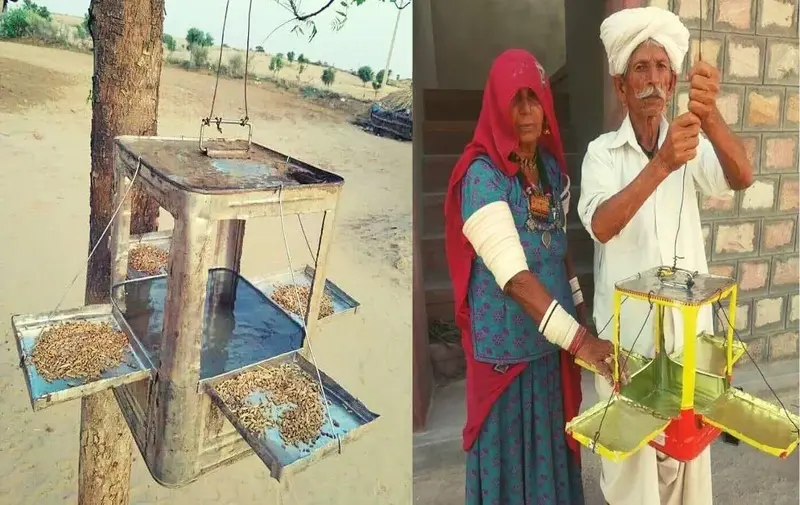
With limited resources and scarce water, the people of Barmer came up with a simple yet powerful idea. Instead of throwing away old oil tins, they transformed them into birdbaths. These were not fancy structures or expensive installations. They were made using everyday materials—discarded metal cans that would otherwise go to waste. By carefully cutting the tins open and shaping them into shallow containers, villagers created safe spaces where birds could drink water. Every tin became more than just a container. It became a lifeline.
What makes this initiative truly inspiring is not just the idea, but the spirit behind it. In a place where even humans faced water shortages, the villagers still chose to share what little they had. They hung these birdbaths under trees, ensuring the water remained cool despite the intense heat. Some even added small stones or materials inside to maintain water quality and make it easier for birds to perch. This was not an organised campaign or a funded project it was pure human empathy in action. The story might have remained local, but it didn’t. It caught the attention of Parveen Kaswan, an Indian Forest Service officer known for sharing environmental stories. When he posted about the initiative on social media, it quickly went viral. What started as a small effort in Barmer soon inspired people across the country. Cities and towns from Pune to Bikaner began adopting the idea. People started placing water bowls, repurposing containers, and creating their own versions of birdbaths. A local solution had become a national movement.
In a world often driven by complex technology and expensive solutions, this initiative stands out for its simplicity. It proves that meaningful change does not always require big investments. All it takes is awareness, creativity, and a willingness to act. By repurposing household waste, the villagers not only helped birds survive but also promoted sustainability. They showed that environmental conservation can begin at home, with the smallest of efforts. There is something deeply moving about this story. It reminds us that humans are not separate from nature we are part of it. In sharing their water with birds, the people of Barmer demonstrated a rare and beautiful understanding of coexistence. They recognised that survival is not just a human need, but a shared one. At a time when cities are expanding and natural habitats are shrinking, such acts become even more important. They remind us to pause, to care, and to act.
As the heat continues to challenge both humans and wildlife, stories like this urge us to reflect. What can we do, in our own small way, to make the world a little kinder? Because sometimes, saving lives does not require grand gestures. Sometimes, it just takes a small tin filled with water and a big heart willing to share it.
Romanticizing life and shaping stories from everything I see through my journalistic lens. Also, I love sports on the side.