"Dream, Dream, Dream! Conduct these dreams into thoughts, and then transform them into action."
- Dr. A. P. J. Abdul Kalam
"Dream, Dream, Dream! Conduct these dreams into thoughts, and then transform them into action."
- Dr. A. P. J. Abdul Kalam
29 Mar 2026
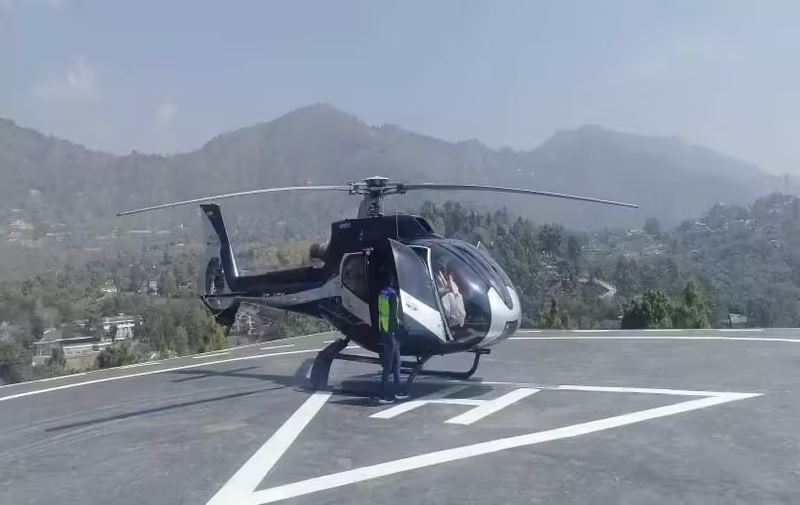
In the breathtaking yet challenging terrains of Uttarakhand, where mountains touch the sky and roads often fail to reach, a powerful initiative has taken flight literally. A free helicopter service launched in the Rudraprayag district is now helping pregnant women from remote villages access hospitals safely and on time. For many living in these isolated regions, childbirth has long been a risky journey. With limited road connectivity, unpredictable weather, and long travel hours, reaching a hospital during labor can become a matter of life and death. This initiative is not just a service; it is hope carried on wings.
The service made its impact felt immediately. On its very first day, a pregnant woman named Udina from Jakholi was airlifted to the district hospital in Rudraprayag. What could have been a dangerous and uncertain journey through rough terrain turned into a safe and swift transfer under medical supervision. This moment is more than a success story; it reflects a shift in how governance can directly touch lives. For Udina and countless others like her, this helicopter was not just a machine; it was a guardian angel ensuring a safe delivery.
India has made significant progress in reducing maternal mortality over the years, yet geography continues to play a decisive role in healthcare access. In mountainous states like Uttarakhand, remote villages are often cut off from main roads, emergency transport is scarce, and reaching a hospital during labor can involve long, risky journeys. The lack of nearby healthcare infrastructure further increases the danger, where even a delay of a few hours can lead to serious complications for both mother and child.
In such challenging conditions, the introduction of a free helicopter service becomes a vital solution, bridging the gap by enabling rapid medical evacuation and ensuring timely access to care. Officials, including District Disaster Management Officer Nandan Singh Rajwar, have emphasized that this initiative can play a crucial role in reducing maternal and infant mortality rates. It also aligns with national efforts under programs like the National Health Mission, which aim to strengthen maternal healthcare and ensure safe motherhood across the country.
The success of Uttarakhand’s helicopter service naturally raises an important question: can other Indian states adopt similar solutions? The answer is yes, but it requires careful and thoughtful planning. Many regions across India, including Himachal Pradesh, parts of the Northeast, and tribal belts in central India, face similar geographical challenges where access to timely medical care is limited. Governments must first identify and map such high-risk areas where emergency connectivity is weak. Since helicopter operations involve high costs, building partnerships with private aviation companies or even defense services can make the model more sustainable and efficient.
At the same time, integrating this service with emergency systems like the 108 Emergency Response Service can ensure faster response, where a single call can activate immediate medical evacuation. Given the unpredictable weather in mountainous regions, strong safety measures are essential, including skilled pilots, advanced navigation systems, and backup plans for emergencies. Equally important is awareness at the grassroots level—local health workers, ASHA volunteers, and village networks must actively inform communities about the availability of such services so that no woman is left behind in a moment of need.
India’s diversity is its strength, but it also demands tailored solutions. What works in cities may not work in mountains. Uttarakhand’s helicopter service is a perfect example of localized innovation, a solution designed for the unique needs of its people. It also reflects a broader shift in governance, where technology and empathy come together. By using helicopters not just for disaster response but for routine healthcare emergencies, the state is redefining accessibility.
At its heart, this story is about humanity. It is about ensuring that no mother has to risk her life simply because of where she lives. It is about giving every child a safe beginning. For families in remote villages, this service brings peace of mind. It reassures husbands, parents, and communities that help is within reach. It transforms anxiety into confidence and isolation into connection. As India continues its journey towards better healthcare, initiatives like this remind us that progress is not just measured in policies but in lives saved and futures secured. Uttarakhand’s free helicopter service is more than a policy; it is a vision of inclusive healthcare. It shows how innovative thinking, when combined with compassion, can overcome even the toughest geographical barriers.

Writing about what truly matters, good news and stories to remind the world - it is brighter than we think.