"Dream, Dream, Dream! Conduct these dreams into thoughts, and then transform them into action."
- Dr. A. P. J. Abdul Kalam
"Dream, Dream, Dream! Conduct these dreams into thoughts, and then transform them into action."
- Dr. A. P. J. Abdul Kalam
2 Mar 2026
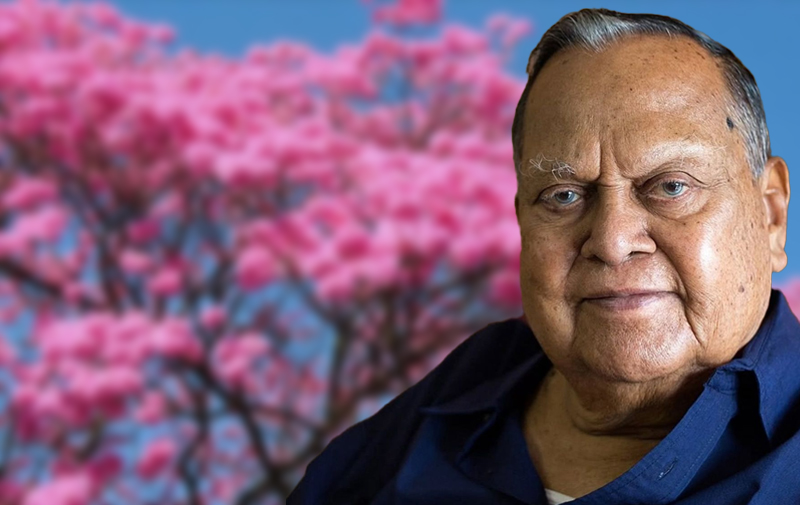
Every year, just as summer begins to press down on Bengaluru, something unexpected happens. Amid honking traffic, rising temperatures and hurried footsteps, entire stretches of the city soften into shades of pink. Petals of Tabebuia rosea spill across footpaths and settle gently on windshields. For a few fleeting weeks, the city pauses. People look up. Cameras come out. Conversations begin with, “Have you seen the trees?” Few realise that this seasonal spectacle is not an accident of nature. It is the result of a carefully planned vision planted more than four decades ago by an Indian Forest Service officer who believed cities must grow but never at the cost of their breath.
In the early 1980s, Bengaluru was transforming. Known once as India’s “Garden City,” it was beginning to expand rapidly. Roads were widened. New layouts emerged. Concrete replaced open land. Population numbers surged, and infrastructure raced to keep up. But growth came with a visible loss. Tree-lined avenues that once defined the city were thinning. Mature trees were cut to make way for development. Saplings were planted as compensation, yet many failed to survive. The intention existed, but the planning did not. It was in this moment of imbalance that Seturam Gopalrao Neginhal stepped forward. As an officer of the Indian Forest Service, he understood that urban forestry required more than symbolic plantation drives. It required strategy, patience and science.
Before ordering plantations, Neginhal did something simple yet powerful: he walked. He walked through neighbourhoods, observed the soil texture, studied how sunlight filtered through different streets and noted traffic density. Instead of viewing tree planting as a numbers game, he treated it as ecological architecture. He experimented with species. Not every tree could withstand pollution, compacted soil and irregular rainfall. Some species struggled in urban stress conditions. Through careful study of Bengaluru’s climate and soil, he identified trees that could adapt and thrive. Among them was Tabebuia rosea, a deciduous tree known for its resilience, broad canopy and seasonal pink blossoms. It offered shade during harsh summers and colour during flowering months. It was not merely decorative; it was functional. The choice would define Bengaluru’s future summers.
Planting a sapling is easy. Ensuring its survival is the real test. Urban saplings face multiple threats: grazing animals, vandalism, construction damage and vehicular pressure. At a time when concrete tree guards were expensive and limited, Neginhal introduced low-cost bamboo and mesh guards. These simple structures protected young trees without burdening public funds. He also invited citizens into the process. Residents were asked what kind of trees they wanted on their streets. This small act built ownership. When people feel involved, they protect what grows outside their homes. Plantation work along major roads was often carried out at night to avoid traffic disruptions. Teams worked quietly under streetlights, placing saplings into soil that would one day anchor towering canopies. This was not a one-season campaign. It was sustained work over five determined years.
By the time the drive concluded, nearly 1.5 million trees had been planted across Bengaluru. The number itself is staggering. But its real significance lies in continuity. The plantations helped strengthen a green belt around the city. They restored shaded corridors along arterial roads. They reduced surface temperatures. They improved air quality long before climate change entered mainstream conversation. This was the 1980s, decades before urban heat islands became widely discussed in public forums. Yet the thinking was already climate-conscious. The results are still visible. Every shaded avenue today carries traces of that foresight. When commuters park under cool canopies or when elderly residents take evening walks beneath leafy stretches, they benefit from decisions made forty years ago.
Tabebuia rosea thrives in tropical climates and tolerates urban stress well. It sheds leaves briefly before blooming, which makes the flowers appear even more dramatic against bare branches. This natural cycle creates a spectacle that marks seasonal change in the city. Beyond aesthetics, these trees contribute to biodiversity by supporting pollinators such as bees and birds. Their canopies reduce direct sunlight exposure on asphalt roads, helping lower heat absorption. Over time, extensive tree cover moderates microclimates within urban pockets.
What appears to be a simple flowering season is, in fact, a layered ecological contribution. In a time when urban expansion often comes at an environmental cost, his story offers a lesson in balance. Development and ecology need not be opposites. With careful planning, they can coexist. And every summer, when Bengaluru turns pink, the city unknowingly says thank you to the man who once chose to walk its streets before planting its future.

Writing about what truly matters, good news and stories to remind the world - it is brighter than we think.