"Dream, Dream, Dream! Conduct these dreams into thoughts, and then transform them into action."
- Dr. A. P. J. Abdul Kalam
"Dream, Dream, Dream! Conduct these dreams into thoughts, and then transform them into action."
- Dr. A. P. J. Abdul Kalam
11 Mar 2026
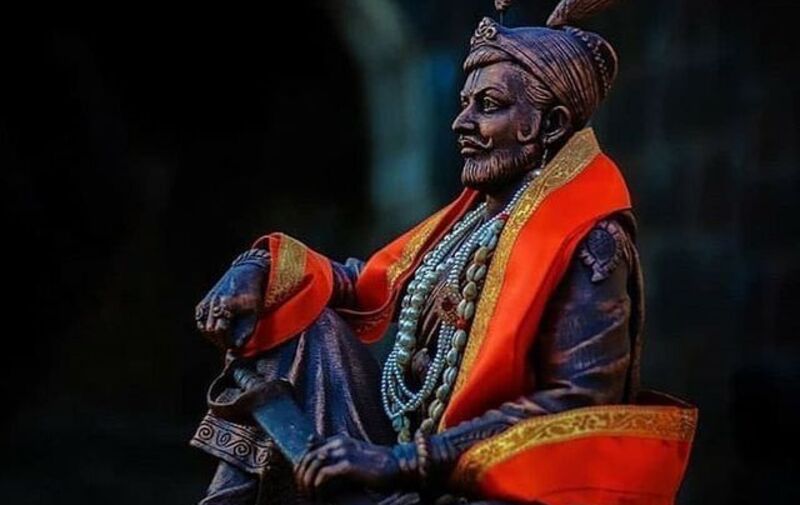
On the death anniversary of Chhatrapati Sambhaji Maharaj, India remembers a warrior whose courage, intellect, and sacrifice became an inseparable part of Maratha history. Born in 1657 to the legendary founder of the Maratha kingdom, Chhatrapati Shivaji Maharaj, Sambhaji was raised in a world where bravery was not just admired but expected. From a young age, he was trained in warfare, administration, languages, and diplomacy. By the age of nine, he had already experienced political intrigue and imprisonment during the Mughal–Maratha conflicts.
These early trials shaped him into a determined and resilient leader. When Shivaji Maharaj passed away in 1680, Sambhaji ascended the throne and became the second ruler of the Maratha Empire. His reign began during one of the most turbulent periods in Indian history, when powerful empires and invading forces were trying to crush the rising Maratha power. Yet Sambhaji Maharaj stood firm, continuing the mission of Swarajya that his father had begun.
Sambhaji Maharaj earned the powerful title “Chhava,” meaning “lion cub.” The name symbolized the belief that he was the fearless offspring of a lion, a worthy successor to Shivaji Maharaj. Stories of his courage spread widely across the Deccan. One popular tale describes how Sambhaji once confronted a lion in the wild and killed it with a single strike of his sword, a moment that strengthened his image as a warrior who possessed both physical strength and fearless spirit.
While the story has taken on legendary form over time, it reflects the reputation he carried among his people and soldiers. Beyond battlefield bravery, Sambhaji Maharaj was also a scholar. He was fluent in multiple languages including Sanskrit, Persian, and Marathi, and he wrote literary works such as Budhbhushanam, which showed his deep knowledge of politics and ethics. For the Marathas, Sambhaji was not just a king, he was a symbol of youthful power, intelligence, and unstoppable courage.
The reign of Sambhaji Maharaj was marked by constant war, particularly against the Mughal emperor Aurangzeb. Determined to destroy the Maratha kingdom, Aurangzeb personally moved to the Deccan with a massive army. Yet Sambhaji Maharaj refused to surrender or submit. He led aggressive campaigns against Mughal territories, Portuguese strongholds, and other enemies who threatened Maratha sovereignty. Under his leadership, the Maratha forces continued to raid Mughal supply lines, capture forts, and challenge imperial authority.
His strategies relied on mobility, local support, and guerrilla warfare, tactics that had made the Marathas famous during Shivaji’s time. Despite the enormous pressure of fighting one of the most powerful empires in the world, Sambhaji Maharaj never abandoned the cause of Swarajya. His resilience frustrated the Mughal forces and proved that the Maratha spirit could not easily be crushed.
In 1689, Sambhaji Maharaj was captured by Mughal forces after a betrayal. What followed became one of the most tragic yet heroic chapters in Indian history. Aurangzeb demanded that Sambhaji surrender the Maratha kingdom and convert his faith, but the king refused. For days he endured brutal torture, yet he remained unbroken in spirit. On March 11, 1689, he was executed, choosing death over surrender. His martyrdom shocked the Maratha people but also ignited a stronger resistance against Mughal rule. Instead of ending the Maratha movement, his sacrifice strengthened it.
Over the years, Sambhaji Maharaj became remembered not only as a warrior king but also as a symbol of courage, faith, and loyalty to Swarajya. Today, on his Punya Tithi, he is honoured as a lion-hearted ruler whose life proved that true bravery lies in standing firm for one’s values, even in the face of unimaginable suffering.
The “Chhava” of the Marathas may have fallen, but his roar still echoes through history.

Writing about what truly matters, good news and stories to remind the world - it is brighter than we think.