"Dream, Dream, Dream! Conduct these dreams into thoughts, and then transform them into action."
- Dr. A. P. J. Abdul Kalam
"Dream, Dream, Dream! Conduct these dreams into thoughts, and then transform them into action."
- Dr. A. P. J. Abdul Kalam
18 Feb 2026
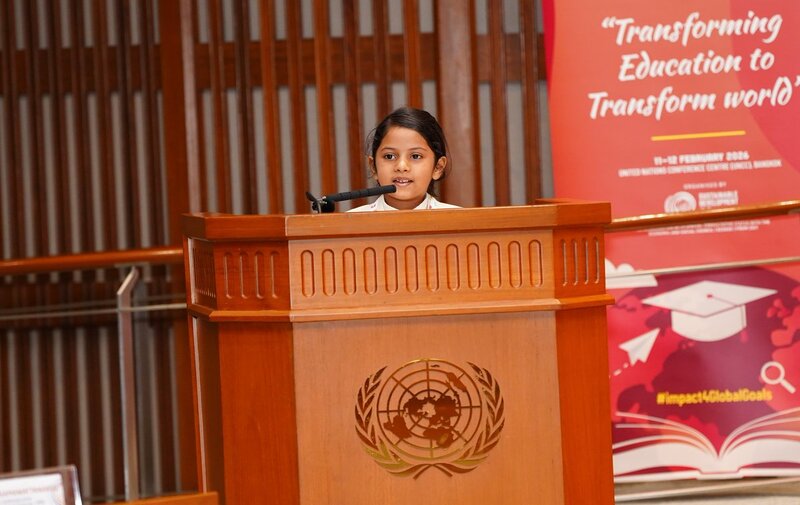
The grand halls of the United Nations Conference Centre in Bangkok are accustomed to seasoned diplomats, policy experts, and global leaders. Yet on 11–12 February 2026, a small figure with a powerful voice captured the attention of the international community. Six-year-old Roohi Mohazzab from Kerala, India, stood at the podium as a keynote speaker at the Global Conference on Education for a Sustainable Future (GCE 2026). Her presence was not symbolic. It was historic. At an age when most children are learning their first lessons in school, Roohi was delivering a message to global policymakers: children are not passive observers of climate change; they are active guardians of the planet.
Roohi, a first-grade student at Common Ground International Academy in Kozhikode, was officially invited as a Keynote Speaker and SDG Impact Awardee at the conference. Organized by the UNESCO Youth Education Research Center in collaboration with the Sustainable Development Council, which holds Special Consultative Status with ECOSOC, the event brought together global stakeholders focused on building a sustainable future through education. The significance of this platform cannot be overstated.
The United Nations Asia-Pacific Headquarters in Bangkok serves as a critical regional hub for policy dialogue, sustainable development discussions, and international cooperation. For a six-year-old from Kerala to be recognized at such a forum reflects not only her individual impact but also a broader shift in how youth voices are valued in global conversations. Her keynote message resonated across the hall: “Children are not just the future; they are the present guardians of Mother Earth.” It was a statement simple in words, yet profound in meaning.
One of the most symbolic moments of the conference was Roohi’s formal launch of her global initiative, “The Children Movement for Climate Compassion.” Introduced on the UN platform, the foundation seeks to nurture environmental responsibility and civic awareness among children worldwide. The idea behind the initiative is transformative. Instead of waiting for adulthood to engage in climate policy and sustainability efforts, children are encouraged to see themselves as stakeholders from the very beginning. Through awareness campaigns, community engagement, and environmental education, the movement envisions classrooms becoming incubators of climate leadership. This initiative reflects a growing understanding that sustainable development must be intergenerational. Climate change affects today’s children most directly, making their inclusion in policy discussions both logical and necessary.
Roohi’s recognition at the UN did not emerge overnight. She has already been widely acknowledged as one of the youngest environmental advocates in the world, leading impactful grassroots initiatives that combine ambition with action. Her CounTree Project, launched on World Environment Day 2025, aims to plant one crore (10 million) trees through 10 lakh school micro-nurseries. By involving schools directly, the initiative transforms environmental responsibility into a daily learning experience. Students nurture saplings, monitor growth, and understand the science and significance of reforestation firsthand. Kerala has long been recognized for its literacy rate, environmental consciousness, and social development initiatives. Roohi’s global recognition adds another proud chapter to the state’s legacy. Her presence at a UNESCO-linked forum reinforces India’s growing contribution to youth-led climate advocacy.
As Roohi stepped away from the podium in Bangkok, the applause was not merely for a speech well delivered. It was for a new vision of leadership—inclusive, compassionate, and fearless. Her story stands as a powerful reminder that the fight for sustainability is not reserved for adults. It belongs to every generation. When children are given platforms, support, and trust, they can influence conversations at the highest levels. At six years old, Roohi Mohazzab has shown the world that climate compassion begins early and that even the smallest voice can echo across global halls. And in that echo lies hope for a greener, more responsible future.
Romanticizing life and shaping stories from everything I see through my journalistic lens. Also, I love sports on the side.