"Dream, Dream, Dream! Conduct these dreams into thoughts, and then transform them into action."
- Dr. A. P. J. Abdul Kalam
"Dream, Dream, Dream! Conduct these dreams into thoughts, and then transform them into action."
- Dr. A. P. J. Abdul Kalam
14 Apr 2026
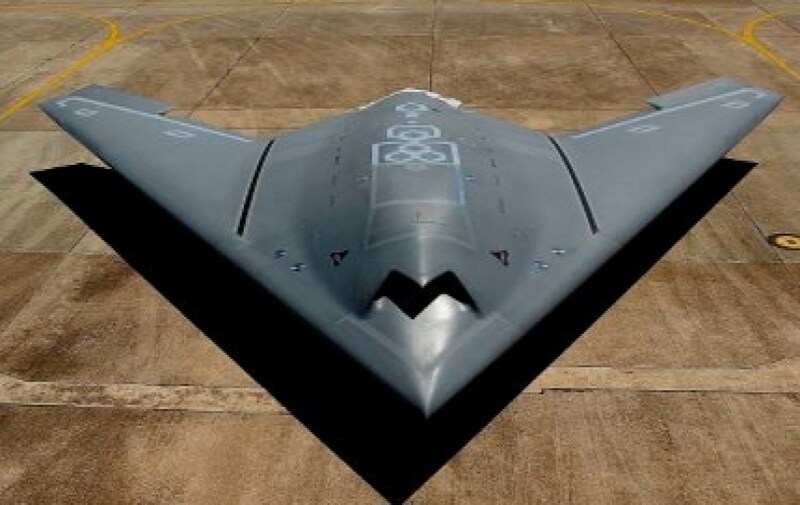
Wars are no longer fought only with soldiers on the frontlines or pilots in cockpits. Increasingly, they are shaped by intelligence, precision, and machines that can think, decide, and act in fractions of a second. In this evolving landscape, India is quietly building something transformative. The Ghatak UCAV, India’s first indigenous stealth unmanned combat aerial vehicle, represents more than just a technological milestone. It is a signal that India is ready to step into the future of warfare with confidence, capability, and independence.
The idea of Ghatak was conceived in the 2010s under the leadership of Defence Research and Development Organisation, with a clear goal: to design a combat drone that could operate deep inside enemy territory without risking human lives. Unlike traditional drones, Ghatak is a fixed-wing stealth platform, engineered for long-range, high-risk missions. Its design reflects a deep understanding of modern warfare requirements—low radar visibility, precision strike capability, and autonomous mission execution. At its core, Ghatak embodies India’s pursuit of strategic autonomy. In a world where defence technologies are often restricted by geopolitical dependencies, building such a system domestically ensures control, flexibility, and long-term security.
Before a system like Ghatak can take full shape, its technologies must be tested, refined, and proven. This is where the Stealth Wing Flying Testbed comes into play. SWiFT, a scaled prototype of the Ghatak UCAV, has already demonstrated critical capabilities such as autonomous flight and stealth aerodynamics. Its successful trials marked a turning point, validating years of research and engineering effort. These tests are not just technical milestones. They represent the dedication of scientists, engineers, and defence personnel working behind the scenes, often unnoticed, yet crucial to shaping the nation’s future.
One of the most significant aspects of the Ghatak programme is its emphasis on indigenous propulsion. The integration of the Kaveri Engine is not just a technical choice; it is a strategic one. For decades, engine technology has been one of the most challenging areas in aerospace development. By advancing the Kaveri engine for Ghatak, India is taking a crucial step toward reducing dependence on foreign systems.
What sets Ghatak apart is not just its unmanned nature but also its intelligence and invisibility. Designed with stealth shaping and an internal weapons bay, it minimizes radar detection, allowing it to penetrate heavily defended airspace. This low radar cross-section gives India a significant advantage in high-stakes scenarios. But stealth alone is not enough. Ghatak is envisioned to operate with advanced AI-enabled mission control, capable of real-time data processing, autonomous decision-making, and precision targeting. This combination of stealth and intelligence transforms it into a powerful tool for deep-strike missions. It allows India to carry out operations without the risks associated with human pilots—no capture, no diplomatic fallout, and minimal escalation.
India’s security environment is shaped by evolving challenges, particularly in relation to China and Pakistan. In such a context, the Ghatak UCAV acts as a force multiplier. Its ability to conduct precision strikes deep within enemy territory enhances deterrence. Adversaries are forced to account for a system that is difficult to detect, harder to intercept, and capable of delivering high-impact results. This shifts the balance not by escalating conflict, but by preventing it. Strong deterrence often ensures that conflicts remain hypothetical rather than real. While Ghatak is a combat platform, its significance extends far beyond the battlefield. It aligns with India’s broader vision of becoming a net security provider in South Asia and a key player in the Indo-Pacific region. Its rapid deployment capability and integration with multi-domain warfare systems—including cyberspace—enable swift and effective responses to emerging threats.
The Ghatak UCAV is still evolving, moving into more advanced phases of development and procurement planning. But even in its current stage, it offers a glimpse into the future. A future where wars are fought with intelligence rather than numbers. Where machines take on the most dangerous missions, protecting human lives. Where nations rely on their own innovation to secure their place in the world. For India, Ghatak is more than a technological achievement. It is a symbol of ambition, resilience, and readiness. And as it prepares to take to the skies, it carries with it a powerful message: that India is not just adapting to the future of warfare but actively shaping it.

Writing about what truly matters, good news and stories to remind the world - it is brighter than we think.