"Dream, Dream, Dream! Conduct these dreams into thoughts, and then transform them into action."
- Dr. A. P. J. Abdul Kalam
"Dream, Dream, Dream! Conduct these dreams into thoughts, and then transform them into action."
- Dr. A. P. J. Abdul Kalam
30 Aug 2026
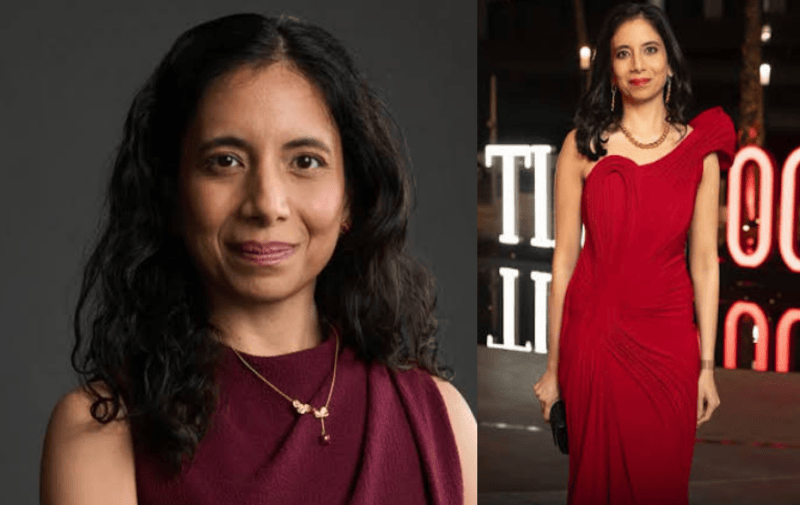
Artificial Intelligence is often associated with chatbots, images and language models. But Professor Anima Anandkumar is pushing it into a far bigger arena — the physical world.
The Indian-born scientist has been named among TIME’s 100 Most Influential People in AI, recognising her pioneering work at the intersection of artificial intelligence and scientific discovery. Anandkumar said that bringing AI and science together has been the focus of her work for the past decade, with the goal of making the simulation and understanding of the physical world dramatically faster.
Her research spans weather forecasting, nuclear fusion, quantum chemistry, medicine and semiconductor technology.
One of Anandkumar’s major contributions is Neural Operators — AI techniques designed to learn and simulate complex physical systems.
In simple terms, these models can help scientists predict how physical phenomena behave without relying entirely on enormously expensive and time-consuming simulations. The potential is huge. Her work has helped develop methods that can model scientific processes dramatically faster than traditional approaches, with some applications reportedly achieving speedups of more than a million times.
From predicting weather patterns to simulating nuclear fusion, the technology could help researchers tackle problems that once demanded immense computing power.
Her research has also found applications in medical devices, computer chips and quantum technology. One example is a catheter designed to reduce bacterial contamination by around 100 times. Neural Operators have also been explored for improving chip manufacturing and optimising components for quantum computers.
Anandkumar’s journey began in Mysore, Karnataka, in a family deeply connected to education. Her parents were engineers, while her grandfather was a mathematician and her great-grandfather a Sanskrit scholar. But science wasn't her only passion. She also trained in Bharatanatyam and performed the classical dance for years.
She earned her BTech in Electrical Engineering from IIT Madras in 2004, followed by a PhD from Cornell University in 2009, where she received an IBM Fellowship. Her career then took her through MIT and Amazon Web Services, where she became a Principal Scientist and contributed to the creation and launch of Amazon SageMaker.
In 2017, she joined Caltech as a professor. She later became Senior Director of AI Research at NVIDIA.
Anandkumar’s influence now extends well beyond academia and industry.
In March 2026, she was appointed to the United Nations Secretary-General’s Scientific Advisory Board, where she contributes to discussions on science and AI.
Her message is particularly significant at a time when the world is debating how AI should be used. Rather than limiting AI to surveillance, entertainment or language, she believes it can become a powerful tool for weather prediction, climate research and scientific discovery.
And with her latest TIME recognition, Anandkumar is showing what AI is capable of — not merely generating information, but helping humanity understand the world itself.
.jpeg)
I have a Masters in Literature and a knack for spotting the silver lining! When I’m not chasing good news, you’ll find me nurturing my farm or lost in a good book.