"Dream, Dream, Dream! Conduct these dreams into thoughts, and then transform them into action."
- Dr. A. P. J. Abdul Kalam
"Dream, Dream, Dream! Conduct these dreams into thoughts, and then transform them into action."
- Dr. A. P. J. Abdul Kalam
27 Mar 2026
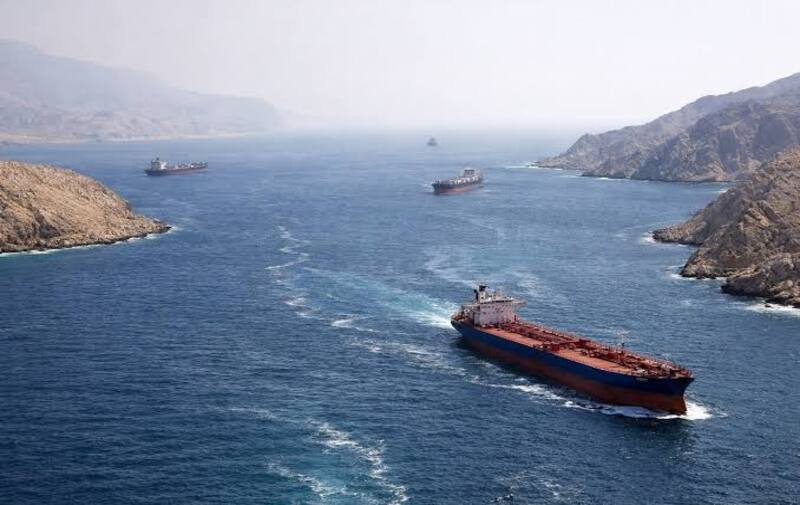
The Strait of Hormuz has long been one of the most critical chokepoints in global trade. Connecting the Persian Gulf to the Gulf of Oman, this narrow stretch of water carries a massive portion of the world’s oil and natural gas supplies. Recent statements by Abbas Araghchi suggest that Iran is allowing “friendly nations” such as India, China, Russia, Iraq, and Pakistan to use this vital route with assured safety. While the move comes amid rising geopolitical tensions, its implications stretch far beyond politics—it directly impacts global energy flows, trade stability, and economic security.
Geographically, the Strait lies between Iran to the north and the Musandam Peninsula shared by the UAE and Oman to the south. Though it spans about 167 kilometers in length, its narrowest width is just around 39 kilometers, making it highly sensitive to disruptions. Despite its size, its importance is enormous. Around 20% of the world’s liquefied natural gas and nearly 25% of global seaborne oil trade passes through this single corridor. At times, over 20 million barrels of oil per day flow through it, making it one of the busiest and most strategically significant waterways in the world. Any disruption here has the potential to trigger a global energy crisis, especially for countries heavily dependent on imports.
Iran’s move to allow safe passage for select nations signals a shift in how access to this waterway could be managed during times of tension. By prioritizing “friendly nations,” Iran appears to be creating a selective corridor of stability within a region otherwise marked by uncertainty. For countries like India, this could mean continued access to crucial oil and gas supplies even during geopolitical strain. Given India’s heavy reliance on imported energy, uninterrupted shipping routes are essential for economic stability. Similarly, major Asian economies like China and Japan depend significantly on oil passing through this strait, making any assurance of safety a critical development.
For India, the Strait of Hormuz is not just a trade route; it is an energy lifeline. A significant portion of India’s crude oil imports comes from the Middle East, and most of it passes through this corridor. If access remains stable, it helps India avoid sudden spikes in fuel prices, supply shortages, and economic disruptions. It also provides breathing space for policymakers to focus on long-term strategies such as diversifying energy sources and investing in renewables. However, the situation also highlights India’s vulnerability. Dependence on a single chokepoint underscores the need for alternative routes and stronger energy partnerships.
The Strait of Hormuz has often been at the center of global tensions, particularly involving Iran and Western powers. Its strategic importance means that even minor disruptions can have major consequences. The ongoing tensions involving Iran and the United States have once again brought the region into focus. In such a scenario, Iran’s decision to allow selective access can be seen as both a diplomatic signal and a strategic move. It reflects how control over critical infrastructure can influence global dynamics, shaping not just trade but also political relationships. The reported opening of the Strait of Hormuz for select nations marks a significant moment in global trade and energy security. For India and other Asian economies, it offers a measure of stability in uncertain times. Yet, it also serves as a reminder of how interconnected the world truly is. A narrow stretch of water in the Middle East holds the power to influence economies, shape geopolitics, and impact everyday lives across continents.

Romanticizing life and shaping stories from everything I see through my journalistic lens. Also, I love sports on the side.