"Dream, Dream, Dream! Conduct these dreams into thoughts, and then transform them into action."
- Dr. A. P. J. Abdul Kalam
"Dream, Dream, Dream! Conduct these dreams into thoughts, and then transform them into action."
- Dr. A. P. J. Abdul Kalam
12 Feb 2026
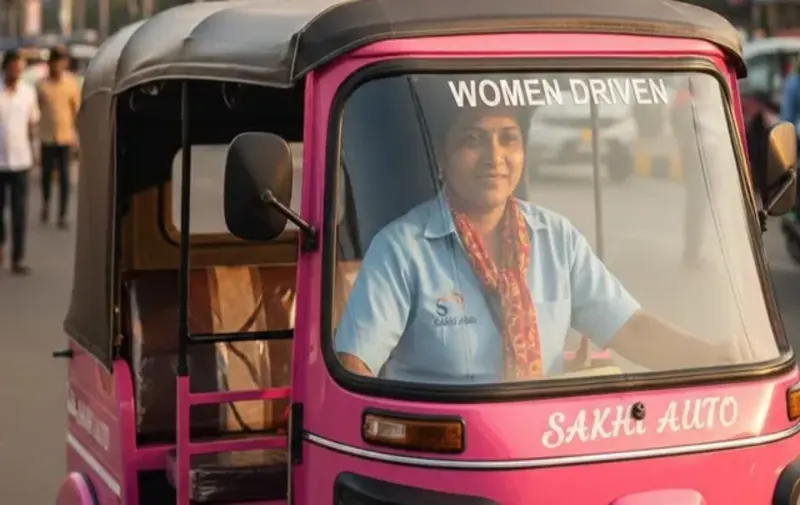
On February 14, as the city celebrates love in its many forms, Bengaluru will witness the launch of something quietly powerful: Sakhi Auto, a women-only auto service designed by women, driven by women, and meant exclusively for women passengers. In a city where conversations around women’s safety in ride-hailing services have grown louder and more urgent, Sakhi Auto arrives not as a flashy startup but as a thoughtful response to a lived problem. At its heart, Sakhi Auto promises something simple yet transformative: the ability for women to travel without fear.
The idea of Sakhi did not come from a boardroom. It came from personal experience. Founder Krishnavi Parekh was inspired by moments many women know too well: travelling alone, constantly alert, calculating risks, and hoping the journey ends safely. Her experiences in Mumbai shaped a clear vision: if women feel unsafe while commuting, why not create a service where trust is built into the system itself? Sakhi Auto was born from that question. By employing only women drivers and serving only women passengers, the platform removes a major layer of anxiety that shadows daily travel for countless women.
From February 14, Sakhi Auto will operate across Bengaluru from 6 AM to 12 midnight, running all seven days of the week. Depending on demand, the service plans to expand into a full 24-hour operation, recognising that women’s workdays, emergencies, and lives do not end at nightfall. The initial rollout includes 50 women drivers, aged between 21 and 40, all with prior driving experience. These drivers are not gig workers lost in an algorithm; they are central to the mission. For now, they will receive their full ride earnings, offering immediate financial stability, with the possibility of a commission-based model later as the platform grows. One of Sakhi Auto’s strongest departures from existing ride-hailing platforms is its clear and fixed fare structure. In a space often criticised for unpredictable surge pricing, Sakhi chooses transparency. The minimum fare is ₹50 for the first two kilometres, followed by ₹20 per additional kilometre. No surge pricing. No sudden spikes during rain, rush hours, or emergencies. Just straightforward pricing that allows women to plan their travel without financial anxiety. In a city where affordability often determines mobility, this clarity matters.
Sakhi Auto understands that accessibility is as important as safety. Commuters can currently book rides through the web platform at ride.sakhiwomen.in or via WhatsApp on 63619 33364, ensuring that even those without advanced smartphones or apps can access the service. A dedicated mobile application is already in development and is expected to launch soon, signalling Sakhi’s intent to scale while staying rooted in its core values. The February launch follows a successful pilot run in January, during which 17 trips were completed. While the number may seem modest, the pilot phase served its true purpose: testing trust, operations, and response. Every completed ride reinforced the idea that women were ready for, and deeply in need of, a service like this. Sakhi Auto is not rushing growth; it is choosing to build slowly, responsibly, and with feedback from the very community it serves.
For the women behind the wheel, Sakhi Auto represents more than a job. It is an entry into visible, dignified work in a sector long dominated by men. Driving through Bengaluru’s busy streets, these women are not exceptions; they are pioneers reshaping what public transport can look like. The platform’s future plan to include trans women drivers further strengthens its commitment to inclusivity, recognising mobility and employment as rights that should not be limited by gender identity. Each auto ride becomes a small act of economic empowerment: a woman earning, another woman feeling safe, and both contributing to a stronger urban ecosystem. Sakhi Auto may not immediately disrupt Bengaluru’s transport market, but its impact runs deeper than numbers. It challenges the idea that women must adapt to unsafe systems rather than systems adapting to women’s needs. By choosing Valentine’s Day for its launch, Sakhi makes a symbolic statement—love, in this case, looks like safety, dignity, and choice.

Writing about what truly matters, good news and stories to remind the world - it is brighter than we think.