"Dream, Dream, Dream! Conduct these dreams into thoughts, and then transform them into action."
- Dr. A. P. J. Abdul Kalam
"Dream, Dream, Dream! Conduct these dreams into thoughts, and then transform them into action."
- Dr. A. P. J. Abdul Kalam
17 Apr 2026
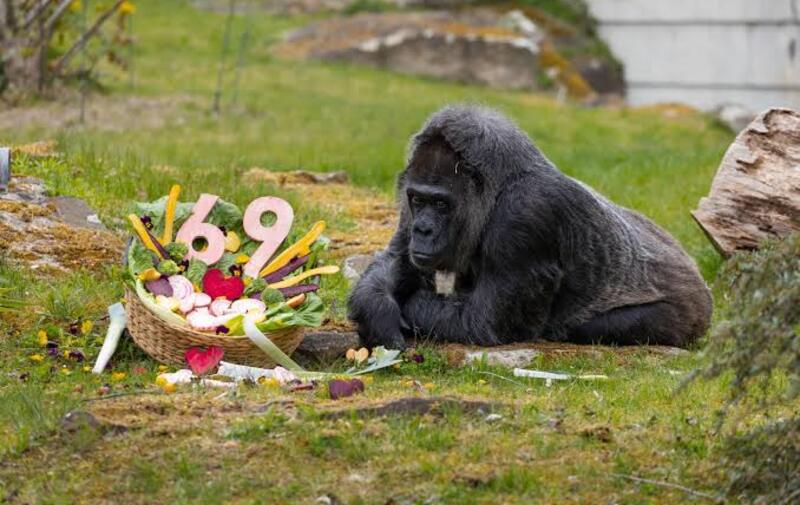
In a quiet corner of Berlin Zoo, away from the playful energy of younger animals, lives a remarkable soul who has silently rewritten history. Fatou is not just any gorilla; she is a symbol of endurance, care, and the extraordinary bond between humans and animals. Born around 1957 in the forests of West Africa, her journey from the wild to becoming the world’s oldest known gorilla is as fascinating as it is emotional.
Fatou’s story begins in the dense, vibrant forests of West Africa, a place where life moves to the rhythm of nature. But her path changed dramatically when she was brought to Europe as a young gorilla in the late 1950s. Though there are legends that she was traded by a sailor to settle a bar tab, what remains certain is that she arrived in Berlin in 1959, just a toddler in gorilla years. For a creature meant to roam vast forest lands, this transition could have been harsh. Yet, over the decades, Fatou adapted, slowly turning a foreign place into her home. Her early years at Berlin Zoo marked the beginning of something significant—not just for her, but for animal care and conservation awareness in Europe.
In 1974, Fatou gave birth to her only offspring, Dufte, becoming the first gorilla in Berlin to successfully raise a baby. This moment was more than just a milestone for the zoo; it was a step forward in understanding how to care for and support gorillas in captivity. But her most astonishing achievement came much later. After the passing of another elderly gorilla, Trudy, in 2019, Fatou became the oldest living gorilla in the world. In 2020, she went even further, surpassing Trudy’s age and becoming the oldest gorilla ever recorded. In the wild, gorillas typically live up to 40 years. Fatou has nearly doubled that lifespan, standing today as a living testament to resilience and dedicated care. Her life stretches across generations. Through her daughter, she has become a grandmother, great-grandmother, and even a great-great-great-grandmother. It is a legacy that mirrors human family trees, reminding us how deeply connected we are to the animal world.
Today, Fatou’s life moves at a slower, gentler pace. Age has brought its challenges. Her eyesight has weakened, arthritis affects her movement, and she has lost her teeth. But what might seem like limitations are met with thoughtful care. Her keepers prepare soft, cooked vegetables to ensure she can still enjoy her meals comfortably. Fruits, once her favorite treat, are now limited to protect her health. She lives in a separate enclosure, away from the noise and activity of younger gorillas. This quiet space allows her to rest, observe, and simply be. Her days are calm, almost meditative, a stark contrast to the energetic chaos often associated with zoos. And yet, despite her age, Fatou has not lost her presence. Visitors often describe a unique feeling when they see her. There is something deeply human in her gaze, calm, wise, and almost reflective. It is as if she carries decades of stories in her eyes.
What makes Fatou truly special is not just her age, but the way she connects with people. Those who stand before her often find themselves pausing, not out of curiosity, but out of respect. Her quiet dignity has a way of making people reflect on their own lives, their own aging, and their own relationships. In many ways, Fatou feels like a grandmother figure: gentle, observant, and full of unspoken wisdom. She reminds us of the elders in our own families, those who may move slower but carry a lifetime of experience. Her story encourages us to look at aging not as a decline but as a stage of grace and depth.
Fatou also represents something larger—the fragile future of her species. Western Lowland Gorillas are critically endangered in the wild, facing threats from habitat loss, poaching, and disease. While she lives safely under human care, countless others struggle to survive in shrinking forests. Her long life highlights what is possible when protection, nutrition, and medical care come together. At the same time, it quietly asks an important question: can we extend this care to the wild spaces where her kind truly belongs? And perhaps that is her greatest gift. Not just the years she has lived, but the way she has lived them—with quiet strength, dignity, and a presence that speaks louder than words.

Writing about what truly matters, good news and stories to remind the world - it is brighter than we think.