"Dream, Dream, Dream! Conduct these dreams into thoughts, and then transform them into action."
- Dr. A. P. J. Abdul Kalam
"Dream, Dream, Dream! Conduct these dreams into thoughts, and then transform them into action."
- Dr. A. P. J. Abdul Kalam
26 Jul 2026
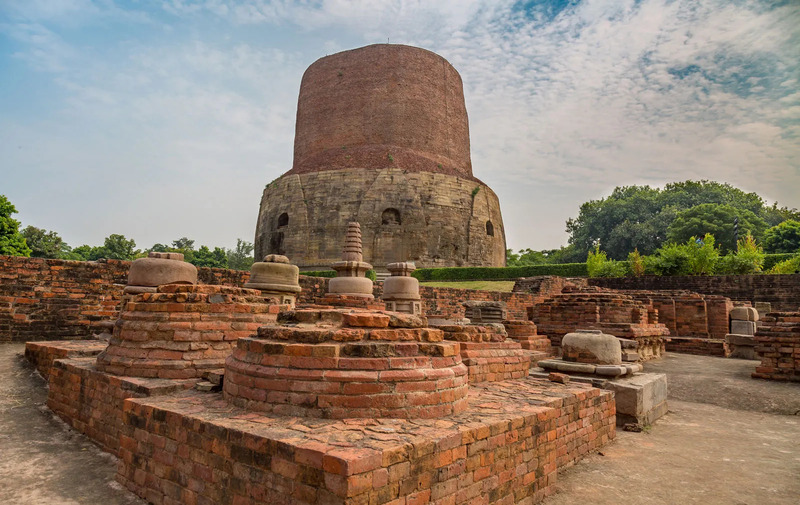
India has added another jewel to its rich cultural crown. In a landmark achievement, the Ancient Buddhist Site of Sarnath in Uttar Pradesh has been officially inscribed on the UNESCO World Heritage List, making it India's 45th World Heritage Site.
The prestigious recognition was announced during the 48th Session of the World Heritage Committee in Busan, South Korea, where India's nomination for the 2025–26 cycle received global approval. The inscription celebrates Sarnath's extraordinary historical, architectural, and spiritual significance, further cementing India's place as one of the world's foremost custodians of cultural heritage.
Located near Varanasi, Sarnath occupies a unique place in world history. It was here, in the 6th century BCE, that Gautama Buddha delivered his first sermon after attaining enlightenment at Bodh Gaya. Known as the "Turning of the Wheel of the Law" (Dharmachakra Pravartana), the sermon laid the foundation of the Buddhist Sangha and introduced the teachings of the Noble Eightfold Path.
The UNESCO inscription covers two major components of the ancient site—the Chaukhandi Stupa and the Archaeological Remains of Sarnath, which include iconic monuments such as the Dhamekh Stupa, Dharmarajika Stupa, Mulagandhakuti Vihara, and the famed Ashokan Pillar.
Sarnath flourished for nearly 1,600 years, evolving through the patronage of kings, monks, and devotees. Temples, monasteries, and stupas were built around the sacred site where Buddha met his first disciples, transforming it into one of Buddhism's holiest pilgrimage destinations.
Although the city declined after the 12th century and gradually disappeared from public memory, it was rediscovered during the 18th century. Extensive excavations carried out by the Archaeological Survey of India (ASI) over the past 150 years have unearthed remarkable remains dating from the 5th century BCE to the 12th century CE, revealing the site's continuous historical development.
Among the most celebrated discoveries are the Mauryan Lion Capital, which later became the National Emblem of India, and the magnificent Dharmachakrapravartan Buddha, a masterpiece of Gupta art. These priceless artefacts are displayed at India's earliest site museum, established at Sarnath in 1904.
The inscription followed an intensive 18-month evaluation process involving technical assessments, expert reviews, and an inspection mission by UNESCO's advisory body, ICOMOS. Sarnath was recognised under UNESCO's cultural criteria for its exceptional testimony to Buddhist civilisation and its direct association with events of outstanding universal significance in the life of the Buddha.
With Sarnath's inclusion, three of Buddhism's four most sacred pilgrimage sites—Lumbini in Nepal, the Mahabodhi Temple in Bodh Gaya, and now Sarnath—are now recognised as UNESCO World Heritage Sites.
The achievement also strengthens India's position globally. With 45 World Heritage Sites, India now ranks sixth in the world and second in the Asia-Pacific region for the highest number of UNESCO-listed heritage properties.
Beyond its historical importance, Sarnath's World Heritage status is expected to enhance cultural tourism, deepen international ties with Buddhist-majority nations. The recognition also acknowledges the decades-long conservation efforts of the Archaeological Survey of India and highlights India's growing leadership in heritage preservation on the global stage.
As visitors from around the world continue to seek places that shaped human civilisation, Sarnath now stands proudly among humanity's most treasured cultural landmarks—a timeless symbol of peace, wisdom, and India's enduring spiritual legacy.
.jpeg)
I have a Masters in Literature and a knack for spotting the silver lining! When I’m not chasing good news, you’ll find me nurturing my farm or lost in a good book.