"Dream, Dream, Dream! Conduct these dreams into thoughts, and then transform them into action."
- Dr. A. P. J. Abdul Kalam
"Dream, Dream, Dream! Conduct these dreams into thoughts, and then transform them into action."
- Dr. A. P. J. Abdul Kalam
25 Feb 2026
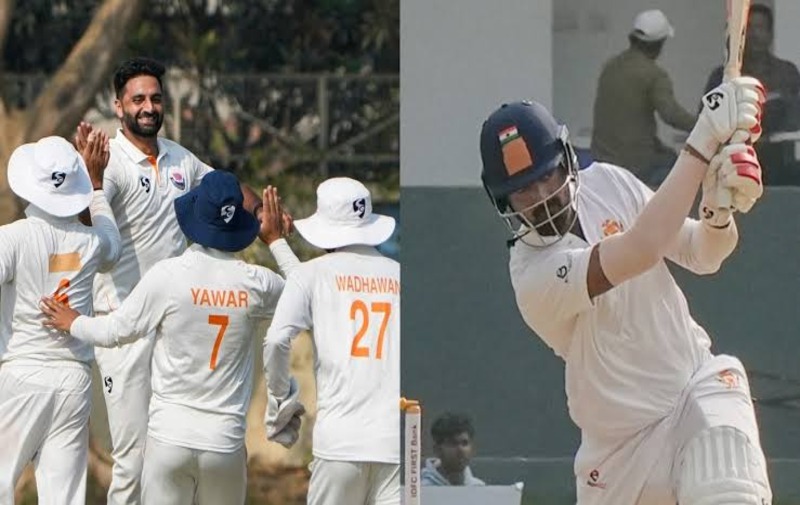
There is something magical about a Ranji Trophy final. No loud music, no flashing lights just red-ball cricket at its purest form. In Hubballi, as Karnataka locked horns with Jammu & Kashmir in the 2025–26 final, a final of north to south, every delivery carried history, pride, and dreams stitched together over 90 years of Indian domestic cricket. Karnataka entered the final after overpowering Uttarakhand with a mammoth first-innings total of 736. Devdutt Padikkal’s double century, twin centuries from Ravichandran Smaran, and solid contributions from KL Rahul powered them into their first final since 2014–15. On the other side stood Jammu & Kashmir, the underdogs who stunned Bengal to script their maiden final appearance in 67 years. Auqib Nabi’s nine-wicket haul and a composed chase led by Vanshaj Sharma had already made them giant killers this season. This was not just a match. This was a clash of legacy and dream.
When Paras Dogra won the toss and chose to bat, the atmosphere tightened. Vidyadhar Patil opened the bowling for Karnataka, and from the very first over, the contest felt intense. Qamran Iqbal and Yawer Hassan walked out knowing they were carrying the hopes of an entire region. Iqbal survived nervy moments before Prasidh Krishna found the outside edge, snapped up brilliantly by KL Rahul in the slips.
The first breakthrough belonged to Karnataka, but Jammu & Kashmir was not backing down. Yawer Hassan showed courage beyond his experience. He cut, drove, and pulled with growing confidence. Against Shreyas Gopal’s spin, he danced down the track and pierced the gaps. His half-century, his maiden in a Ranji final, was greeted with applause from teammates who understood the magnitude of the moment. At the other end, Shubham Pundir was elegance personified. His drives through cover were timed so sweetly that you could almost hear the crack of the bat echoing across the ground. When he reached his fifty with a crunching boundary square of the wicket, it felt like Jammu & Kashmir had truly arrived on the big stage. Yet Karnataka kept breathing down their necks. Prasidh Krishna returned with hostility, extracting bounce and movement. In one fierce moment, a sharp bouncer struck Dogra near the neck, the ball lobbing up dangerously. Karnataka reviewed for a catch, but UltraEdge confirmed it had hit the body. It was a reminder of how brutal red-ball cricket can be. Finally, Krishna struck again. Hassan, on 88, edged to KL Rahul at slip. A low catch, checked by the third umpire, was declared clean. Karnataka had their second breakthrough. The battle had tilted, but the fight was far from over.
The Ranji Trophy began in 1934–35, originally called the Cricket Championship of India. It was renamed in honour of Kumar Shri Ranjitsinhji, the first Indian to play international cricket. Since then, it has grown into the backbone of Indian cricket. Organised by the Board of Control for Cricket in India (BCCI), the tournament now features 38 teams representing states and union territories. It follows a round-robin format in the group stage, followed by knockouts. Group matches are four-day affairs, while knockouts extend to five days, demanding patience, endurance, and technique. Mumbai remains the most successful side with 42 titles, including an extraordinary streak of 15 consecutive championships. But every season writes a new script, and this year, Jammu & Kashmir’s journey has already become one of the most inspiring chapters.
In an era dominated by T20 leagues and instant entertainment, the Ranji Trophy stands tall as cricket’s ultimate classroom. This is where Indian cricketers are truly tested. Long hours under the sun, sessions of relentless bowling, and the discipline of building an innings ball by ball. It is here that legends are shaped. From Sunil Gavaskar to Rahul Dravid, from Anil Kumble to modern stars like KL Rahul and Ravichandran Ashwin, the Ranji Trophy has been the foundation of India’s cricketing success. Performances here decide national call-ups. Selectors watch closely. Every run and wicket matters. The tournament also gives smaller states and emerging regions a platform. Jammu & Kashmir reaching the final is not just a cricketing story; it is a social one. It shows how sport can unify, inspire, and give hope. For a young cricketer practicing on a dusty ground in Srinagar or Mysuru, the Ranji Trophy is not just a competition—it is a dream.
As Karnataka chases their first title in over a decade and Jammu & Kashmir aims to script history, this final feels symbolic. One side represents tradition and experience. The other represents aspiration and breakthrough. For cricket lovers, it is a reminder that the heart of Indian cricket does not only beat in packed international stadiums. It beats in domestic arenas where future stars are forged. The Ranji Trophy is long, demanding, and sometimes unforgiving. But that is precisely why it is necessary. It builds character. It builds technique. It builds India’s cricketing future. And as the red ball swings under the Hubballi sky, you realise this is not just a match. This is the soul of Indian cricket in motion.
Romanticizing life and shaping stories from everything I see through my journalistic lens. Also, I love sports on the side.