"Dream, Dream, Dream! Conduct these dreams into thoughts, and then transform them into action."
- Dr. A. P. J. Abdul Kalam
"Dream, Dream, Dream! Conduct these dreams into thoughts, and then transform them into action."
- Dr. A. P. J. Abdul Kalam
31 May 2026
For most athletes, completing Ultraman Australia once is enough to define an entire career. The event is widely regarded as one of the toughest endurance races on the planet, a relentless three-day challenge that pushes the human body and mind to the edge of collapse. But Pune’s endurance athlete Shubham Kajale chose to return.
And this time, he came back stronger. The 28-year-old has successfully completed Ultraman Australia for the second consecutive time, conquering an astonishing 515.4 km across swimming, cycling, and running stages through punishing Australian terrain and unpredictable coastal conditions.
Ultraman Australia is not just another endurance race. It is a battle against exhaustion, weather, pain, and the limits of human resilience. The challenge begins with a terrifying 10 km open-water ocean swim where athletes battle waves, strong currents, saltwater fatigue, and unpredictable sea conditions. Kajale himself had to fight severe seasickness during this stage, a nightmare scenario for any endurance swimmer.
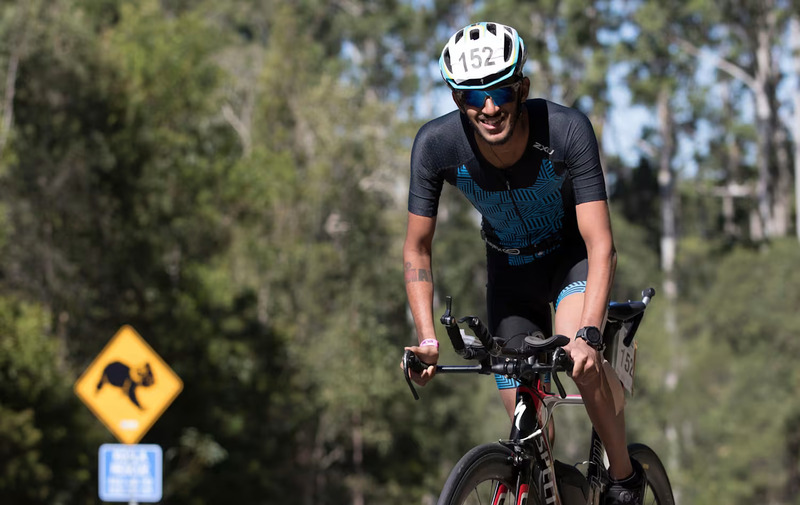
The second day escalates dramatically with a staggering 421 km cycling route spread across highways, steep climbs, and unforgiving roads. By the final day, athletes must still find enough energy to complete an 84.3 km double marathon run.
In total, participants cover 515.4 km in just three days. It is said that for many, the event becomes less about competition and more about survival.
Kajale’s journey into endurance sports began unexpectedly after his Class 10 board examinations, when he discovered the world of Ironman triathlons.
The obsession grew rapidly. At just 18 years old, he became an Ironman finisher, an achievement many athletes spend decades chasing. Yet even then, Kajale was already looking beyond conventional goals. He recalled that when he saw the sheer scale of a three-day, 515km race, he didn't see it as an athletic event, instead, he saw a test of human limits and he instantly knew that he had to chase it.
That pursuit eventually led him to Ultraman Australia, where he first made history as India’s youngest-ever Ultraman finisher at the age of 24.
But the second attempt, he says, was completely different. This time, it was not driven by youthful adrenaline. It was engineered through science.
According to a report in Punekar News, Kajale credits much of his transformation to his wife, a qualified sports physiotherapist who became the architect behind his preparation. Unlike his first Ultraman campaign, which relied heavily on instinct and sheer resilience, the second was built around biomechanics, recovery science, muscle conditioning, and structured endurance planning.
Training for an event of this scale in Pune came with major obstacles. The city lacks coastlines for ocean swim practice and does not fully replicate the terrain of the Australian course. Yet Kajale and his team improvised relentlessly. Long-distance swim simulations were recreated through high-volume pool sessions and lake training around Pune. Cycling endurance was built on surrounding highways, while climbs near Sinhagad became critical for elevation conditioning and stamina.
Despite his incredible achievement, Kajale believes his larger mission is only beginning. He now plans to establish a dedicated sports performance lab for endurance athletes in India — a facility designed to provide scientific training, recovery systems, and data-driven performance support for future athletes.
In a country where endurance sports infrastructure remains limited, Kajale hopes his journey can inspire a new generation of ultra-distance athletes to dream beyond boundaries. For Shubham Kajale, Ultraman was never just about crossing a finish line. It was about proving how far the human spirit can go.
.jpeg)
I have a Masters in Literature and a knack for spotting the silver lining! When I’m not chasing good news, you’ll find me nurturing my farm or lost in a good book.